At embryonic day 8.5, some mouse blood-vessel cells lost VEGFR2, a key receptor that normally helps vessels grow. Yet those cells did not disappear. Over time, they adapted and helped build new vessels, offering a possible clue to why treatments that block a vessel-growing signal can lose their effect.
The signal is called VEGF, short for vascular endothelial growth factor. Doctors use medicines that block VEGF to limit the growth of blood vessels that feed tumours, as well as to treat some eye diseases. But resistance to these medicines can develop. Scientists have long known that VEGF signalling is vital when blood vessels first form: mice with no VEGFR2 develop no blood vessels and die early in embryonic development. It was less clear whether vessel cells could adjust if the receptor disappeared only from some cells, and they had time to adapt.
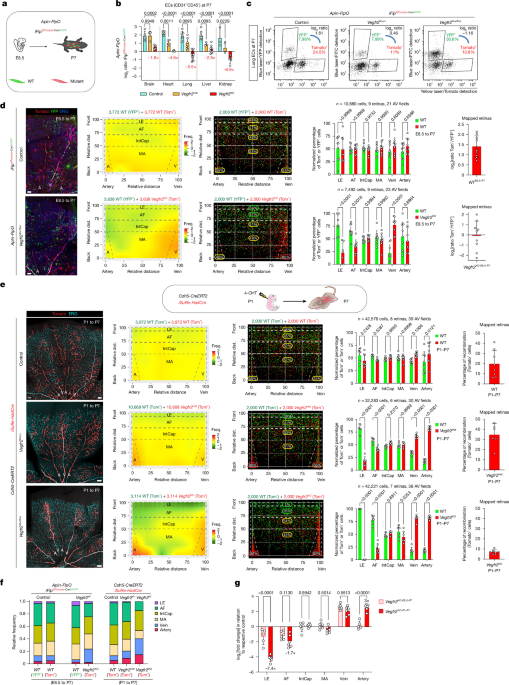
To investigate, researchers used genetic tools to switch off the mouse Vegfr2 gene in a subset of endothelial cells, the cells lining blood vessels, while marking those cells so they could track them over time. The mosaic approach let mutant and normal cells live side by side. When the change began at E8.5, the altered cells survived and multiplied through embryonic development and until postnatal day 7. They remained at a disadvantage compared with normal cells, but the gap was relatively small: normal cells outcompeted them by about two to seven times. The effect varied by organ, with the disadvantage more pronounced in the lung and kidney and less pronounced in the brain.
The team also switched off Vegfr2 later, at embryonic days 10.5 and 12.5. In that experiment, only 1 to 6 percent of endothelial cells were recombined, compared with 23 to 50 percent in the first setup. The pattern across organs was similar: brain cells were least affected, followed by cells in the heart, liver, lung and kidney.
The larger finding was that VEGFR2 loss did not stop every later wave of vessel growth. Mutant cells expanded in veins and could spread from there to form new vessels in many organs. In other words, veins became a continuing source of cells able to take part in angiogenesis, the growth of new blood vessels. Single-cell RNA sequencing, a method that measures gene activity in individual cells, showed changes that may help explain this shift. The adapted cells increased signals that can act through other VEGF receptors and made more venous-cell genes, especially Nr2f2.
When the researchers targeted these adaptive, resistance-linked mechanisms, the mutant cells no longer expanded after prolonged loss of VEGFR2 signalling. The work was done in mice, so it does not show that the same process explains treatment resistance in people. But it points to a way that vessel cells may work around a blocked growth pathway—and suggests that future treatments could need to target not just the original signal, but also the escape routes cells develop over time.