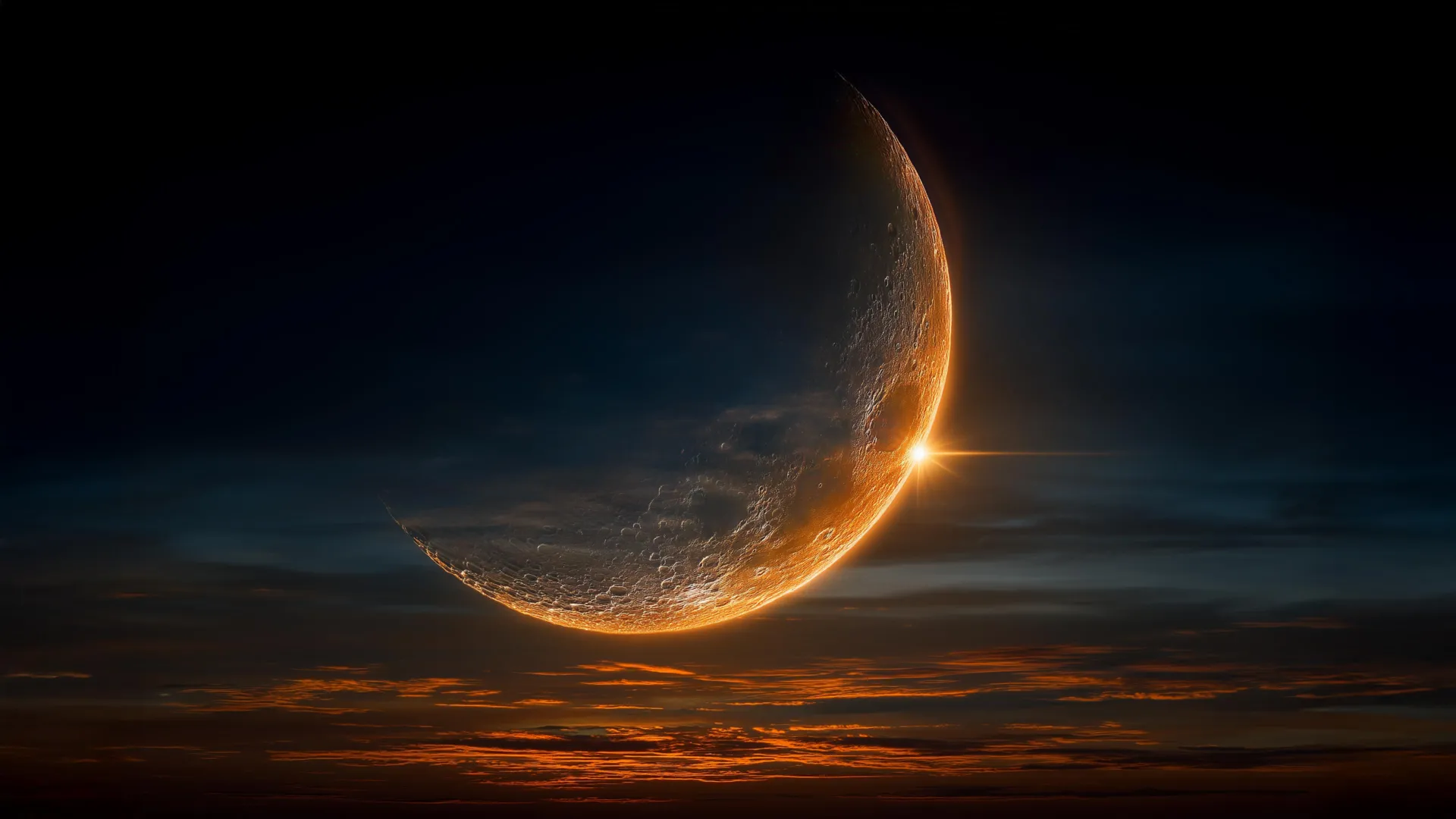
On June 17, the Moon will slide directly in front of Venus in a rare celestial performance visible from parts of the United States, Canada, Brazil, and Venezuela. This lunar occultation—where our nearest neighbor completely blocks the brilliance of Earth's sister planet—will make Venus appear to vanish from the sky before emerging again, a sight that reminds us how precisely the heavens move through space.
The occultation is only the beginning of June's extraordinary gift to skywatchers. Throughout the month, a constellation of events will unfold above the western horizon, turning June into a masterclass in planetary motion and stellar geography. For anyone with access to clear skies, the rewards of looking up will be substantial—and some require no equipment at all.
The spectacle begins early. On June 9, Venus and Jupiter reach their closest approach in what astronomers call a planetary conjunction. Though the planets remain millions of miles apart in actual space, from Earth's perspective they appear to nearly touch, creating one of the sky's most striking visual meetings. Venus, the brightest planet visible after sunset, will be impossible to miss. Jupiter, nearly as radiant, will shine nearby in the western twilight. A few days later, from June 11 through June 15, Mercury joins the gathering, creating an eye-catching alignment of three planets strung across the low western sky. Mercury sits much closer to the horizon—a fainter object that will require a clear view of the western sky to spot before twilight swallows it.
These planetary gatherings happen because all planets orbit the Sun along a similar path across our sky called the ecliptic. As they travel this shared track, they occasionally cluster together when viewed from Earth. It is a dance as old as the solar system itself, made visible to anyone willing to glance skyward at dusk.
The lunar occultation on June 17 is rarer and more dramatic. For observers along its viewing path—concentrated across the Americas—Venus will seem to vanish as the Moon's edge slides in front of it, then reappear minutes later. Even outside the narrow path of totality, many observers will see the Moon and Venus positioned unusually close together. A word of caution: if the occultation occurs during daylight hours in your location, viewing requires extreme care. Never point binoculars, telescopes, or cameras near the Sun without proper solar safety equipment; unprotected viewing through optical devices can cause severe eye damage.
As June deepens, the month offers yet another gift: the arrival of astronomical summer. The June solstice occurs on June 21 at 1:24 a.m. Pacific time, marking the official beginning of summer in the Northern Hemisphere and the year's longest day. With darkness falling later each night, the sky's most celebrated summer targets begin rising into full view—the Summer Triangle, formed by the bright stars Vega, Altair, and Deneb, and the deep-sky treasures scattered throughout it. The Dumbbell Nebula, also known as Messier 27, holds special significance as the first planetary nebula ever discovered. The Ring Nebula, the North America Nebula, and the Veil Nebula round out the region. Though invisible to the naked eye, these glowing clouds of gas and stellar nurseries reveal their spectacular details through telescopes and long-exposure photography.
June asks little of us except that we step outside and look up. The planets will be there, the Moon will perform its rare dance, summer will arrive, and the distant nebulae will shine as they have for billions of years.