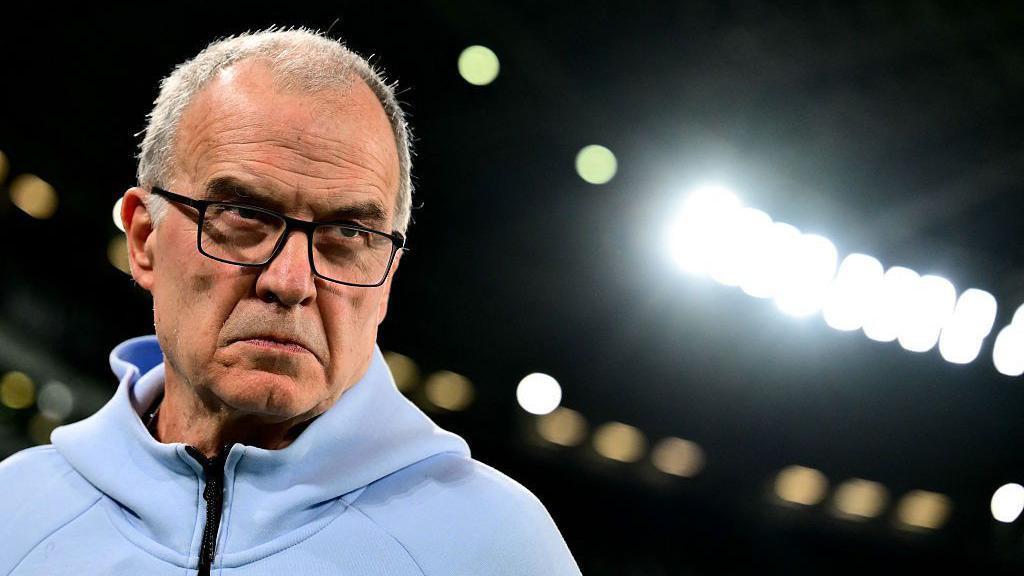
Marcelo Bielsa, born in Rosario, Argentina, was never meant to be a footballer—he was supposed to become something more analytical, like his brother who entered politics or his sister who became a renowned architect. Instead, as a child, he sent his mother to the newsagent every day to buy football magazines and newspapers, spending hours absorbed in the tactical minutiae of how teams played and managers worked. It was an obsession that would reshape his entire career and, eventually, transform the clubs and national teams he touched.
As a player, Bielsa was limited. A defender without pace, he came through Newell's Old Boys but retired at 25, frustrated by his own inability to execute the tactical visions playing out in his head. That frustration became his philosophy: if a player lacked natural talent, he would drill the processes into their minds through intense, repetitive training sessions. Every movement, every decision, repeated until it became instinct.
Appointed Newell's manager in 1990, Bielsa won the Argentinian championship almost immediately. After a spell in Mexico, he returned to Argentina in 1997 to manage Velez Sarsfield, where he earned the nickname "El Loco"—the crazy one—by fielding two teenage centre-backs. They won the league title. His conviction in unconventional thinking had proved itself again.
In 1998, Bielsa took over the Argentina national team, one of the best squads in world football. He had legendary strikers at his disposal, including Gabriel Batistuta, who was scoring goals for fun in Italy's top flight. But Bielsa's system had only one place for a striker, and he chose Hernan Crespo. Batistuta mostly watched from the bench. The players understood. "You get to notice which coaches are winners and which aren't," teammate Juan Pablo Sorin said. "He's managed to get to the stage where if two or three players are missing, the team doesn't change."
Argentina breezed through qualifying for the 2002 World Cup, losing just one of their 18 games. They were installed among the tournament favorites. Then came the lowest point of Bielsa's career: Argentina failed to make it out of the group stage. Some blamed injuries and poor form, but Bielsa's tactical choices—benching Crespo in favor of the aging Batistuta, overlooking regular goalkeeper German Burgos—haunted the tournament.
Yet Bielsa remained undeterred. He led Argentina to the Copa America final a year later and to Olympic gold in 2004, then resigned, saying he no longer had the energy. He reputedly spent three months in a monastery, living with only books and no phone or internet access.
When he returned to football in 2007 as Chile's manager, he emerged rejuvenated. He lived in a bedroom at Chile's training complex and spent four years transforming it from a tired, outdated facility into a modern setup. He promoted talented youth players like Alexis Sanchez, Arturo Vidal, Gary Medel and Mauricio Isla from the Under-20 side. Vidal later reflected on the transformation: "Before I was erratic, running around like crazy all over the pitch. He made me realise the importance of the mental side of my game."
By 2010, Chile had qualified for the World Cup after two successive absences. Bielsa's intensity—that childhood obsession with understanding the game—had taught him not just how to win, but how to rebuild.