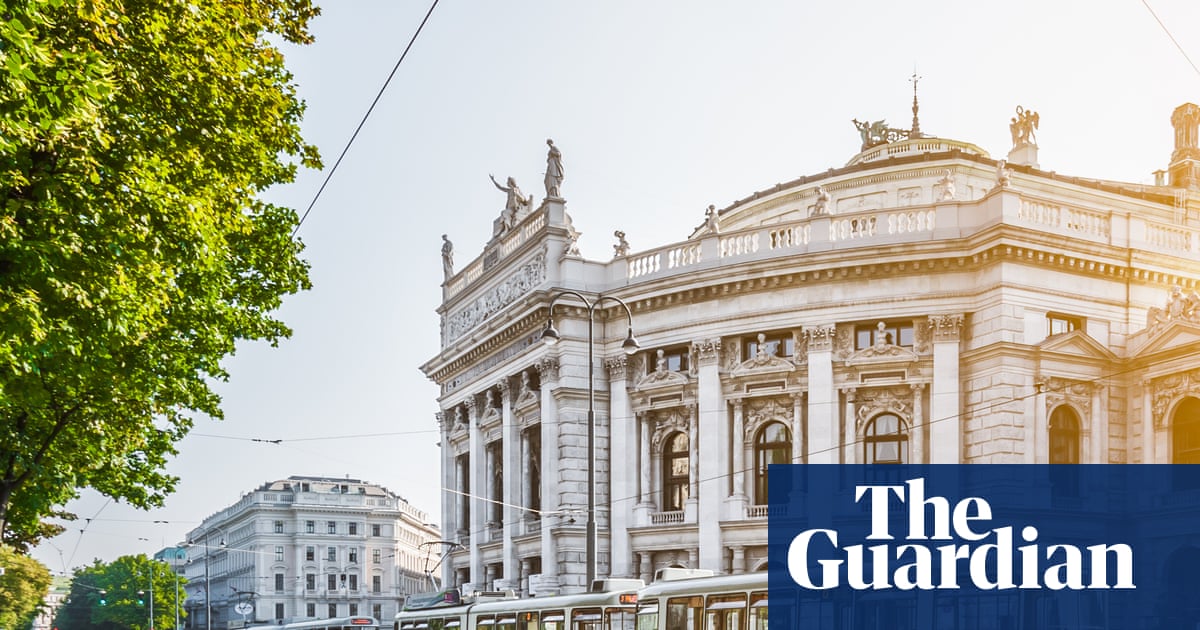
When Leonore Gewessler steps onto Vienna's underground trains and trams, she feels something many urban commuters never experience: time itself returned as a gift. Austria's former climate and transport minister watches the city's network run with clockwork precision across its breadth, and she knows exactly what she's witnessing—a global model for how cities can move people affordably and efficiently. Yet even as Vienna's public transport system draws admiring eyes from London to Los Angeles, a stubborn reality persists: cars still dominate a quarter of all journeys through the Austrian capital.
It's a paradox that exposes a hard truth about urban mobility. Vienna has spent decades building one of Europe's most envied transit networks—comprehensive trains, trams, and buses laced throughout the city, served by yearly tickets costing just €1.26 per day. In 2015, the number of annual public transport passes sold surpassed the number of registered cars in the entire city. Yet despite this triumph, Vienna shares a problem with Paris, London, and Prague: abundant clean transport options alone cannot dislodge the car from its cultural and practical throne. Even these champions of public transit struggle to cut private vehicle journeys below 30 percent of all trips, while American cities remain trapped in a 90-percent-plus car dependency that seems almost unimaginable to European eyes.
Transport researchers like Giulio Mattioli at the Technical University of Dortmund have identified the ceiling: beyond a certain threshold, encouraging better transit becomes a zero-sum game. To make cars reliable and convenient, cities stripped priority from other modes—they gave vehicles the best street space, the fastest routes, the cultural dominance. Reversing that equation requires taking space away from cars, a politically fraught proposition almost everywhere. Vienna, though, arrived at its current balance through historical accident as much as planning foresight. Its famous tram network was laid when the city was the booming capital of the Austro-Hungarian Empire, and unlike most European capitals, Vienna avoided the post-World War II car-centric reconstruction that gutted other cities' transit infrastructure. A growing subway system later complemented those trams, but as Johannes Kehrer, head of strategic infrastructure at Wiener Linien, notes, trams remain Vienna's "sleeping superpower" with potential to expand further.
The city now pursues an ambitious target: reduce private car journeys from 25 percent to 15 percent by 2030. Vienna has introduced parking fees well before most European cities and extended the scheme citywide—modest but real friction against driving. It introduced its revolutionary cheap ticket in 2012, which Gewessler later expanded into a national "climate ticket" when she shifted federal transport spending from roads to rail. Yet the most potent lesson Vienna offers may be the simplest: good transit infrastructure creates transit riders. "If you build public transport infrastructure, you get public transport. If you build road infrastructure, you get drivers and traffic jams," Gewessler says. Even so, Vienna's experience suggests that building the perfect system is only half the battle. The other half—actually changing how people move through their cities—requires something farther-reaching than clean alternatives alone. It demands a wholesale shift in whose needs the city prioritizes first.