When an expectant mother faces complications during childbirth, the difference between life and death can come down to minutes — and whether the nearest clinic has the right machines and the right people. In Kenya's Vihiga County, that gap is closing, one careful step at a time.
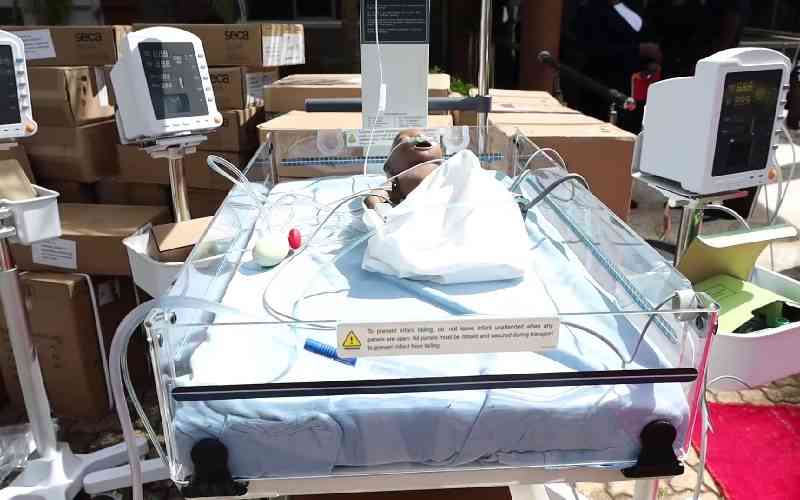
The county government has just received life-saving maternal, newborn and child health equipment worth Sh50 million (about 50 million Kenyan shillings) through the Momentum Country and Global Leadership (MCGL) project, a partnership with the global health organisation Jhpiego. But this isn't simply an arrival of shiny machines. It's another layer in a system being quietly built around mothers — from the community health worker who spots a high-risk pregnancy to the midwife and doctor who handle an emergency delivery in the maternity ward.
That system has been growing for years. The collaboration has boosted newborn services at Vihiga Teaching and Referral Hospital, helped open the Emuhaya Newborn Unit, and trained roughly 1,700 health workers in maternal, newborn and child health. It has also brought in proven ways of managing dangerous complications, including postpartum haemorrhage — heavy bleeding after childbirth, a leading cause of maternal death.
Governor Wilber Ottichilo says the partnership has brought quality care closer to residents and strengthened the county's ability to respond to emergencies. "The most important investment is in our health workers," he said. "By strengthening their skills, we are strengthening the health system for the long term."
The numbers back up that steady progress. The average distance to the nearest health facility has fallen from three kilometres in 2022 to 2.3 kilometres in 2025, while the number of public health facilities has grown from 54 in 2017 to 78 in 2025. New clinics — including Kisatiru, Epang'a, Givigoi and Evojo — have opened their doors, and several others have been renovated to offer maternity services.
Those shorter journeys make a real difference. When women don't have to travel far, they can seek antenatal care early and give birth with the help of skilled professionals. The results are showing: the share of births attended by skilled health workers has climbed from 72 per cent to 80 per cent, and more mothers are attending antenatal clinics.
The county has also invested in modern maternity facilities, expanded labs, strengthened referral systems and increased community health outreach. Specialised newborn units now operate in three Level Four hospitals to care for premature and high-risk babies. The MCGL partnership added vital equipment: Continuous Positive Airway Pressure (CPAP) machines to help tiny babies breathe, radiant warmers, phototherapy machines and oxygen equipment. About 4,000 V-Drapes — simple devices that help manage postpartum haemorrhage — were distributed, along with anthropometric gear used to measure and track child growth.
Dr Allyson Bear, President and CEO of Jhpiego, said she is "encouraged by the progress Vihiga" has made, calling it the product of a genuine partnership.
Ottichilo is clear that this isn't a hand-out that ends when a project does. "Our success has been built on county leadership and ownership," he said. The goal is to build systems strong enough to keep protecting mothers long after the donations stop coming — so that every birth, wherever it happens, starts with hope instead of fear.