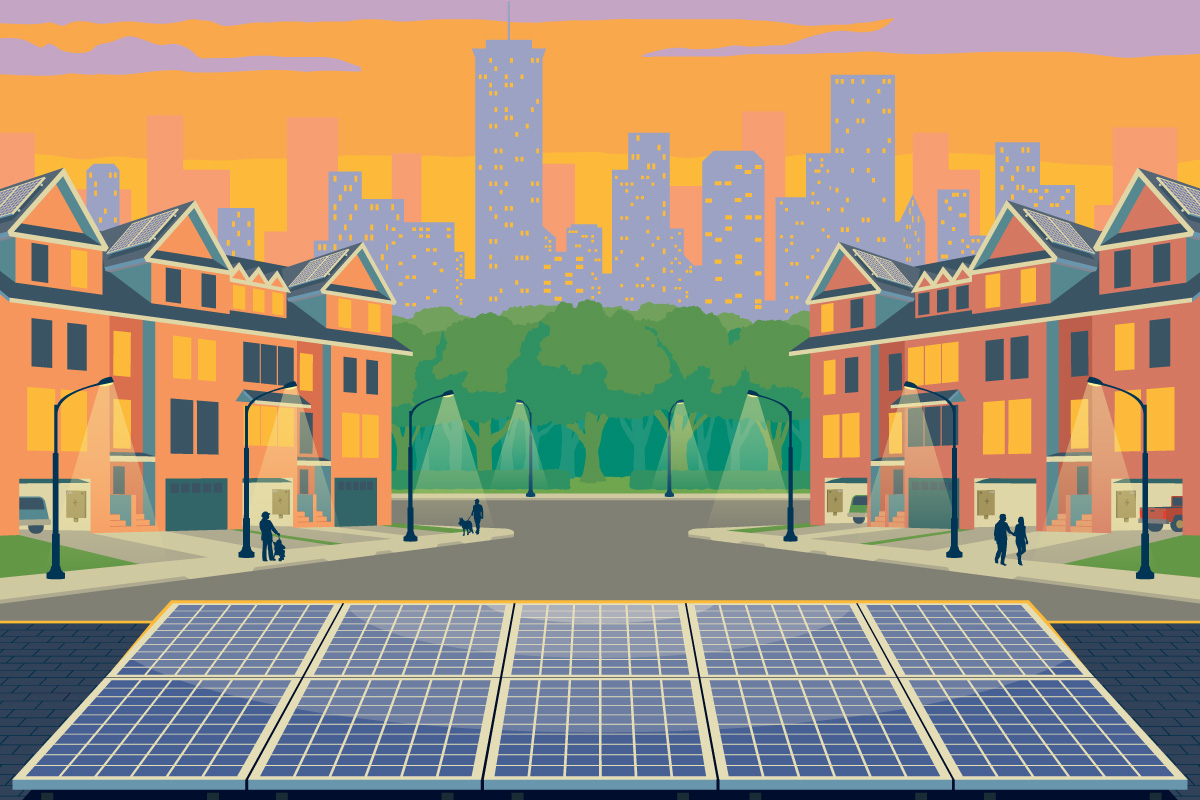
When the Texas grid strained under a summer heatwave in 2022, a network of 4,000 homes with smart thermostats and solar batteries automatically adjusted their energy use—each home a tiny soldier in a silent, coordinated defense of the power system. This is the quiet power of virtual power plants (VPPs), now gaining momentum across the United States thanks to strategic investments by the Department of Energy’s Loan Programs Office (LPO). As peak electricity demand rises for the first time in a decade and aging coal and gas plants retire, the U.S. must add roughly 200 gigawatts (GW) of new capacity by 2030. VPPs offer a smarter, cleaner, and more affordable path forward.
Unlike traditional power plants, VPPs don’t burn fuel or require massive construction. Instead, they harness distributed energy resources (DERs)—rooftop solar panels, behind-the-meter batteries, electric vehicles, smart water heaters, and flexible industrial loads—aggregating their power to deliver utility-scale grid services. By shifting when these devices draw or supply electricity, VPPs can smooth demand, ease congestion, and even inject power back into the grid during emergencies. There are already 30 to 60 GW of VPP capacity operating across the country using commercially available technology—equivalent to powering 22 to 45 million homes. In California, VPPs have shifted EV charging to off-peak hours; in New England, homes with solar-plus-storage have reduced grid strain during winter peaks.
The economic case is compelling. A VPP composed of residential thermostats, water heaters, EV chargers, and batteries can provide peaking capacity at about half the net cost of building a utility-scale battery or a natural gas peaker plant. For American households, this means lower electricity bills. For DER owners, it means rewards for participation. Tripling today’s VPP capacity to 80–160 GW by 2030 could save around $10 billion annually by avoiding new power plant construction, delaying costly infrastructure upgrades, and reducing reliance on inefficient peaker plants. The DOE’s recently released VPP Liftoff Report outlines how this scale is achievable within the decade, despite current hurdles like inconsistent compensation rules and fragmented grid integration tools.
Still, VPPs remain undervalued. Many grid operators are unaccustomed to treating thousands of decentralized devices as a single, reliable resource. Regulatory frameworks vary widely, and the complexity of VPP implementation has slowed growth. Yet the momentum is building. With LPO financing and clearer market signals, VPPs are poised to become a cornerstone of a more resilient, equitable, and clean energy future—proving that sometimes, the most powerful plants don’t look like plants at all.