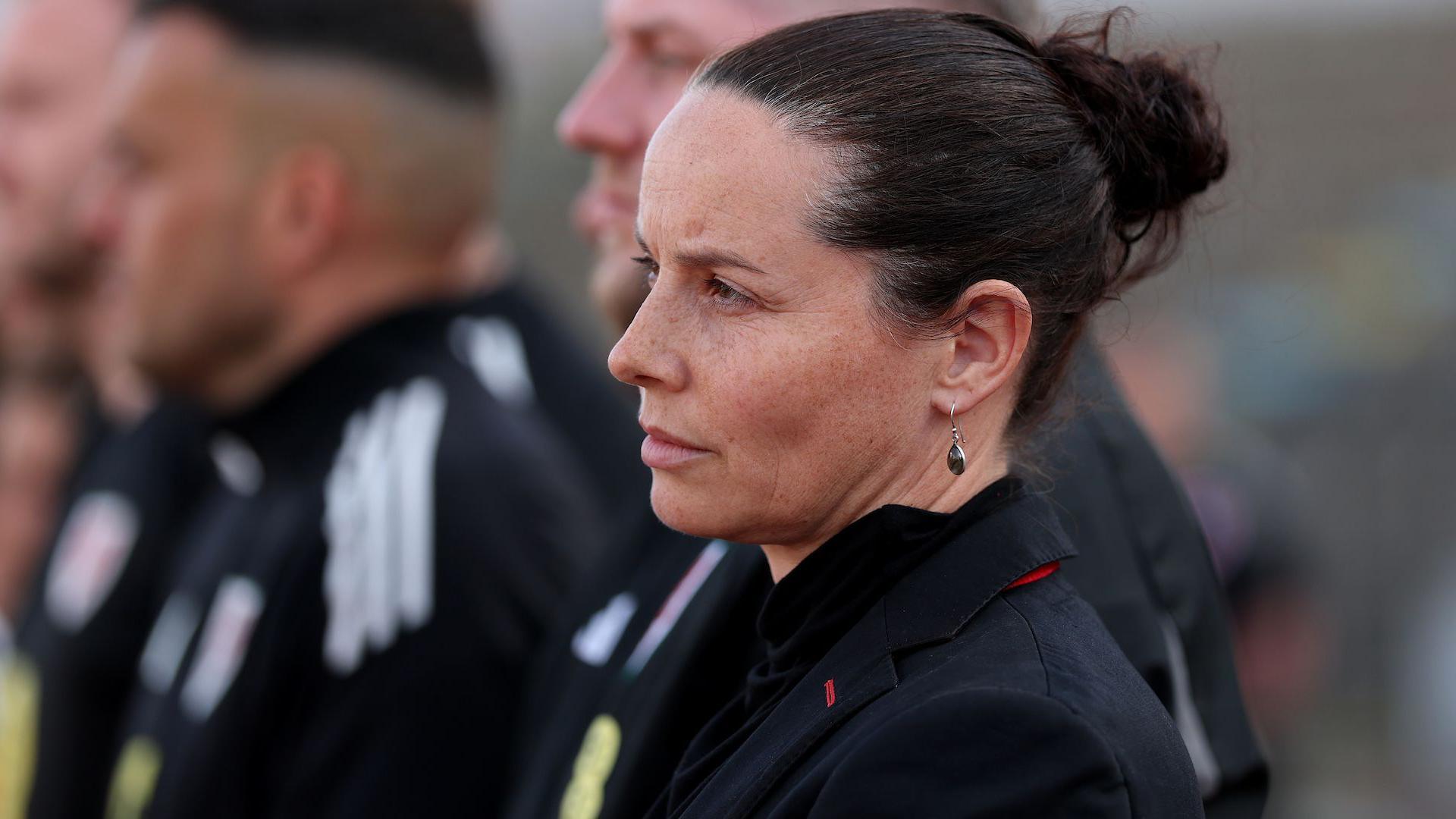
Rhian Wilkinson has unfinished business in Welsh football — and she's just committed to seeing it through. After guiding Wales women's national team to Euro 2025 in her first season as head coach, Wilkinson has extended her contract, signaling her intention to build something far larger than tournament qualification alone.
When Wilkinson took charge in February 2024, following Gemma Grainger's unexpected resignation, few could have anticipated the immediate breakthrough that followed. In months, she led the squad to qualification for Euro 2025, marking the first time Wales women have ever qualified for a major tournament in their history. It was a moment of genuine pride for a nation whose football culture had long struggled to achieve such milestones at the international level.
Yet the conversation around Wilkinson's tenure has swiftly shifted beyond that singular achievement. Former Wales captain and coach Kath Morgan suggested that the new contract signals Wilkinson's reign will "be judged on qualification" — a heavy measure of success that would center entirely on whether Wales can reach the Women's World Cup after facing up to three playoff rounds following the group stage next month. It's the kind of binary thinking that has long defined football ambition: qualify or fail.
Wilkinson, however, refuses to reduce her vision to that single metric. She acknowledges that reaching another major championship is indeed "the goal," but she's reframing what success actually looks like over her tenure. "I just think we put a lot of emphasis on [qualifying] and we do as a team — internally and externally we've been very clear with our ambition," she explained. "But what is our gauge of success and failure?"
Her answer reveals a different philosophy altogether, one rooted in sustainable program development rather than short-term tournament results. "How as a staffing team do we make sure that the legacy of our time working for this programme is that we're leaving it in a really healthy environment where this team doesn't name itself, where we've got depth and different options in every position across the field? If we can do that well, we will qualify for major tournaments."
This shift in thinking speaks to a maturity emerging in women's football globally. Yes, tournaments matter — they always will. But the foundation that allows tournament qualification to happen repeatedly, the infrastructure that prevents regression, the depth that prevents reliance on a handful of players — these are the things that transform momentary success into lasting change. Wilkinson is betting that if Wales can build that ecosystem now, qualification will follow naturally rather than feel like a desperate, one-off achievement.
For a nation that has waited this long for a women's major tournament appearance, the temptation to obsess over the next qualification hurdle is entirely understandable. But Wilkinson's extended contract and clarified vision suggest she's thinking generationally. The playoff rounds ahead matter, certainly. But what matters more is the kind of program she's building behind the scenes — one where multiple pathways exist to success, where young players see a sustainable future in the national team, where depth replaces dependence. That's the legacy she's chasing. Everything else, she seems to believe, will follow.