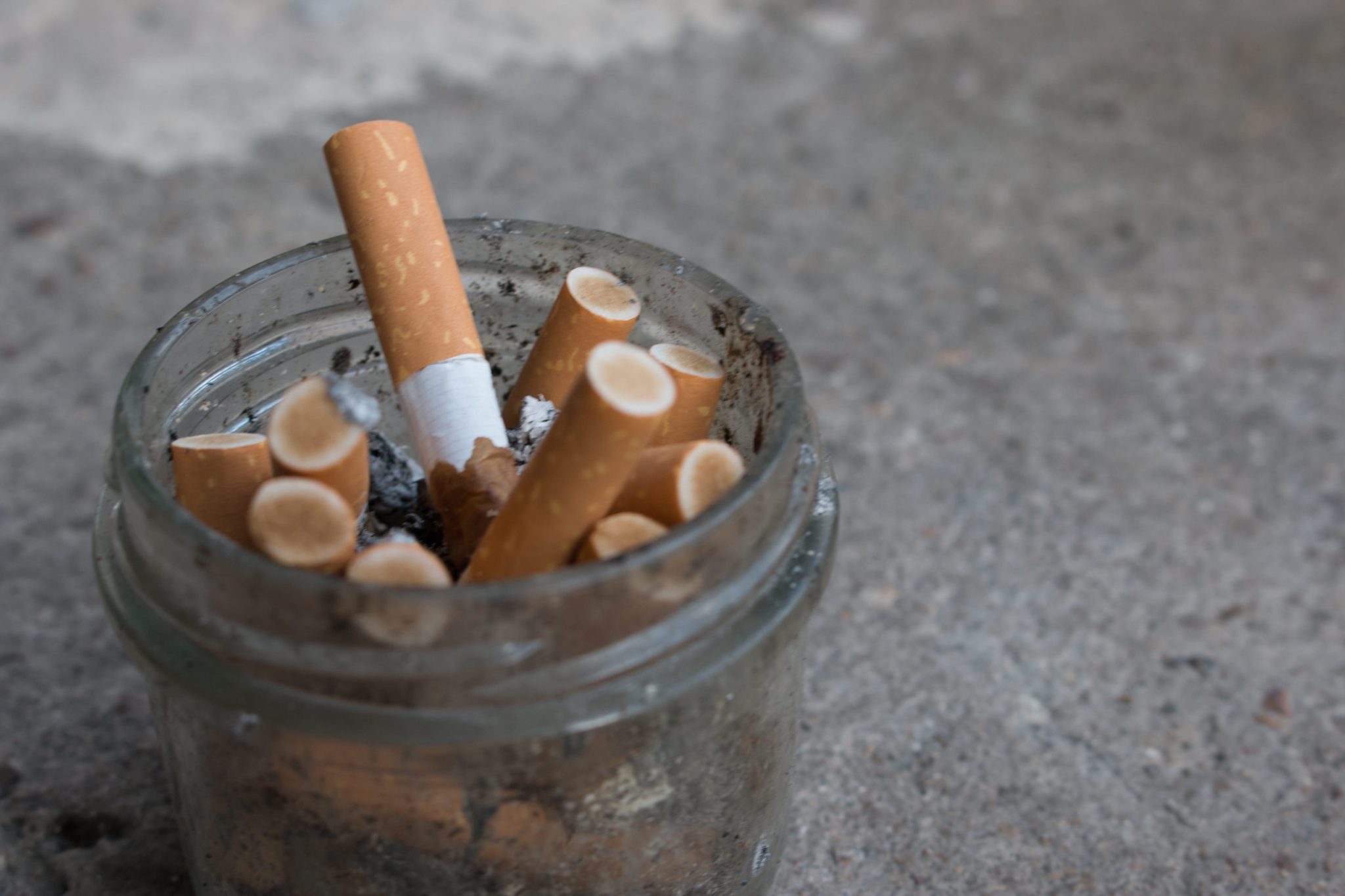
Somewhere on a Dutch street corner, a mobile cart has figured out a quiet but powerful formula: bring your neighborhood's litter, take home a plate of warm poffertjes. WasteBar, a project that turns cigarette butts and cans into food and drinks, has discovered what many environmental initiatives miss—that the barrier to cleaning up our world is often not opposition, but a feeling of futility.
The problem it addresses is staggering. The Netherlands discards between five and ten billion cigarette butts annually, each filter made of cellulose acetate, a plastic that takes up to a decade to decompose while leaching nicotine and heavy metals into soil and waterways. In a country generating an estimated 50 million kilograms of litter per year, cigarette butts are among the most visible and persistent offenders. They are also, it turns out, the perfect entry point for behavioral change.
When visitors bring their collected butts to the WasteBar cart, they are not simply rewarded with food and a thank you. The team takes time to explain the environmental damage these small plastics cause and walks people through proper waste separation and recycling. It feels less like a transaction and more like a conversation—you came for the pancakes, and you leave with knowledge you did not expect to gain.
The ambition behind the project extends well beyond any single cart. WasteBar partners with artist Angelina Kumar and the recycling organization UPPACT to give collected waste a second life. Kumar created Het Peukenbos (The Cigarette Butt Forest), an installation made from over 500,000 collected butts that has been on display in Utrecht through September 2025. The scope is scaling rapidly: the 2026 campaign is aiming to collect one million cigarette butts, with plans to transform them into a recycled bench or garden set through UPPACT.
What makes WasteBar resonate is its clarity about human motivation. Environmental action rarely fails because people oppose cleaner streets; it fails because picking up after strangers feels thankless and pointless. A portion of poffertjes—those Dutch mini pancakes—turns out to be enough to shift that calculation. Someone might bring ten cigarette butts, or a hundred. Either way, the street becomes a bit cleaner, and they have received something tangible in return. The friction that usually prevents environmental action is replaced by something lighter and more human.
The cart operates without preaching. There is no judgment in the exchange, no shame attached to the litter collected. Instead, WasteBar has created what amounts to a small economy where the currency is the problem itself—where the thing we discarded becomes valuable simply because someone decided to value it. In that shift lies the possibility of something larger: not just cleaner streets in the Netherlands, but a model for how incentive, education, and dignity might work together to reshape our relationship with waste.