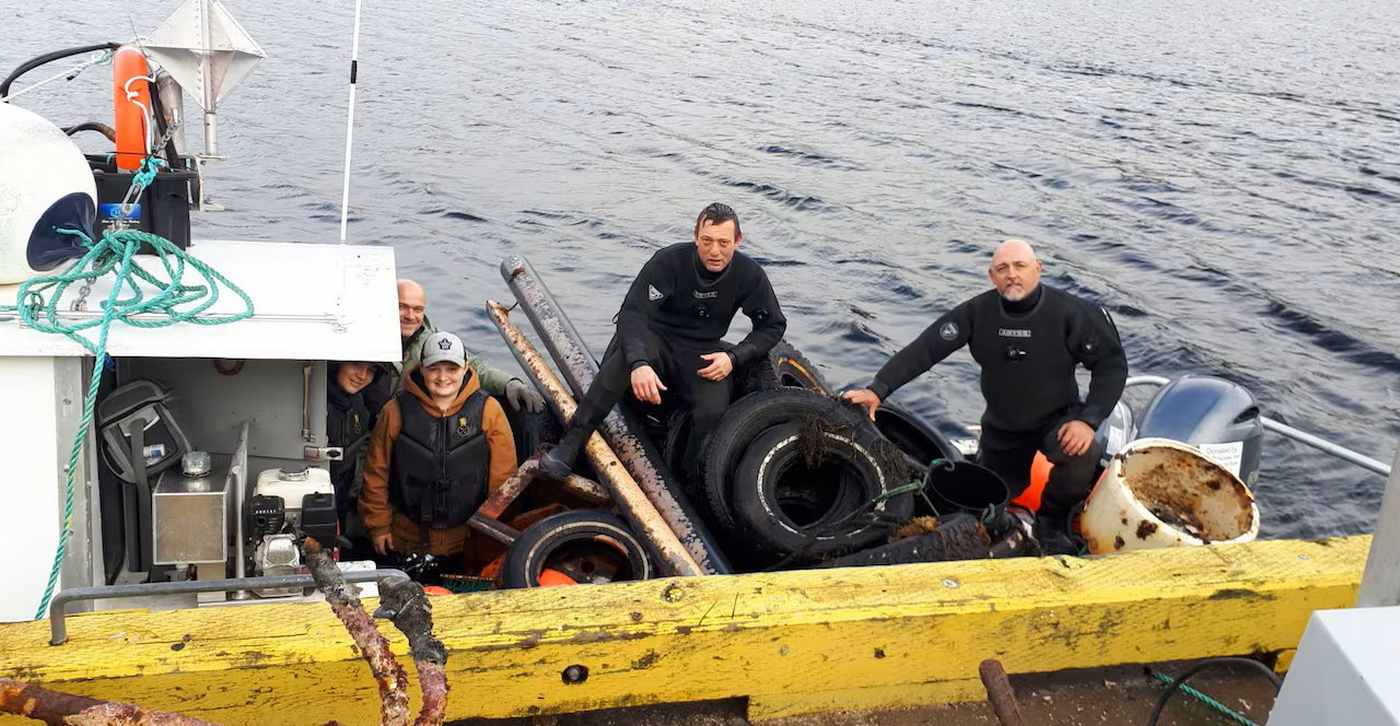
Sean Bath once hunted spiny sea urchins off the coast of Bay Roberts, Newfoundland, his boat cutting through the North Atlantic swells where car tires and frayed nets lay tangled on the seabed. Back then, he barely noticed the debris—until he did. Now, he pulls it up by the ton. In 2018, Bath launched the Clean Harbors Initiative, a grassroots mission to rid Canadian harbors of ghost gear and marine waste, beginning with a single, staggering haul: 15,000 pounds of trash from Bay Roberts harbor. That number—nearly seven metric tonnes—was just the start. Ghost gear, the abandoned fishing equipment that continues to trap and kill marine life for years, makes up a significant portion of ocean plastic, and Bath has made it his life’s work to dismantle it piece by submerged piece.
What began as a solo effort fueled by guilt and determination has grown into a sustained operation. For years, Bath struggled to fund his dives, often dipping into his own pockets to cover fuel and equipment. But everything shifted in 2021 when the documentary Hell or Clean Water premiered at Toronto’s Hot Docs festival, following Bath over a year of grueling underwater cleanups. The film sparked a wave of public support, turning personal donations into a lifeline. With renewed funding, Bath hired additional divers and boats, expanding his reach beyond the murky depths of harbors to shorelines that had long been overlooked.
One such expansion came out of necessity. On a trip to Long Harbor, poor visibility grounded the dive team. Instead, they turned to the beaches of St. Croix—and discovered a new, more sustainable frontier. “Each day we were out there, we were able to collect about three boatloads full of plastics,” Bath told CBC News. Unlike diving, beach cleanups require no specialized gear or fuel, making them accessible and repeatable. This shift doesn’t mean the dives have stopped; it means the mission has evolved. From tires shed by ships to ghost nets that drift for decades, every pound removed is a victory for marine ecosystems.
Today, Bath’s work stands as a testament to the power of personal transformation. Once part of the problem, he’s now a steward of the sea, pulling wreckage from the ocean floor and inspiring others to act. His journey reminds us that solutions don’t always come from institutions—they can start with one person, one harbor, one tire at a time. And as plastic pollution continues to threaten marine life, Bath’s message is clear: we can’t wait for someone else to clean up what we’ve left behind.