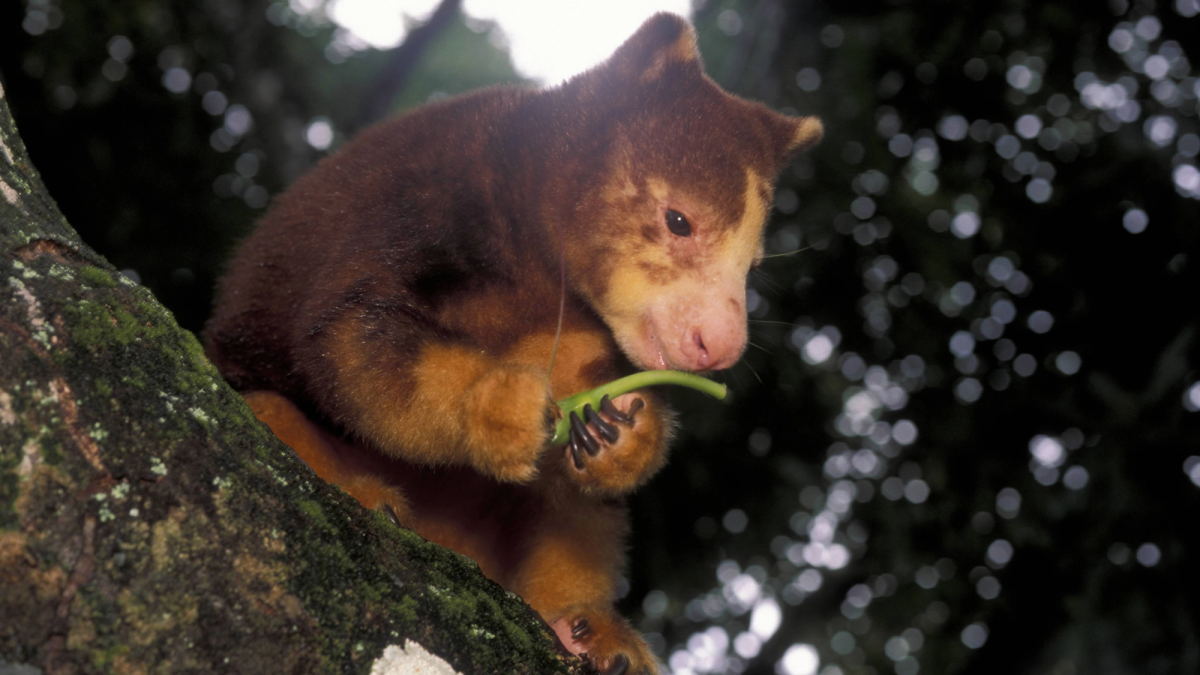
When Roger Williams Park Zoo posted a video of three pink-nosed tree kangaroos munching contentedly on crunchy vegetables, the moment felt almost too perfectly wholesome for the internet. Yet this is precisely what conservation groups are betting on: that adorable animals doing adorable things can draw global attention to a quietly endangered species most people have never heard of.
For tree kangaroos, the stakes of going viral are surprisingly high. These 14 species of small, bushy-tailed marsupials are the world's only arboreal kangaroos, living in the rainforests of Australia, Indonesia, and Papua New Guinea. They're herbivorous, with long arms and padded back feet perfectly adapted for clinging to trees rather than bounding across grasslands. But their forest homes are shrinking, and some species face extinction. The Golden-mantled tree kangaroo, native only to a small area of Papua New Guinea, is among the world's most endangered mammals.
Enter the International Tree Kangaroo Crunch-a-Thon, organized by AZA SAFE (Saving Animals From Extinction): Tree Kangaroo of Papua New Guinea. Starting this week, zoos across the United States are flooding Instagram and Facebook with videos of their tree kangaroos eating crunchy vegetables—bell peppers, celery, romaine hearts, snap peas, green beans, cucumbers, and zucchini. The competition is straightforward: most likes, most views, and judges' choice. Winners will be announced on May 17. But the real goal is larger: using the irresistible power of adorable animal content to shine a spotlight on a species that desperately needs one.
The timing is deliberate. World Tree Kangaroo Day falls on May 21, and organizations like Roger Williams Park Zoo are seizing the moment to educate the public about tree kangaroo conservation. "In partnership with the AZA Tree Kangaroo SAFE program, we're participating in the Tree Roo Crunch-a-Thon to help shine a spotlight on this endangered species," the zoo wrote in a social media post. "Our Zoo is home to three Matschie's tree kangaroos—a species of tree kangaroo native to the cloud forests of Papua New Guinea."
What makes this approach remarkable is its acknowledgment of how social media actually works. Rather than fighting against the platform's appetite for engaging, feel-good content, conservationists are feeding it—quite literally. A close-up video of an animal's snout as it crunches vegetables may seem trivial, but it carries weight. It humanizes an unfamiliar species and creates an emotional connection between viewers and an animal they might otherwise never encounter. That connection, multiplied across thousands of shares and likes, becomes real advocacy.
The Crunch-a-Thon also represents a shift in how conservation organizations think about public engagement. Endangered species protection has long relied on serious messaging and statistics. But a video of a tree kangaroo happily eating vegetables goes further than a factsheet ever could—it makes people care first, learn second. By the time viewers discover that these charming creatures are facing extinction, they've already invested emotionally.
As the organizers put it with characteristic optimism: "Let the crunching begin!" Behind that playful invitation is a genuine hope that cuteness and conservation can work hand in hand, and that in a world where social media is often blamed for our collective despair, it might occasionally be harnessed for something good.