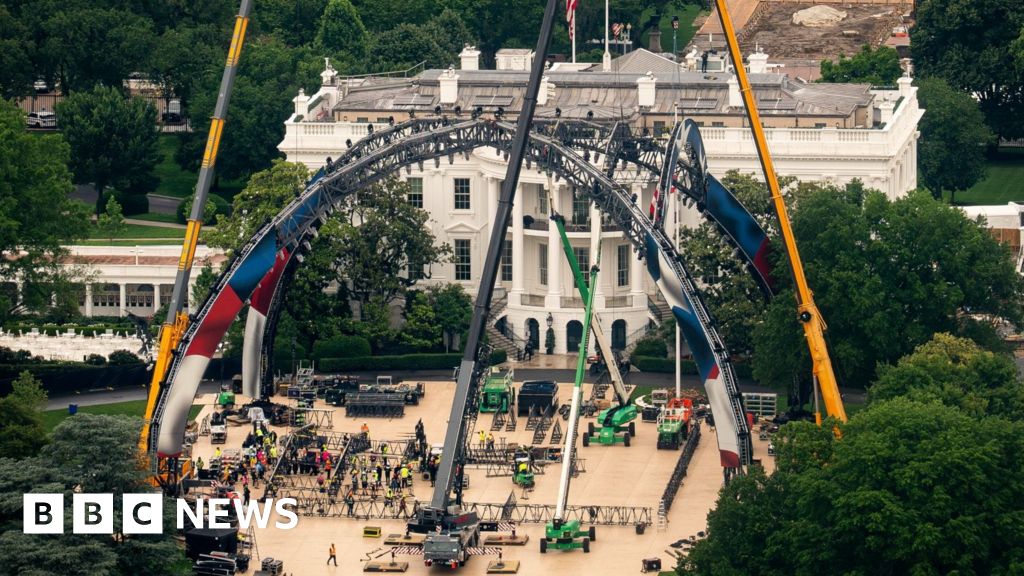
The White House South Lawn is being transformed into a sporting arena unlike any in presidential history. A 5,000-seat UFC cage fight is being constructed for June 14, 2025, marking an unconventional celebration of America's 250th anniversary and signaling a dramatic shift in what events the nation's most formal residence will host.
President Donald Trump announced the plan alongside UFC President Dana White, who will oversee the construction and execution of the event. The decision to hold a mixed martial arts championship at the White House reflects a broader cultural moment in American politics, where entertainment and governance are increasingly intertwined. The cage fight itself represents a sport that has grown exponentially in mainstream acceptance over the past two decades, and its presence at the White House underscores how far both the sport and the venue's cultural role have evolved.
The logistics of the event reveal the scale of the undertaking. The 5,000-seat arena will occupy the South Lawn, the most visible and symbolically significant outdoor space at the White House. Beyond the seated venue, organizers are planning eight large screens in a nearby park, extending the event's reach to thousands of additional spectators who will experience the fight from a distance. This dual-venue approach acknowledges both the exclusivity of premium seating and the democratic principle of public access to major national events.
The America 250 celebrations represent a broader effort to commemorate the 250th anniversary of American independence with a series of distinctive events throughout 2025 and 2026. The UFC fight positions itself as one of the most unconventional entries in that slate of commemorations—a departure from traditional ceremonies or historical reenactments. It reflects contemporary American culture and the sports that define modern entertainment for millions of fans.
The construction phase itself requires careful coordination to preserve the White House grounds while accommodating temporary infrastructure. The engineering involved in building both the 5,000-seat arena and the viewing screens in an adjacent park must balance structural integrity with the aesthetic and security requirements of the presidential residence.
For UFC fans, this event represents an unprecedented milestone: a championship-level fight hosted at the nation's highest office. For the broader public watching via the eight screens or following remotely, it represents access to a major cultural moment tied directly to presidential celebration. For the White House itself, it marks a significant moment in how the institution uses its physical spaces and cultural platform.
As preparations move forward, the June 14 event will test how tradition and modernity can coexist in America's most iconic setting. Whether this approach to celebrating national heritage becomes a template for future administrations remains to be seen, but the ambition is unmistakable: to bring UFC's combat spectacle directly to the symbolic heart of American power.