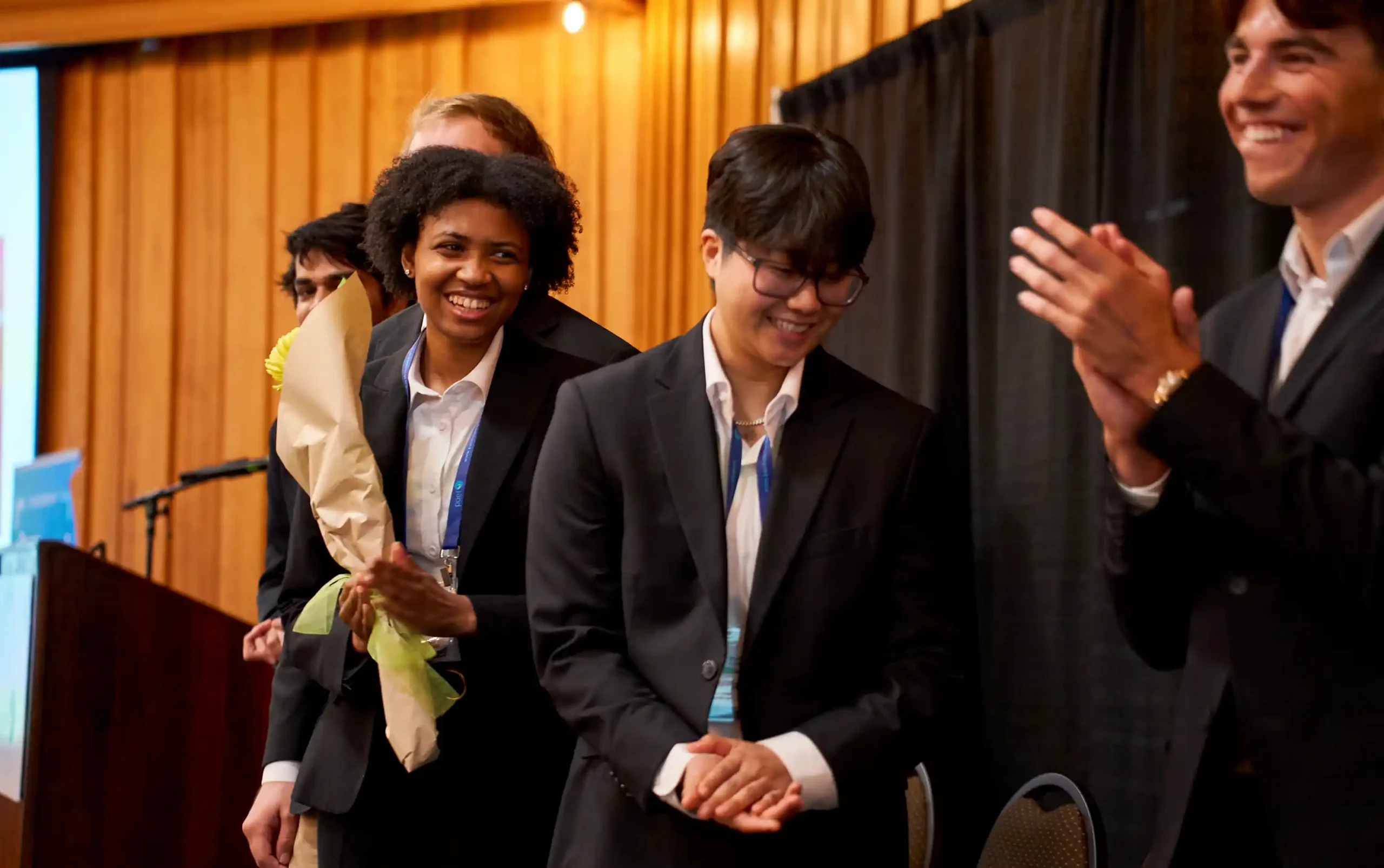
When Lauren Rueda, a faculty advisor at California Polytechnic State University, watched two of her students go from mildly curious about hydropower careers to actively applying for jobs — after just one conference in Green Bay — she knew the competition had done something remarkable. "Two students who were somewhat interested in hydropower jobs after completing their project are now actively applying for jobs with companies they met in Green Bay," Rueda said.
That spirit of turning classroom ideas into real-world careers is exactly what the Hydropower and Marine Energy Collegiate Competitions are designed to spark. In 2026, two universities took home top honors and, perhaps more importantly, dozens of students walked away with new job prospects and industry connections.
California Polytechnic State University, San Luis Obispo — known as Cal Poly — claimed the Grand Prize at the fourth annual Hydropower Collegiate Competition, or HCC, held in Green Bay, Wisconsin on April 30. Their winning project was a place-based in-conduit hydropower innovation designed to extract energy from a pressure-reducing station within the Sacramento Suburban Water District. In other words, they found a way to generate electricity from pipes that already exist — no new dams needed.
Southern Utah University took second place, while Purdue University and Northern Arizona University tied for third. The People's Award, voted on by a live audience poll, went to the University of Southern California, whose fast-paced "Quick Pitch" impressed the crowd enough to win the most votes.
Meanwhile, USC wasn't just collecting popular applause. The University of Southern California also snagged the Grand Prize at the seventh annual Marine Energy Collegiate Competition, or MECC, which took place May 18–20 during the Ocean Renewable Energy Conference in Portland, Oregon. A record-setting 24 teams competed in the MECC finals, all tasked with developing marine energy innovations to tackle challenges facing ocean-based industries, research sectors, and national security.
Both competitions are run by the National Laboratory of the Rockies and funded by the U.S. Department of Energy's Hydropower and Hydrokinetic Office. Elise DeGeorge, the NLR project lead, said this year's contests stood out for how deeply students connected with industry professionals. "We had significant integration with industry," DeGeorge said. "Our tight connection with the NHA gave student teams a chance to be front and center at a regional meeting — so much so that they were invited to present their quick pitches at the luncheon, and industry got to vote on the best quick pitch."
The ripple effects of those connections are already showing. Looking ahead to 2027, a record 45 teams have earned their spots in the competitions — the largest applicant pool yet. That means even more student innovators will have the chance to turn ideas into impact, and maybe, like Rueda's students, discover a career they never expected.