President Sergio Mattarella stepped into the Arena di Verona to the sound of thunderous applause as the 2026 Winter Paralympics opened in Italy—a moment that crystallized a fundamental shift in how the world views difference. For the first time in half a century of Winter Paralympics history, the games had arrived in a nation that had not even competed in the very first edition back in 1976. That inaugural event in Sweden had drawn 250 athletes from 16 countries. This year, 665 athletes from 55 nations descended on Milan and Cortina d'Ampezzo from March 6 to 15, a more than doubling of both scale and representation.
The numbers alone tell a story of expanding possibility. Italy sent 46 competitors—40 men and 6 women—competing on home ice. Five nations made their Paralympic debut. Yet amid the celebration, the weight of the moment was not lost. Giovanni Malagò, president of the Milano Cortina 2026 Foundation, spoke plainly about the context: "We cannot ignore that these Games are taking place at a time of profound division, torn apart by wars, pain and suffering. We are at one of the most dramatic turning points of our time, and for this very reason, the message of peace, inclusion and solidarity at the heart of the Paralympic movement is more meaningful and important than ever."
That message resonated through the remote mountains of Cortina and into Milan's urban heart because the Paralympics offer something that transcends sport. Andrew Parsons, president of the International Paralympic Committee, has spent four years watching the world fracture along lines of conflict and division. Yet he refused despair. "These Games offer something truly different, where differences do not divide us, but are sources of strength," he insisted—a counterpoint to a world increasingly defined by walls and barriers.
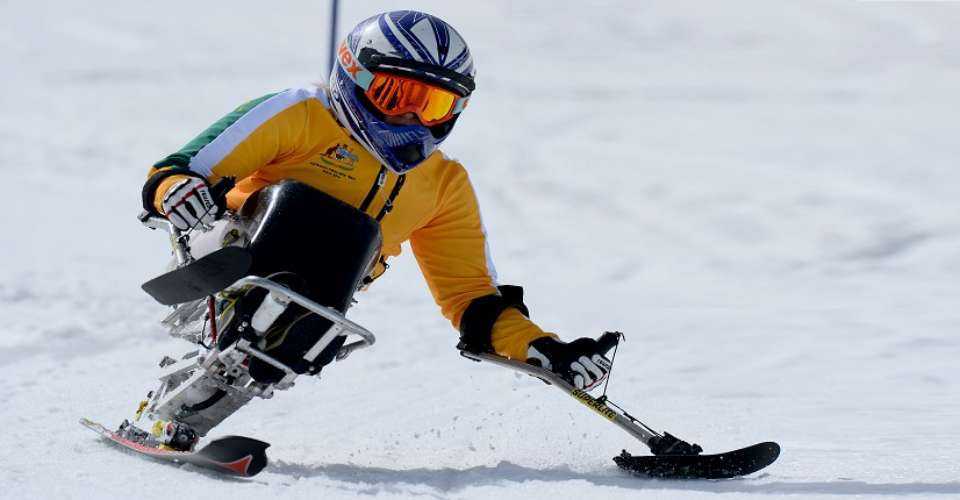
The phrase "We are not our limits" became the philosophical backbone of Milan-Cortina, and the athletes embodied it across slopes, ice rinks, and competition courses. Here were skiers with visual impairments reading the mountain through sound and guide partners. Wheelchair basketball players executing plays with precision and power. The disabled body, so often invisible or pitied in mainstream culture, became the protagonist of excellence and determination.
Notably, one Iranian athlete was prevented from attending by war—a reminder that even as these games celebrated inclusion, global conflict still enforced its own brutal exclusions. Yet the games proceeded, drawing larger and more diverse participation than any Winter Paralympics before.
The significance lies not in medals or records, though those matter to the athletes who compete. It lies in what Mattarella's presence signified: that a nation's leadership recognizes the Paralympic movement as central to its values. It lies in five nations experiencing their first Winter Paralympics, watching athletes with disabilities compete at the highest level and deciding to join. It lies in the message sent to young people everywhere that your body, whatever shape it takes, is capable of greatness.
As the closing ceremony approached, the 2026 Winter Paralympics had already done what the movement intended: point toward a society that does not merely tolerate difference, but recognizes it as the very source of collective strength.