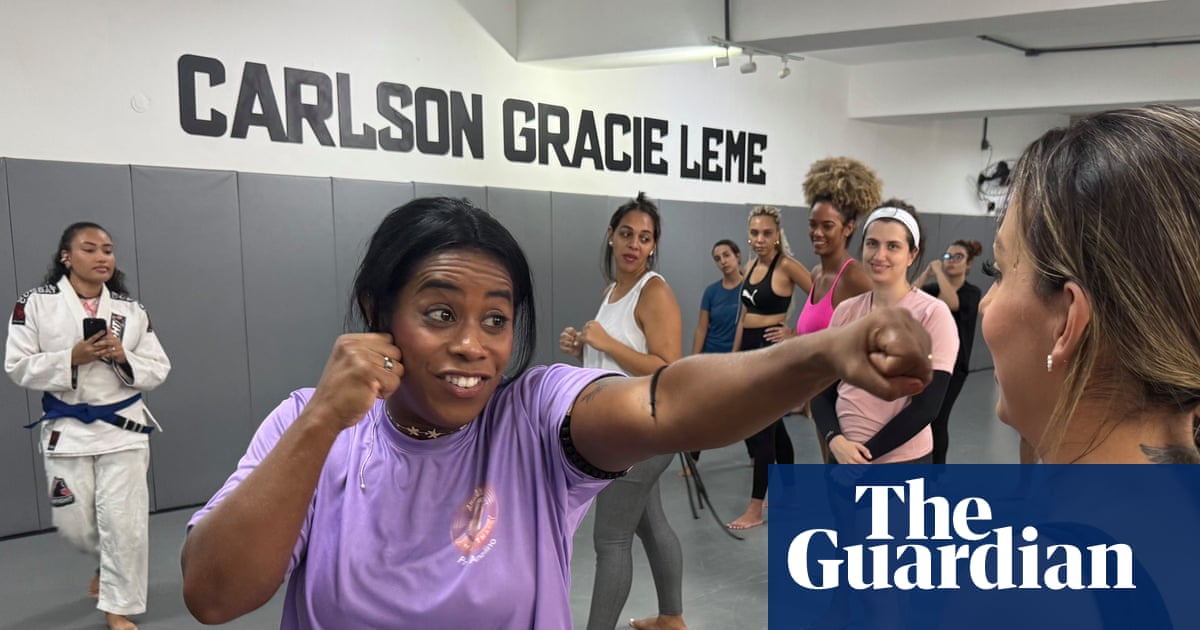
Ana Paula Lima stands barefoot in a sunlit martial arts studio at the edge of a Rio de Janeiro favela, guiding a circle of young women through the precise motion of breaking free from an arm lock. "Women are vulnerable," she says, "but we don’t have to be helpless." Around her, 30 women—students, mothers, workers—bend, pivot, and shout in unison, rehearsing moves that could one day save their lives. Among them is 19-year-old Sabrina Fortunato, a law student who says she came not just to learn self-defence, but to reclaim a sense of safety in a country where fear has become routine. "The news is shocking and makes women feel unsafe in their own country, in their own home," she says.
Brazil is facing a surge in gender-based violence. A 2025 national survey revealed that 37.5% of women experienced some form of violence in the past year—up from 28.6% in 2017. Femicides climbed 14.5% over five years, reaching 1,568 in 2025, with 13% of victims in 16 states having already sought legal protection from their killers. Despite landmark legislation like the 2006 Maria da Penha law, enforcement remains inconsistent, and women are increasingly taking protection into their own hands. In response, initiatives like Empoderadas, founded by former MMA athlete Érica Paes, have emerged as lifelines. Since 2019, the programme has trained 35,000 women in self-defence, legal aid, and psychological support across Rio de Janeiro.
The movement is spreading fast. A recent market survey found that six in ten Brazilian women either practice or want to learn a combat sport, with self-protection as the primary motivation. Mariana Rocha, a 38-year-old nutritionist, began jiujitsu last year after her local studio launched women-only classes. "Jiujitsu teaches you to walk differently, to pay attention to things, to keep your hands free," she says. "It’s not just about fighting—it’s about awareness." Her words echo a growing sentiment: that empowerment begins with the body.
The roots of this crisis run deep, tied to the rise of misogynistic online communities known as the 'manosphere.' One 18-year-old gang-rape suspect turned himself in wearing a T-shirt reading "Regret Nothing," a slogan popularized by influencer Andrew Tate. In São Paulo, a senior military police officer accused of murdering his wife referred to himself in messages as an "alpha male" demanding a "submissive beta female." Just before International Women’s Day 2026, a disturbing TikTok trend surfaced—men filming mock attacks after fake marriage proposals, captioned "Training in case she says no." The platform removed the content, but the damage was done.
In response, Brazil’s senate passed a bill in March 2026 to classify misogyny as a hate crime—a step forward, though it still awaits approval in the lower house. The government has also strengthened the Maria da Penha law. But as Samira Bueno of the Brazilian Forum on Public Safety notes, laws alone are not enough without investment in public safety and social support. "Women feel unprotected and the state has failed them," she says. Yet in studios across Rio, in the synchronized breath of women learning to fall and rise again, there is a quiet defiance—and the beginning of change.