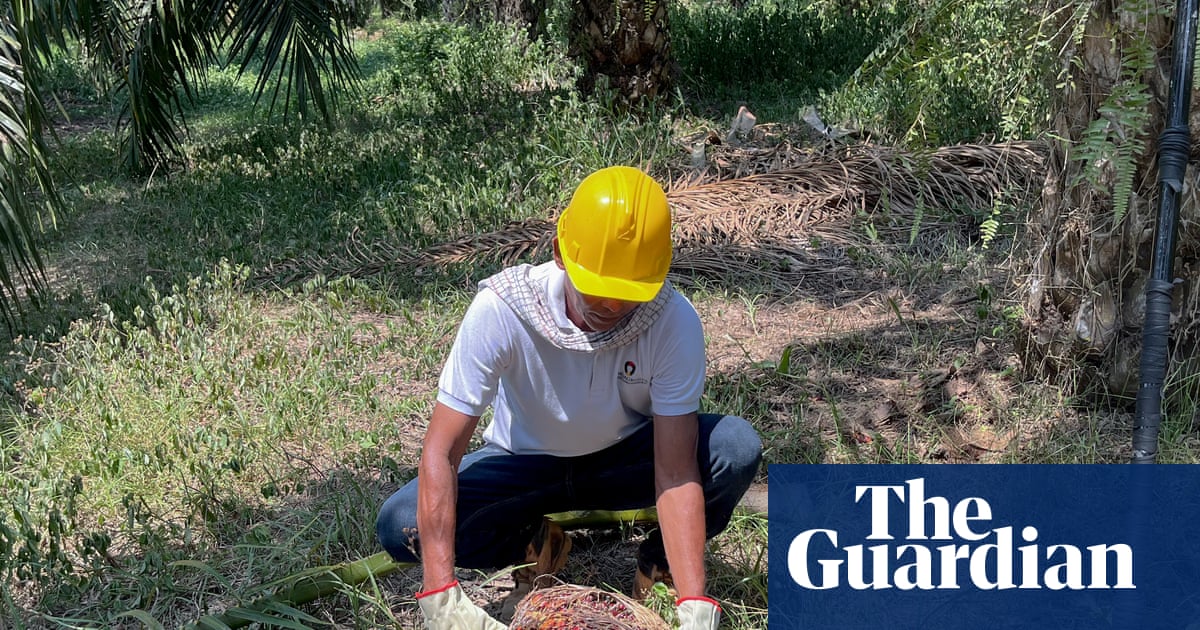
Under a brutal 36-degree sun, Yoger Payares swings a pole-mounted iron hook called a malayo, chopping at the long fronds of a towering oil palm tree until a bunch of vibrant reddish-orange fruit crashes to the ground. It is hard, sweaty work on his 11-hectare farm in the tiny village of Caño Barbú, near San Pablo in northern Colombia. But Payares will tell you it beats the work he did just a few yards away for more than a decade: growing coca leaves.
He first got pulled into the coca trade in 1990, after leaving his job as a cattle farmer. For years, the region was torn apart by violence between armed groups like the Farc and ELN guerrillas, later inflamed by the drug trade. "You grew up in fear," Payares says, listing off horrors from the killing of his police-officer cousin to the kidnapping of a neighbour's son. "It was dangerous. Growing coca was an easy way to make money — it solved my money problems. But it was difficult to live here and not be involved."
Since 1995, Colombia has had a public policy of helping coca growers switch to other crops. Farmers in San Pablo were offered subsidies, technical support and tax discounts to grow cacao and oil palm instead. Payares took the leap. Now, he says, "Things are calmer. I can live safely." The palm has transformed his life: one child has finished university, another is studying there. He owns a house and his own truck. "I never thought that I would have my own transport. Everything I have is thanks to what the palm has given me."
The change is visible across San Pablo, a town of almost 30,000 people on the west bank of the mighty Magdalena River. Today there are thought to be 275 smallholder oil palm growers here, and nearly 90% of them are independent smallholders, according to Camilo Santos, deputy director of market transformation for Latin America at the Roundtable on Sustainable Palm Oil. "Their efforts have been key to revitalising the local economy, creating jobs, improving food security and attracting workers from neighbouring regions," he says.
Colombia is now the largest oil palm producer in Latin America, with 609,142 hectares planted with the crop in 2024 — up 2.2% from the year before, according to the National Federation of Oil Palm Growers. Along with coffee, it's the country's biggest planted crop, competing mainly with tropical giants Indonesia and Malaysia.
Yet not everyone is cheering. Palm oil cultivation can drive deforestation and biodiversity loss, and some experts like Arturo Garcia of the consultancy Econometria worry about monoculture's effects on food security and the environment. Still, many smallholders take hope in new president Abelardo de la Espriella's bioeconomy plan and in the appointment of Fabio Arjona, a marine biologist and former conservation leader, as environment minister.
"It's a strong trend, and I'd say irreversible," Garcia says of sustainable palm oil. For Payares, the choice was simple. "We now live without this violence," he says — and points to the calm, green rows of palms that gave it back to him.