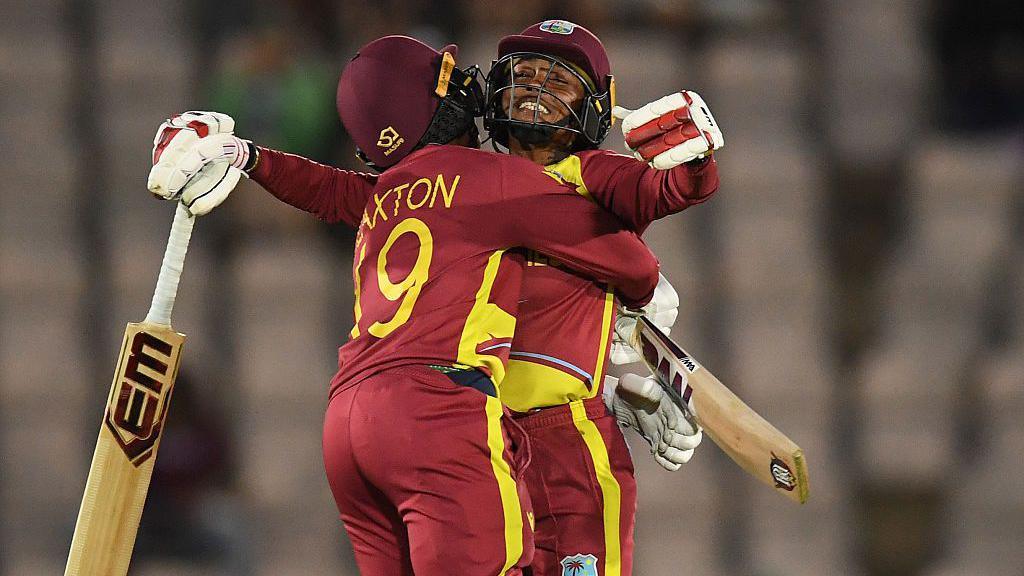
Shemaine Campbelle sprinted a desperate bye in the penultimate ball of the final over, and the West Indies women had beaten the world champions. In Southampton on a sweltering afternoon, defending champions New Zealand fell to a seven-wicket defeat that will ripple through the ICC Women's T20 World Cup—not because the loss itself was shocking, but because of how it happened, and who made it happen.
Campbelle's unbeaten 90, scored off 62 balls, was more than a match-winning innings. It was a personal watershed. This was her first T20 fifty in 122 matches for the Windies, a statistic that speaks to years of faithful service and the weight of this moment. As the winning run was scrambled, she was visibly emotional—the relief and vindication of a cricketer finally breaking through a long drought on sport's biggest stage.
West Indies had been chasing 163, a target New Zealand's bowlers and fielders had believed was defendable. The White Ferns had recovered from a shaky start, collapsing from 49-0 to 56-3, before Brooke Halliday (40) and Maddy Green (35) steadied the ship. Izzy Gaze's 39 at the top gave New Zealand a foundation that, combined with a competitive batting display, left them with a total that looked solid at the halfway mark. But New Zealand's fielding let them down in ways that would cost them dearly. They dropped Hayley Matthews twice—once on nine—before the West Indies' star all-rounder went on to make 48 and set up the chase with crucial momentum.
Aaliyah Alleyne, meanwhile, had been devastating with the ball. Her four wickets for 27 runs dismantled New Zealand's middle order and proved that the West Indies attack had teeth. But it was Campbelle in the final moments who would write the story. With Sophie Devine tasked with defending six runs in the last over, Campbelle had the tactical intelligence to give strike to 20-year-old Jahzara Claxton, West Indies' young prospect, with one run still needed. The pair sprinted a bye from the penultimate delivery, and in that single moment of urgency and coordination, the defending champions' tournament was reset.
The significance extends beyond the scoreline. In a group where England are considered strong favorites to finish first, the battle for second place remains wide open. For West Indies, this victory is not just a morale boost—it is a statement that they belong in this conversation, that they can execute under pressure, and that they have players capable of delivering on the sport's grandest stages. Campbelle's 122-match journey to her first T20 fifty suddenly feels like the beginning of something rather than the end of something, a redemption that gives the West Indies genuine momentum heading into their remaining fixtures.
New Zealand will regroup, but they will do so chastened by what they left behind in Southampton—a match they had every reason to win, lost to a team that wanted it more and executed better when it mattered most.