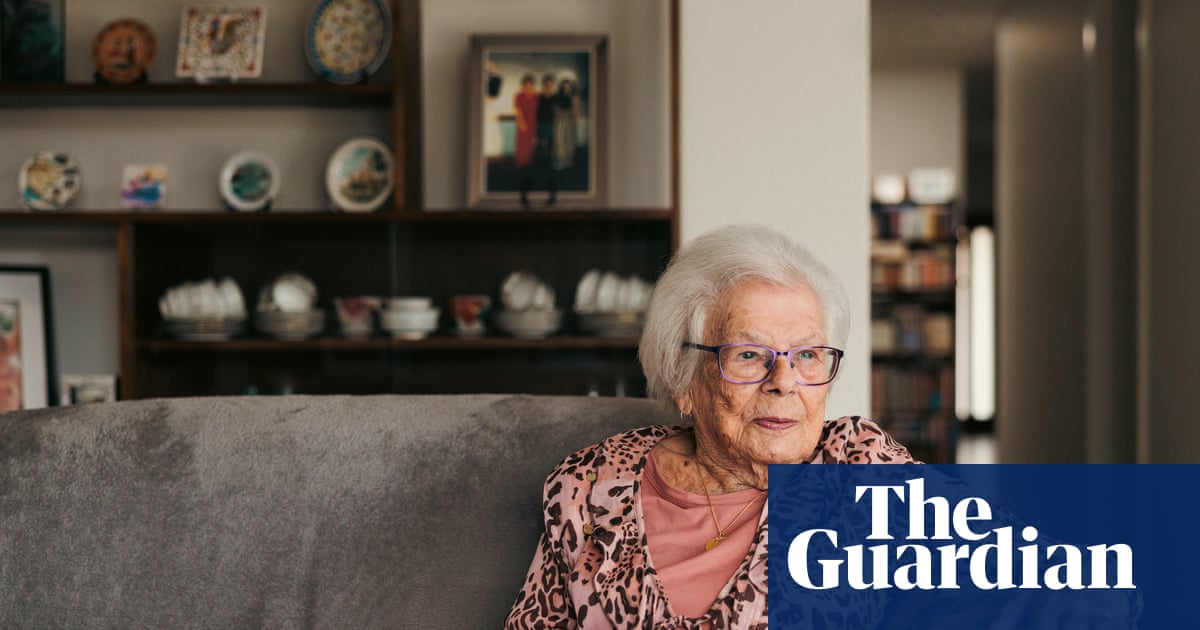
At 102 years old, Sonja Ibermann Cowan polishes brass memorial plaques outside a Berlin apartment—her mother Toni and older sister Lotte's names engraved on them—from 10,000 miles away in Melbourne. During a pandemic lockdown, she reached across continents to reconnect with a journalist whose morning walk had once led her past these Stolpersteine, or "stumbling stones," small bronze plaques embedded in German pavements that mark the last known homes of Holocaust victims. In that moment, two strangers separated by the world and decades found themselves bound together by history—and by Sonja's determination that her family's story not be forgotten.
The friendship began unexpectedly in July 2020 when Benjamin Preiss, Sonja's journalist grandson at The Age newspaper in Australia, discovered an essay his great-aunt's childhood friend Deborah Cole had written three years earlier about historical memory in Berlin. That piece, published after Donald Trump's first inauguration, explored how preserving the darkest chapters of national history—preserved bullet holes from the Battle of Berlin, tank shell scars on buildings at Humboldt University, and memorials both grand and small—might inoculate citizens against extremism. The essay mentioned Lotte and Taube by name. When Benjamin realized the journalist lived in central Berlin and that two Stolpersteine lay in front of her building honoring his great-grandmother and great-aunt, he knew he had to reach out. "I was thunderstruck," Cole later recalled.
Their first conversation came in September 2020 over Zoom, a lockdown call unlike any other. Sonja appeared with a bright smile and rose-colored lipstick, self-possessed and sharp-minded at 97 (now 102), speaking in a singular German-Scottish accent tinged with Australian twang—a voice that traced her tortuous life path across continents. Her hearing and memory were clear. She chuckled at Cole's pronunciation of Stallschreiberstraße, the Berlin street where she'd attended school as a child, and joked dryly about living "from day to day" while "eingesperrt"—locked up—to protect her health during the pandemic. "No dancing!" she said with characteristic humor.
What emerged from their conversations throughout the pandemic and beyond was an extraordinary story of survival and connection. Sonja had escaped to the UK as a teenager while her mother and sister were murdered in the Holocaust. Cole and her husband Hilmar had made a point for years of polishing the two Stolpersteine outside their building, a small gesture honoring strangers who would have been their neighbors during the war. Now those stones had names and a face—and a living voice, full of memory and mischief, determined to ensure her family's fate would not become merely historical abstraction.
The Stolpersteine project, the life's work of artist Gunter Demnig, is now the world's largest grassroots remembrance initiative. Over 100,000 of the plaques are embedded across 31 European countries, dedicated to victims who overwhelmingly have no marked grave. Each inscription includes a name, date of birth, deportation date, and—if known—date and place of death. They bring the incomprehensible scale of Nazi slaughter down to human proportion: passersby quite literally bow before them to consider a single person's fate. In Sonja's case, one small plaque brought a 102-year-old survivor and a Berlin journalist together to ensure that Toni and Lotte, along with the millions of others, would never be forgotten.