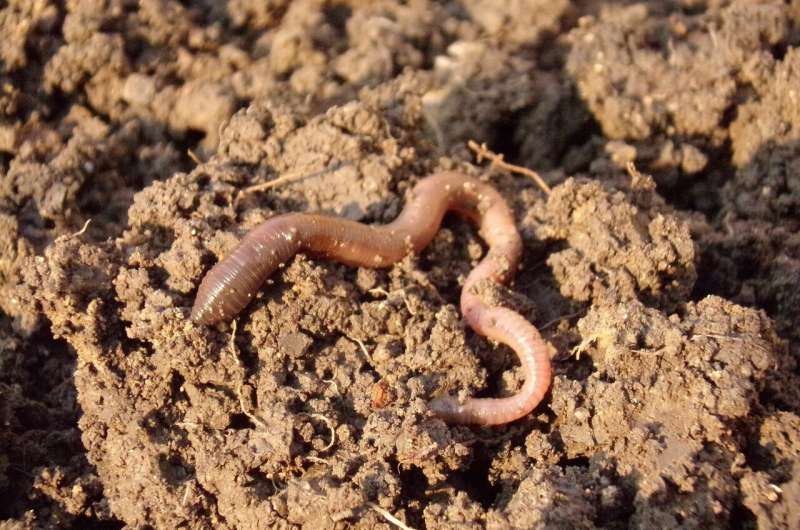
Researchers tracking 2,779 microplastic particles through earthworm digestive tracts have made a surprising discovery: the tiny invaders stayed put. Using a groundbreaking X-ray technique developed in collaboration with the Canadian Light Source in Saskatoon, scientists found that microplastics ranging from 5 to 53 micrometers in size do not cross the gut lining into other tissues—suggesting that our digestive systems may be better armor against plastic pollution than previously feared.
The question of whether microplastics pass harmlessly through our bodies or become embedded in our tissues has haunted researchers for years. Globally, humanity produces 450 million tonnes of plastic annually, and nearly one-quarter ends up in the environment, where it slowly degrades into these microscopic fragments. They've been found in ocean depths, mountain peaks, polar regions, and inside human bodies. Until now, determining whether microplastics actually breach the digestive barrier has been nearly impossible. Traditional methods required dissecting organisms and examining their tissues under a microscope—a process so prone to contamination by stray microplastics that accurate measurement became guesswork.
The research team chose earthworms as their test subjects because these creatures are foundational to soil health and constantly feed in environments where microplastics accumulate, making them an ideal model for understanding how soil organisms interact with plastic pollution. The researchers fed earthworms soil containing two size ranges of microplastics: 5 to 22 micrometers and 45 to 53 micrometers. The particles were coated with barium salts, which glow bright white under X-rays, making them visible in three-dimensional detail.
The breakthrough came through synchrotron-based microcomputed tomography—an extraordinarily high-resolution imaging technique that creates detailed three-dimensional pictures of organisms without requiring dissection. As the barium-coated microplastics appeared as luminous white particles against the darker earthworm tissues, researchers could definitively count and track every particle. They observed 2,779 individual microplastics within the digestive tracts of the exposed worms. The finding that mattered most: not a single microplastic was detected outside the gut.
This is the first time synchrotron-based microcomputed tomography has been used to track microplastic movement within a living organism, and the implications extend beyond earthworms. While researchers emphasize the need for caution when extrapolating findings from invertebrates to humans, the results suggest our digestive tract deserves recognition as a formidable barrier. The particles that cannot be broken down during digestion may simply pass through the body and be excreted—rather than accumulating in organs, tissues, or the bloodstream.
The work underscores an urgent need for non-invasive techniques that can determine how microplastics move through organisms without destroying the evidence. As plastic pollution becomes an inescapable environmental reality, better tools for risk assessment will prove essential for protecting all life, from soil dwellers to humans. This study offers both a technological breakthrough and a glimmer of reassurance: sometimes the body's own defenses are stronger than we realize.