It’s just after 1pm on September 11, and former Liverpool footballer Jamie Redknapp is standing in the middle of a buzzing trading floor, phone pressed to his ear, shouting to be heard. Within a minute, a deal worth tens of millions of pounds is done, a huge cheer goes up, and Redknapp admits he hasn’t got the faintest idea what just happened. “I don’t know what I said or what I did, but it was fun,” he laughs.
Redknapp is one of around 50 celebrities — from Dame Helen Mirren to Tom Hardy and Hugh Grant — who have come to Canary Wharf in London for BGC Group’s annual Charity Day. It’s an event born out of tragedy: on 9/11, the company’s parent firm, Cantor Fitzgerald, lost 658 employees, more than any other single organisation. Twenty-five years on, that terrible day has been turned into a day full of purpose.
Here’s the twist that makes it special: when clients close trades on Charity Day, 100% of the revenue goes to charity — not just the profits, but every single pound. This year that raised a whopping US$16 million (£12 million) for charities in the UK and around the world. Since 2005, the total has reached US$250 million. Comedian Leigh Francis (aka Keith Lemon) closed one of the biggest trades of the day and says he’s “never seen so much money raised in one day for a charity event.”
For the people who benefit, those numbers change lives. Downstairs, BGC has set up a huge play area with a petting zoo, karaoke and a giant Paddington Bear. It’s here that Debbi Clark, founder of London charity HvH Arts, explains that Charity Day makes up a full third of her organisation’s annual income. That money funds a music mentorship programme for children from low-income families. “The donation is fundamental,” she says. “There’s no way we could run that programme without it. BGC’s funding has given us the capacity to treble the amount of children we help since 2019.”
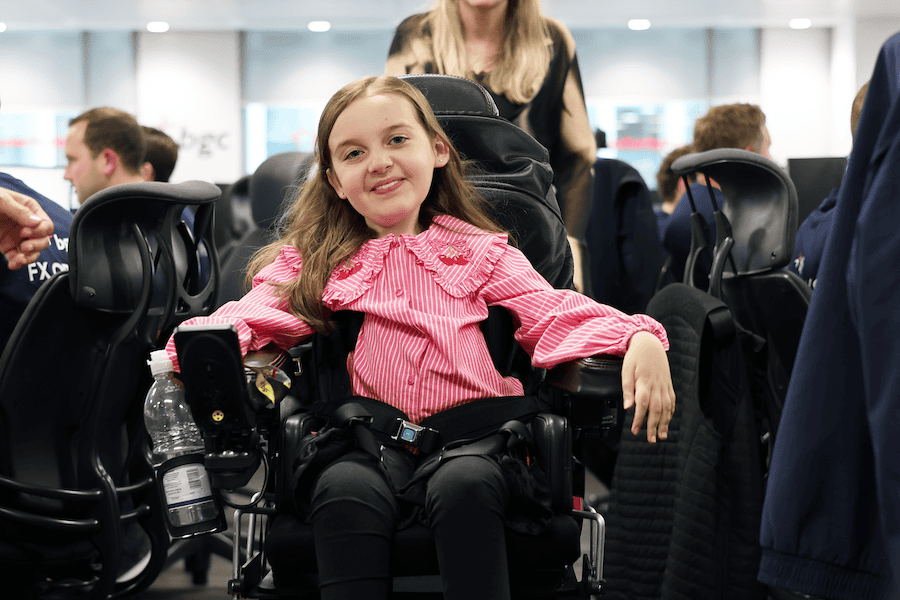
Carmela Chillery-Watson, 12, who has a rare form of muscular dystrophy that also affects her heart and liver, is one of Muscular Dystrophy UK’s Young Ambassadors. Money from days like this helped fund the custom wheelchair she uses every day, which the NHS doesn’t cover.
The need is urgent. New research shows only 27% of UK businesses support charities, and corporate giving by FTSE 100 companies has halved as a share of profits since 2009. BGC’s Co-CEO Sean Windeatt finds that dismaying: “When household budgets are squeezed… and the public can’t give what they used to, business has a role to play in helping to fill that gap.” For him, this day is personal — in 2001, he was among those who lost colleagues on 9/11. Turning that grief into US$16 million of good every single year is a powerful answer to Lucy’s question: why don’t more companies do this?