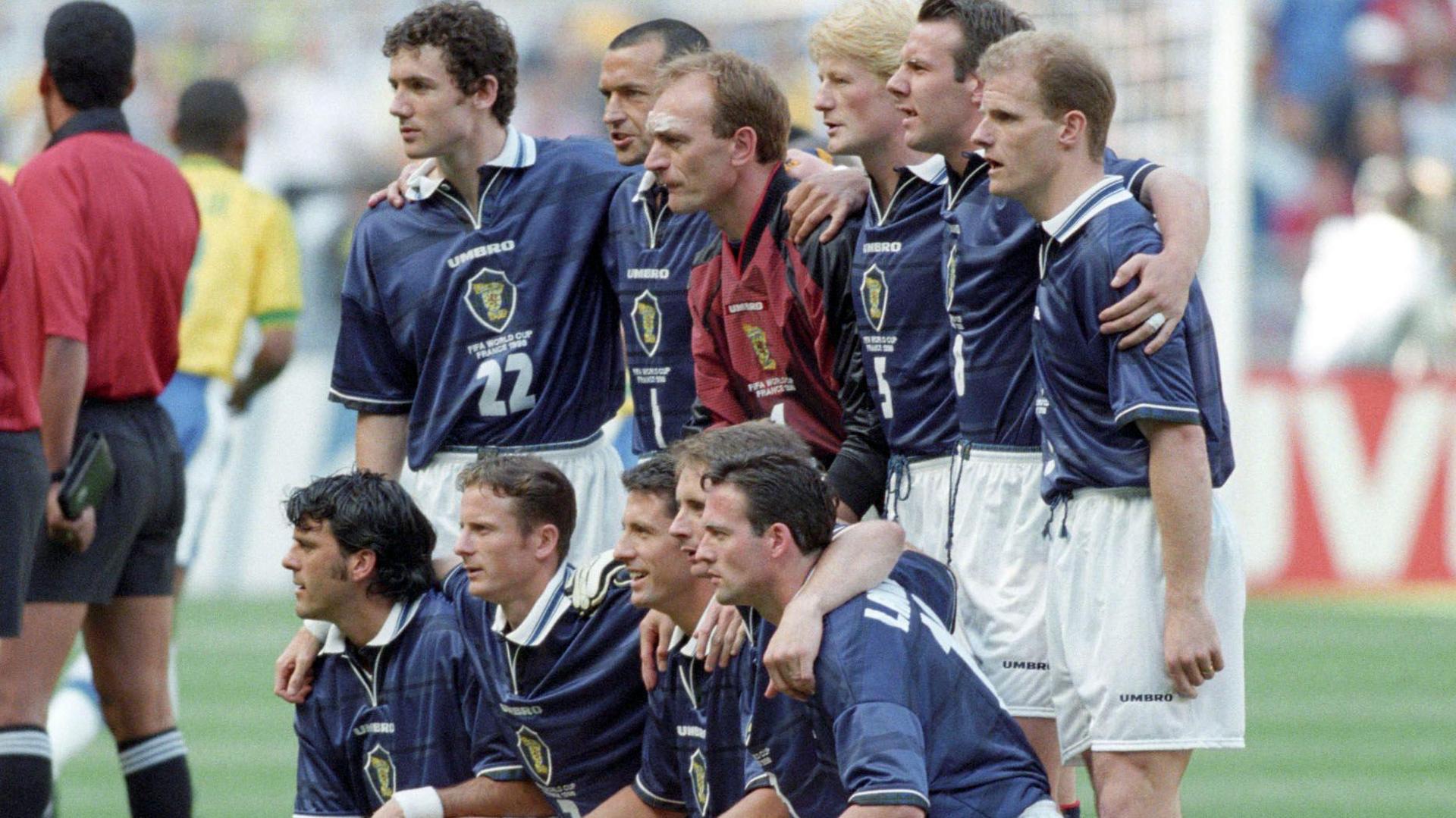
When Darren Jackson lined up in the tunnel at the Stade de France for Scotland's 1998 World Cup opener against Brazil, he found himself standing next to Ronaldo—and that's when the surreal dream became undeniable reality.
Playing at the World Cup is the pinnacle every young footballer imagines while kicking a ball in the street with their mates, yet the experience itself defies expectation. BBC Sport Scotland gathered wisdom from those who've lived it: Paul Lambert and Jackson from the 1998 squad, and Rachel Corsie, who captained Scotland's women's team at the 2019 World Cup in France. All three used the same word to describe it: surreal.
The journey to that moment, though, can be grueling. The build-up phase—when fans frantically book travel and players obsess over fitness—ranks among the most stressful parts of the entire experience. "You're like, I want to be in the best condition of my life," Corsie explained. "I don't want to get hurt, I want to get selected, I want to be playing for my club. There's so many things that you're thinking and you just think, I just want us to get there." Lambert echoed the tension: "It feels like endless build-up. Then, when you're selected, that's when it really sinks in that the summer could be the greatest tournament for the national team."
But once the tournament begins, something shifts. Jackson didn't make his Scotland debut until age 28, making his World Cup appearance even more extraordinary. Standing opposite Brazil's constellation of stars—Ronaldo, Rivaldo, Dunga, Roberto Carlos, Cafu—made the occasion crystalline. There's no fatigue in those moments, Lambert said. "You don't have time for fatigue and you don't think about the season that's going to come up on you in a few months' time. All you do is think about the games and the occasion you're going to play."
Yet Corsie harbors one regret: she leaned too heavily into managing the pressure and didn't allow herself to fully enjoy it. "I hope the players do manage to enjoy it," she reflected, "because this is going to be a moment in your career you're going to cherish for the rest of your life. Your family and friends will be so proud."
The secret to sustaining that joy through weeks away from home lies in squad togetherness. Lambert praised the "club atmosphere" Craig Brown cultivated in 1998, where players mixed freely at meals and meetings rather than clustering in cliques. "We were like clubmates," Jackson said. "We didn't all just sit in the same seats in the meetings or at dinner, you just came in and sat with anybody and everyone got along. It was brilliant." The current squad shares that bond, bonding over golf, PlayStation sessions, card games, and coffee trips—luxuries unavailable in the 1990s.
Modern comforts have evolved considerably. The current squad finds personalized pictures of their younger selves in Scotland shirts awaiting them at their Charlotte base camp, and captain Andy Robertson has delivered hand-written messages and gift boxes to each teammate. Jackson still possesses the kilt he famously wore leaving Paris, hanging in his wardrobe alongside a keyring and pennant from Brazil. Corsie kept ticket stubs and coffee shop stickers, insisting that a good coffee station remains among the World Cup's most essential provisions.
Yet the core advice remains timeless. "The most important thing is you've got to embrace it," Jackson said. "You've got to enjoy it because it's the pinnacle you've got there. From a wee boy, you'd put a Scotland strip on and you'd never think you're going to stand in a World Cup game representing your country. So you've got to enjoy it."