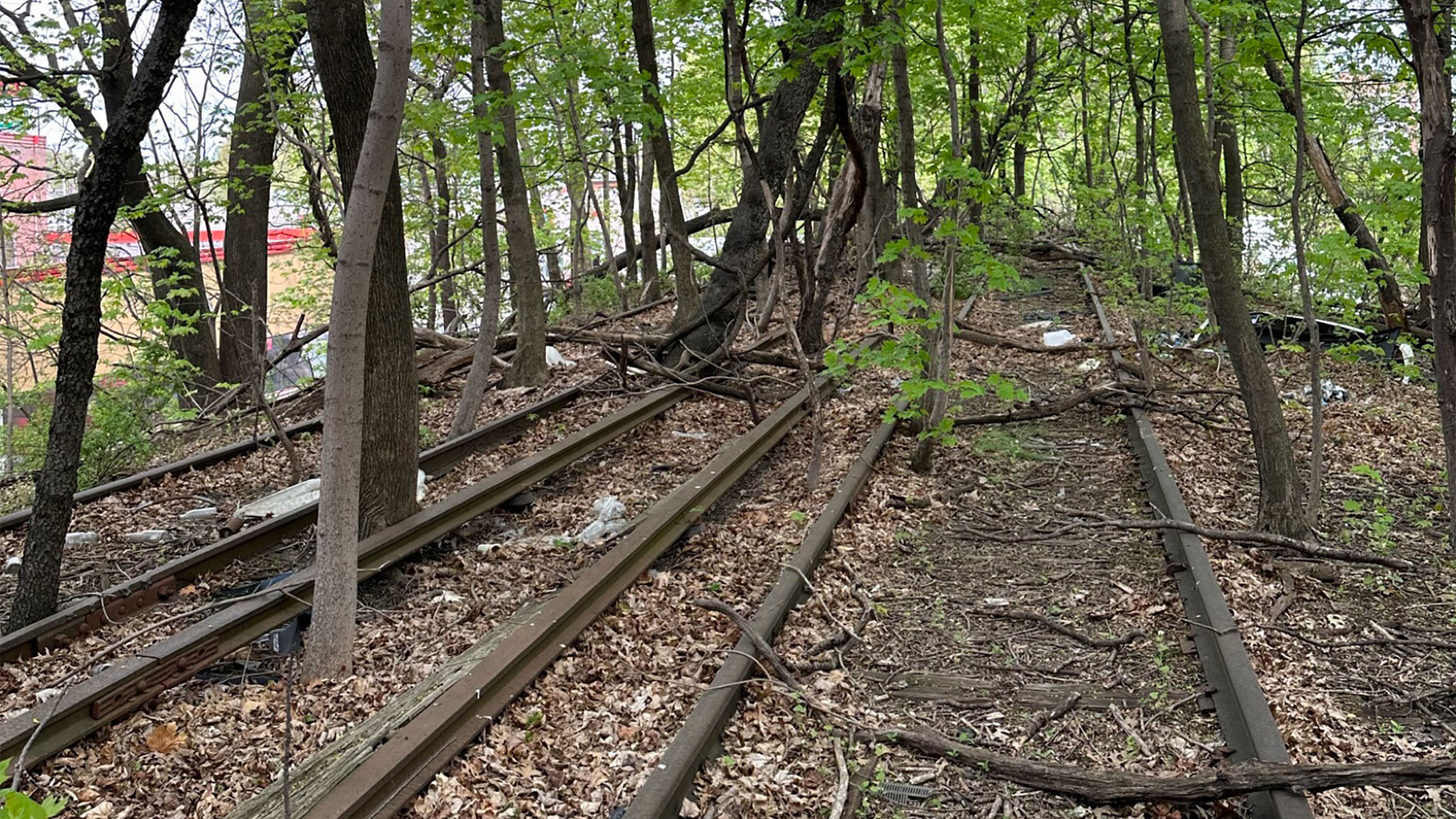
For 65 years, an abandoned railroad line has cut through Queens like a scar—a 3.5-mile stretch of rusty tracks last used in 1962, plagued by illegal dumping and neglect. Now the community that has watched it decay is locked in an intense debate about how to heal it, and the answer they land on could reshape how cities nationwide think about repurposing forgotten infrastructure.
Travis Terry has watched this blight from his Forest Hills home for over a decade. In 2011, he began championing QueensWay, a proposal to transform the idle Rockaway Beach Branch of the Long Island Rail Road into a 47-acre park with a linear green space perfect for biking to Forest Park, Queens's third largest park. The vision is grounded, practical, and increasingly backed by serious money: Mayor Zohran Mamdani recently allocated $43 million from his $124.7 billion annual budget to get QueensWay's first phase—a modest 5-acre linear park—off the ground later this year.
But Andrew Lynch sees another possibility entirely. In 2016, after watching the two visions clash, he wrote a blog post proposing something bolder: QueensLink, which would extend the subway's M Train line through Queens while also creating 33 acres of parkland. "When I saw this debate, I was like, 'Man, none of you guys want to work together. Let me show you what's up,'" he told Grist. The idea has gained traction among transit advocates who point to Queens' particular need: residents of the borough make more car commutes than anywhere else in New York City, a sign of inadequate transit options despite the city pouring $5.5 billion into the Interborough Express to connect Queens and Brooklyn, and $7.7 billion into Manhattan's Second Avenue Subway expansion.
The stakes of this local dispute ripple far beyond Queens. Nationwide, more than 25,000 miles of abandoned rail have already been converted to recreational trails. The Atlanta Beltline, a 22-mile loop of trails and parks, has become the most visible model—though notably, its light rail plans have stalled. New York has its own celebrated rail-to-trail success story in The High Line, and city officials have spent more than a decade investing in equitable park access.
What makes QueensWay compelling is precisely this equity angle. The Trust for Public Land, which has backed the park project since 2011, points out that it would serve four of the city's 20 neighborhoods with the least accessible park acreage. The 28 schools around the rail line would gain new recreation space, while the corridor would become more walkable and bikeable. "It was really about reconnecting communities that had been separated through these big infrastructure projects," said Tamar Renaud, the organization's New York State director.
Yet QueensLink advocates argue that transit is the deeper need. While earlier estimates put the cost at $8.1 billion, the MTA has since revised that to $5.9 billion—still significant, but potentially transformative for a borough where car dependency remains stubbornly high. The real tension is institutional: City Hall has told QueensLink supporters the park project is too far along to halt, though officials claim one doesn't preclude the other. Lynch, however, suspects the MTA would hesitate to build rail service atop parkland.
The answer now rests with Mayor Mamdani, who supported QueensLink as an assemblyman but chose to fund QueensWay as mayor. He hasn't foreclosed any option—his staff has pledged not to rezone the land exclusively as parkland, technically preserving the possibility of future rail expansion. For now, construction on a 5-acre green space will break ground later this year, while the dream of connecting Queens by subway remains unresolved, waiting for a bolder vision of what's possible when you refuse to choose between them.