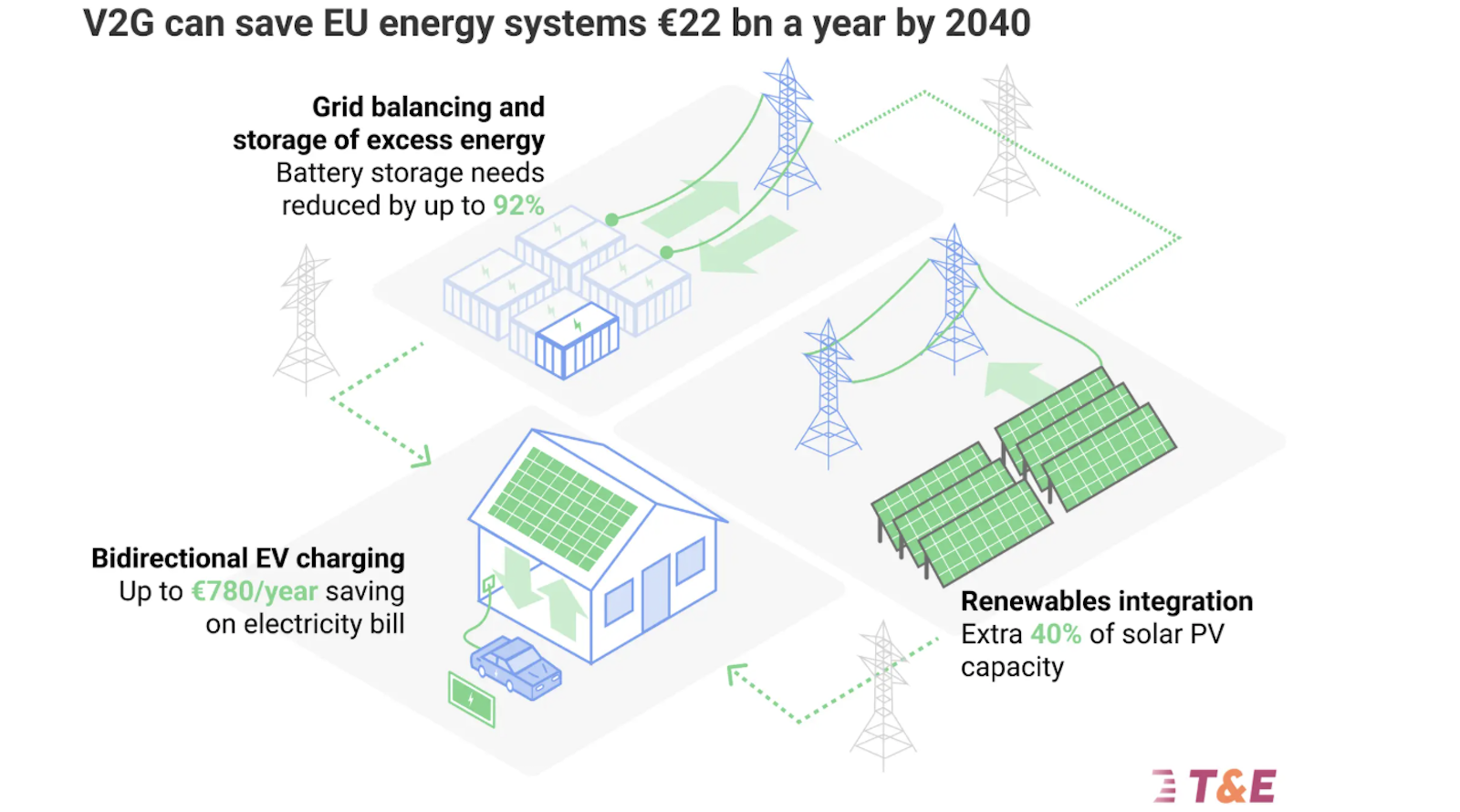
Imagine if every electric car on the road could double as a giant battery, storing electricity when the wind blows and the sun shines, then sending it back to power homes when energy is needed most. That vision is at the heart of a major new plan from the European Commission to clean up how Europeans get around.
Transport & Environment (T&E), a sustainability nonprofit, recently released an in-depth look at the EU's Electrification Action Plan. The plan's core idea is simple: replace oil and gas with clean electricity in cars, buses, trucks, ships, and eventually even airplanes. The benefits go beyond cutting pollution. According to the plan, direct electrification is "the clearest way to cut energy demand, increase Europe's competitiveness and lower energy prices."
The plan puts electric vehicles, or EVs, front and center. But these aren't just replacements for gas-powered cars. The Commission sees them as "batteries on wheels" that can help solve one of renewable energy's trickiest problems. Solar panels and wind turbines produce electricity when the sun shines and wind blows, but not necessarily when people need power. EVs can store this excess clean energy and send it back to the grid during quiet periods, making the whole system more reliable.
To make this work, the plan proposes specific rules. The Commission has promised to create requirements for Vehicle-to-Grid, or V2G, technology in all new EVs by the end of 2027. V2G lets electricity flow both ways — out of the battery and back into the power grid. Member states will also get freedom to test V2G through "regulatory sandboxes," which are experimental zones where new ideas can be tried safely. The plan also pushes for faster rollout of smart meters, devices that help manage when and how EVs charge.
There's one catch, though. To make V2G work, every EV needs special hardware inside — a bidirectional charger that can convert the car's battery power into electricity the grid can use. A standard one-way charger costs roughly €500 (about $540). But a bidirectional charger, the kind needed for V2G, costs at least €4,000 and often more. Unless this technology comes built into new cars, drivers would face a costly upgrade down the road, which could slow adoption. T&E is calling on EU leaders to include this "hardware" requirement when they finalize rules for the Automotive Package, a separate set of regulations still being negotiated.
The plan also reshapes how electricity grids are paid for. Grid operators will be encouraged to use "non-wire solutions" — like batteries, flexibility programs, and digital tools — alongside building new power cables. Consumers could save money by charging their cars when electricity is cheap and cheap, rather than during expensive peak hours.
Europe's grids will need more investment to handle all this new electricity. Most of that funding comes from network charges added to monthly bills, so the changes aim to keep costs manageable while modernizing the system. ACER, the EU's energy regulator, will track progress using new smart grid indicators.
For a continent trying to break its dependence on imported fossil fuels, the plan offers a concrete path forward. Europe already leads the world in EV sales for cars, vans, and buses — and now it's building the rules to make those vehicles work for the power grid too. If the plan succeeds, the next generation of Europeans might grow up thinking of cars not just as transporters, but as partners in a cleaner energy system.