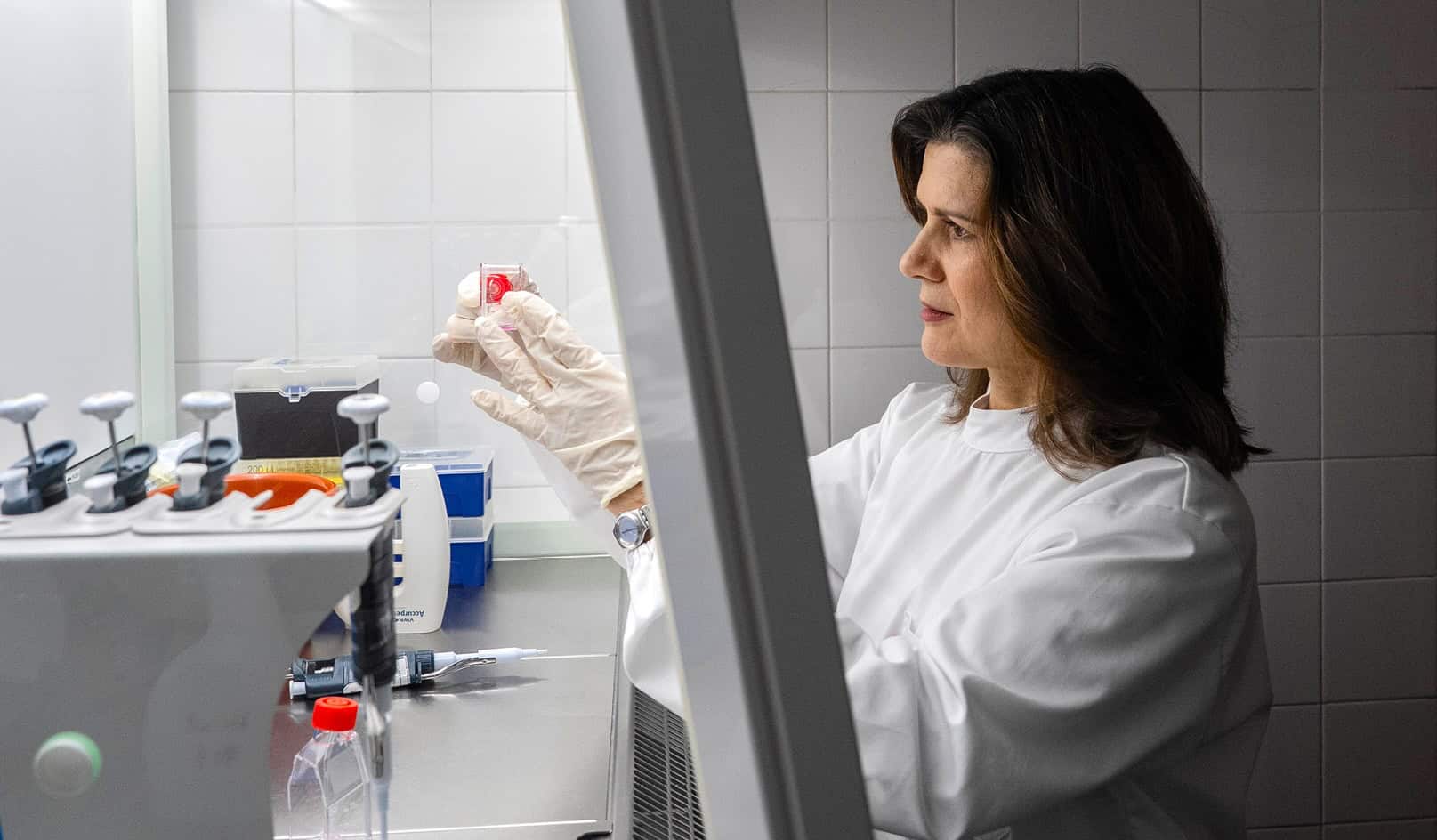
Portuguese oncologist Paula Videira's laboratory did what seemed impossible: they designed an antibody that recognizes cancer cells by their unique signatures alone, leaving healthy tissue untouched. This week, her innovation joined 11 other breakthrough inventions shortlisted for Europe's most prestigious prizes in ingenuity, a recognition that reflects a fundamental shift in how humanity is solving its most pressing crises.
The European Inventor Award has unveiled its finalists, and the selection reads like a manifesto for survival. Beyond Videira's cancer-targeting antibody, the shortlist includes Sir Adrian Hill's R21/Matrix-M malaria vaccine, which achieves markedly higher protection than existing jabs, and a "magnetic surfboard" developed by Poland's Przemek Ben Paczek—a levitation system that retrofits existing railways to move freight without locomotives or fossil fuels. These aren't incremental improvements. They address healthcare systems, infectious disease, and the urgent need to decarbonize transport all at once. The award organizers noted that the finalists "highlight how science, engineering and entrepreneurship can contribute to more sustainable societies, stronger healthcare systems and a more resilient economy." The winner will be announced on July 2.
Meanwhile, the world's energy system crossed a historic threshold this April. For the first time ever, wind and solar generated more of the planet's electricity than natural gas—22 percent compared to gas's 20 percent, according to analysis from the thinktank Ember. This wasn't a one-month anomaly driven by geopolitical crisis. It reflects a deeper economic shift. "Countries around the world have been turning to wind and solar because they are cheap, homegrown and secure sources of electricity," said Ember's global electricity analyst Kostantsa Rangelova. The current energy pressures have only accelerated the case for renewables, she added.
The pandemic has also reshaped what it means to be a father in America. College-educated fathers have cut their paid work hours by an average of six per week since 2020, while increasing housework and childcare by more than four hours—a shift researchers describe as unprecedented. The American Time Use Survey, analyzed by Ariel Binder at the American Institute for Boys and Men in Washington, DC, reveals what she calls a historic "gender convergence" driven not by women entering the workforce, but by men recalibrating their household roles. This generational reconsideration reflects the rise of flexible working arrangements and a broader reimagining of what fatherhood looks like.
The gains aren't uniform across class lines. Non-college educated fathers recorded only slight drops in paid work but increased childcare and housework by 2.7 hours per week—time largely carved out of rest. The data underscores how progress flows unevenly through society, even as it flows.
On roads, the motor car's dominion is visibly waning. Global sales of petrol and diesel vehicles peaked in 2017 and have fallen by roughly a quarter since, to just over 60 million in 2025. Electric car sales, by contrast, more than doubled between 2022 and 2025. Since road transport accounts for about 15 percent of global emissions, this shift is no luxury—it's essential. The data suggests the internal combustion engine's era of dominance, once unimaginable to abandon, is finally closing.