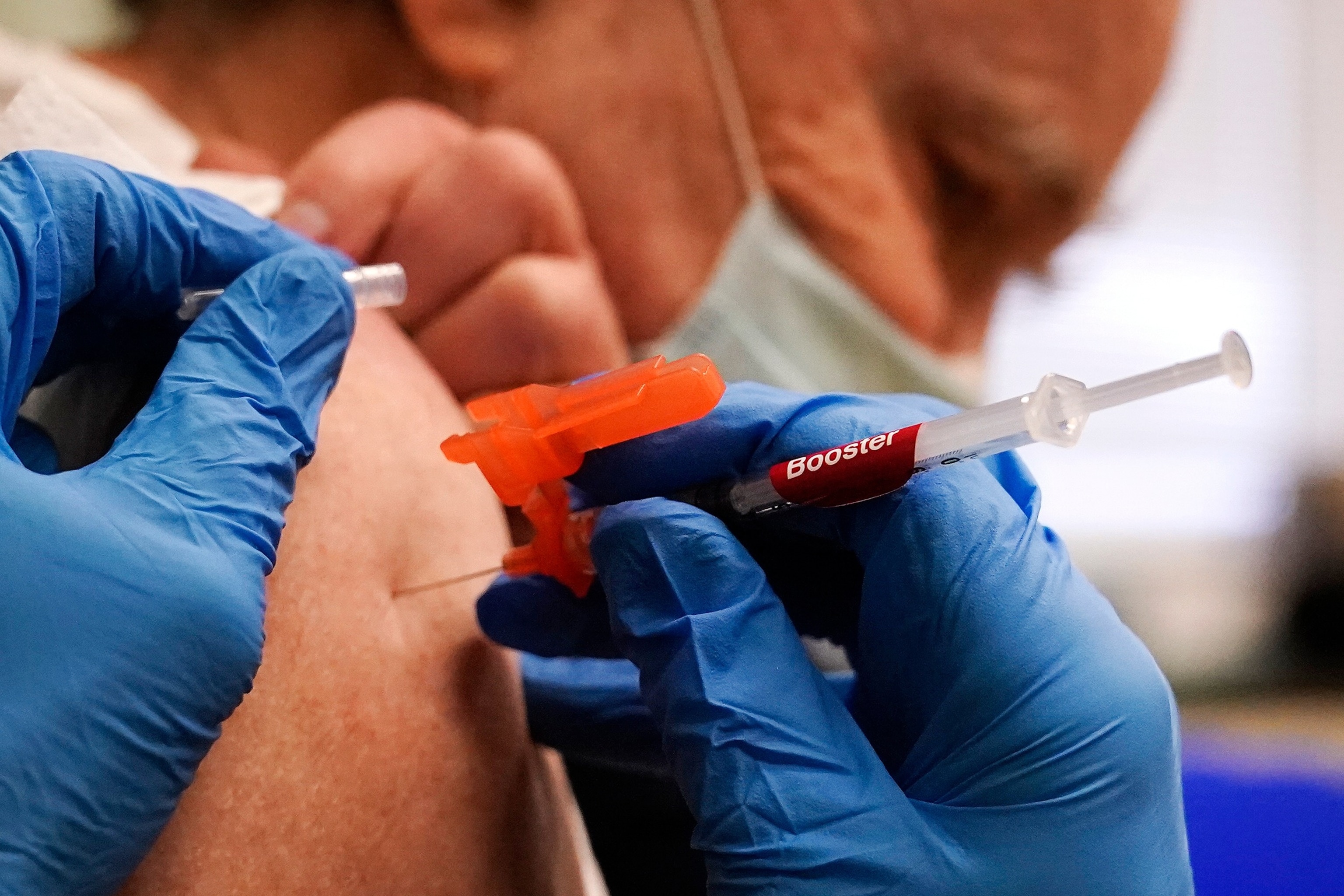
As kids across the U.S. trade swim shorts for backpacks and head back to school, a new batch of updated COVID-19 vaccines is arriving right alongside them. The Food and Drug Administration has just approved fresh shots from Moderna, Pfizer, and Sanofi to take on the strain expected to dominate this winter.
The new 2026–2027 vaccines zero in on something called the XFG strain, a "recombinant" variant that formed when two omicron substrains joined together. Right now, XFG causes roughly 40% of U.S. cases, according to the latest Centers for Disease Control and Prevention (CDC) data from July.
Why the update? Like the flu, the COVID virus mutates — it changes noticeably over time. "We have to update the vaccine in our best attempt to match the strain that we anticipate will be most active during the coming winter," explains Dr. William Schaffner, a preventive medicine professor at Vanderbilt University Medical Center in Nashville. The closer the match, the better the shot works, he says.
Eligibility differs by maker. Moderna's mRNA shot is approved for people six months to 64 years old with an underlying condition, plus all adults 65 and older. Pfizer's version covers ages five through 64 with an underlying condition, plus everyone over 65. Sanofi's shot is protein-based — a more traditional technology similar to vaccines that have existed for decades.
Underlying conditions that raise the odds of severe COVID include cancer, asthma, chronic lung disease, diabetes, heart conditions, mental health conditions, and pregnancy.
The shots should show up in pharmacies, hospitals, and clinics across the country in the coming days. Health experts say it's safe to get a COVID shot at the same time as a flu vaccine or an RSV vaccine — one in each arm, or two in the same arm spaced apart. "Some people like to postpone it and just get one after the other. That will work," Schaffner says, "but I'm always worried that a vaccine postponed may be a vaccine never received."
Most insurance plans, including Medicare Part B and Medicaid, are expected to cover the vaccine at no cost. That's because most insurers are required to pay for shots recommended by the CDC's Advisory Committee on Immunization Practices. One big uncertainty: the free Bridge Access Program for uninsured adults ended in August 2024, and it's unclear whether state and local health departments will fill that gap this season.
Why bother getting vaccinated if you've already had COVID or a shot before? Immunity fades over time. More than 1.2 million Americans have died from the virus since the pandemic began, and the experts stress that these updated vaccines are strongest at preventing the worst outcomes — keeping people out of the hospital and the ICU.
Dr. Peter Chin-Hong, an infectious disease specialist at the University of California, San Francisco, points to four groups at highest risk who should line up first: those 65 and older, very immunocompromised people, pregnant women, and the very young, especially babies and toddlers. For everyone else, a simple question remains — why wait?