Fatima Muhammad has never forgotten the day strangers told her to leave her baby son in the forest to die. Alameen was just an infant — happy and playful, a child who loves to draw and dance. His only crime was being born with Down's syndrome, a condition that in Nigeria often triggers fear, superstition and cruel rejection.
"When I go out, people throw jabs at us, avoid my daughter and call me a bad mother," said Halima Ovosi, another mother in Plateau State who knows this pain firsthand. She is Naseerah's mother — Naseerah has cerebral palsy, a different disability but the same stigma.
For decades, children with disabilities across Nigeria have faced what the country's first national assessment of disability inclusion, released in 2024, called "systemic barriers — social, economic and institutional — that have limited their full participation in national life." Down's syndrome occurs in Nigeria at a rate of roughly 1 in 865 live births, yet families say public understanding has barely budged.
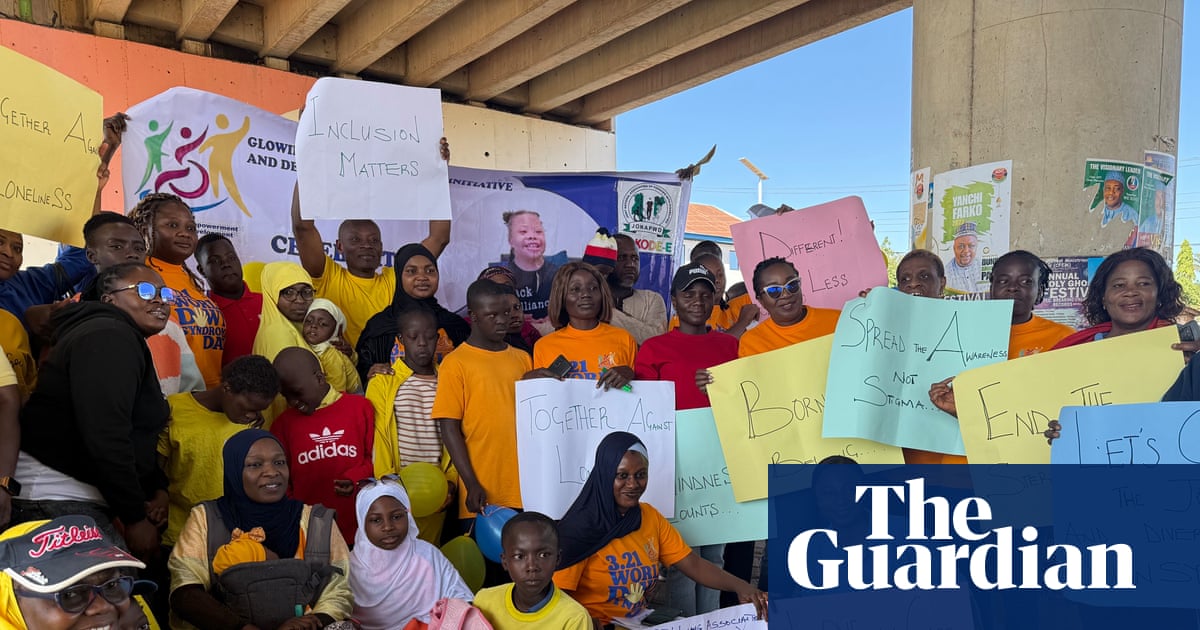
But something changed earlier this year. On World Down Syndrome Day, Fatima Muhammad walked outside — really walked, in public, for the first time in her life — joining more than 100 people who took to the streets of Jos, Plateau State. Families, government officials, doctors and nutritionists carried handmade signs that read, "Spread awareness, not stigma" and "Inclusion matters." It was one of the very few public marches in the region advocating for children like Alameen.
"I was happy to see people step up and try to end the stigma," Muhammad said.
Leading that march was Safiya Atta Mansoor, a 60-year-old former finance director who now runs a charity called the GlowingStar Empowerment Initiative and Development, founded in March 2025. Mansoor launched it after watching her own niece, Naseerah, struggle without adequate support. When Naseerah was four months old, her family noticed she wasn't reaching normal developmental milestones. Later diagnosed with cerebral palsy, she faced years of setbacks — including a school that closed without warning, setting her social development back.
Mansoor wanted to do more than help one family. Through GlowingStar, she now builds spaces where caregivers can discuss mental health and challenges without fear of judgment. The charity's WhatsApp group has become a vital peer network for families who often have nowhere else to turn. Mansoor also partners with donors to fund rehabilitation plans covering physiotherapy, education, speech therapy and nutritional support for children.
"These kinds of disabilities are often treated like a curse, a contagious disease or a result of witchcraft," Mansoor said. "This is what I am fighting against."
Muhammad now joins Mansoor on radio and television programs across Plateau State, speaking openly about her experience to challenge myths and encourage other families. "I feel better now that I can speak about my struggles and encourage other families facing this," she said.
The work is far from finished. Families in southern Nigeria, particularly Lagos, have greater access to specialised schools and advocacy groups, but Plateau State has far fewer resources. Mansoor's goal is to push for government policies that would guarantee inclusion in schools and subsidised healthcare for children with disabilities. For now, she and these families are building something new, one conversation at a time.