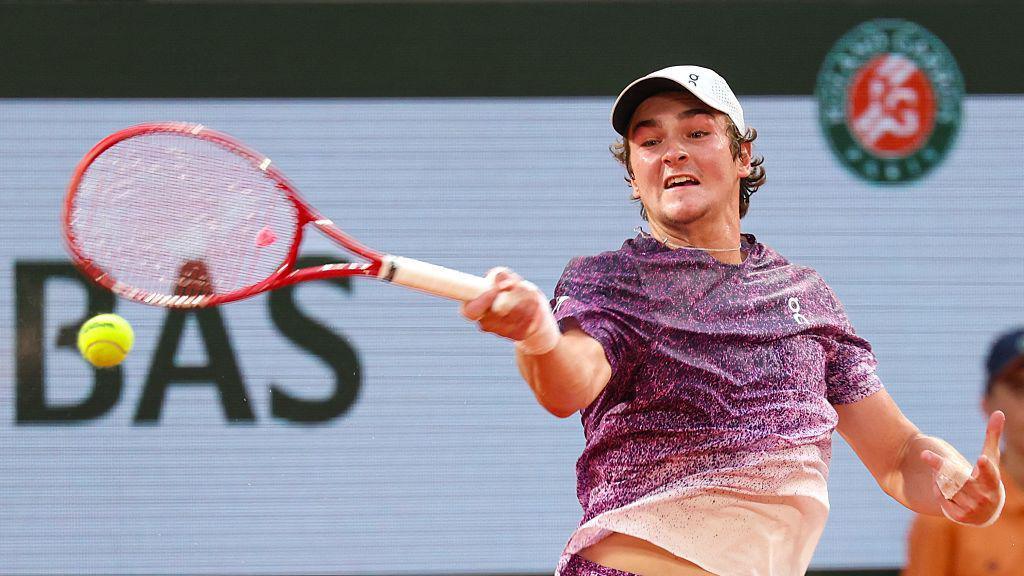
On a Friday evening in Paris, 19-year-old Joao Fonseca stepped into Court Philippe-Chatrier and did something no teenager has ever managed: he beat Novak Djokovic at a Grand Slam. It wasn't just a win—it was a four-hour, 53-minute epic in which the Brazilian fought back from two sets down, landing three nerveless aces in game 12 of the deciding set to save a break point and convert match point, finally closing out a 4-6 4-6 6-3 7-5 7-5 scoreline as the light faded over the French Open.
This victory matters because it marks a turning point for a player who, despite years of hype, had struggled to live up to the whispers that he was tennis's next big thing. Fonseca won the 2024 ATP Next Gen Finals at just 18—following in the footsteps of Jannik Sinner and Carlos Alcaraz—and then shocked the world by defeating ninth seed Andrey Rublev on his Grand Slam debut in Melbourne. But since then, the narrative had shifted. Yes, there were flashes: a title in Buenos Aires in February 2025, a run to the third round at Wimbledon, another title at the Swiss Indoors. Yet something felt unfinished. A year earlier, Fonseca had arrived at the French Open as the world number 65; he returned this year as the 28th seed, and the murmurs about unfulfilled potential had never quite stopped.
Djokovic, the third seed and 24-time Grand Slam champion, was a test of a different magnitude entirely. The 37-year-old had beaten every teenager who'd stepped in front of him at a major—18 times before Fonseca made it 19 encounters. He had led 3-1 in the fifth set. But the Brazilian's booming forehand, his teasing drop shots, and ultimately his willingness to serve out of his skin on the darkening clay shifted the momentum. "I was just trying to hit the ball as fast as I could," Fonseca said afterward, still astonished. "I felt like John Isner. I have never done that before."
What made the moment even more poignant was a small gesture: midway through the applause, Fonseca paused to wish his mother happy birthday from the court. It humanized what had otherwise been a tennis clinic staged by a teenager who'd finally stopped playing it safe and started playing like the generational talent everyone always suspected he was.
The ripples extend beyond Fonseca's career. With Sinner exiting in the second round and defending champion Carlos Alcaraz absent from this year's tournament, a new Grand Slam champion will be crowned in 2026. The men's game, long dominated by Djokovic's shadow, suddenly feels wide open. Fonseca is now the sixth teenager ever to beat Djokovic at ATP Tour level, and the first since Philipp Kohlschreiber in 2009 to knock him out before the quarter-finals at Roland Garros.
Commentators were quick to recognize the significance. "Joao Fonseca has definitely announced himself now," BBC Radio 5 Live's Annabel Croft said. "He can proudly say he has lived up to the hype." For a player who'd spent the last year hearing whispers of disappointment, those words mean everything. The goods, as Djokovic once called them, have finally arrived.