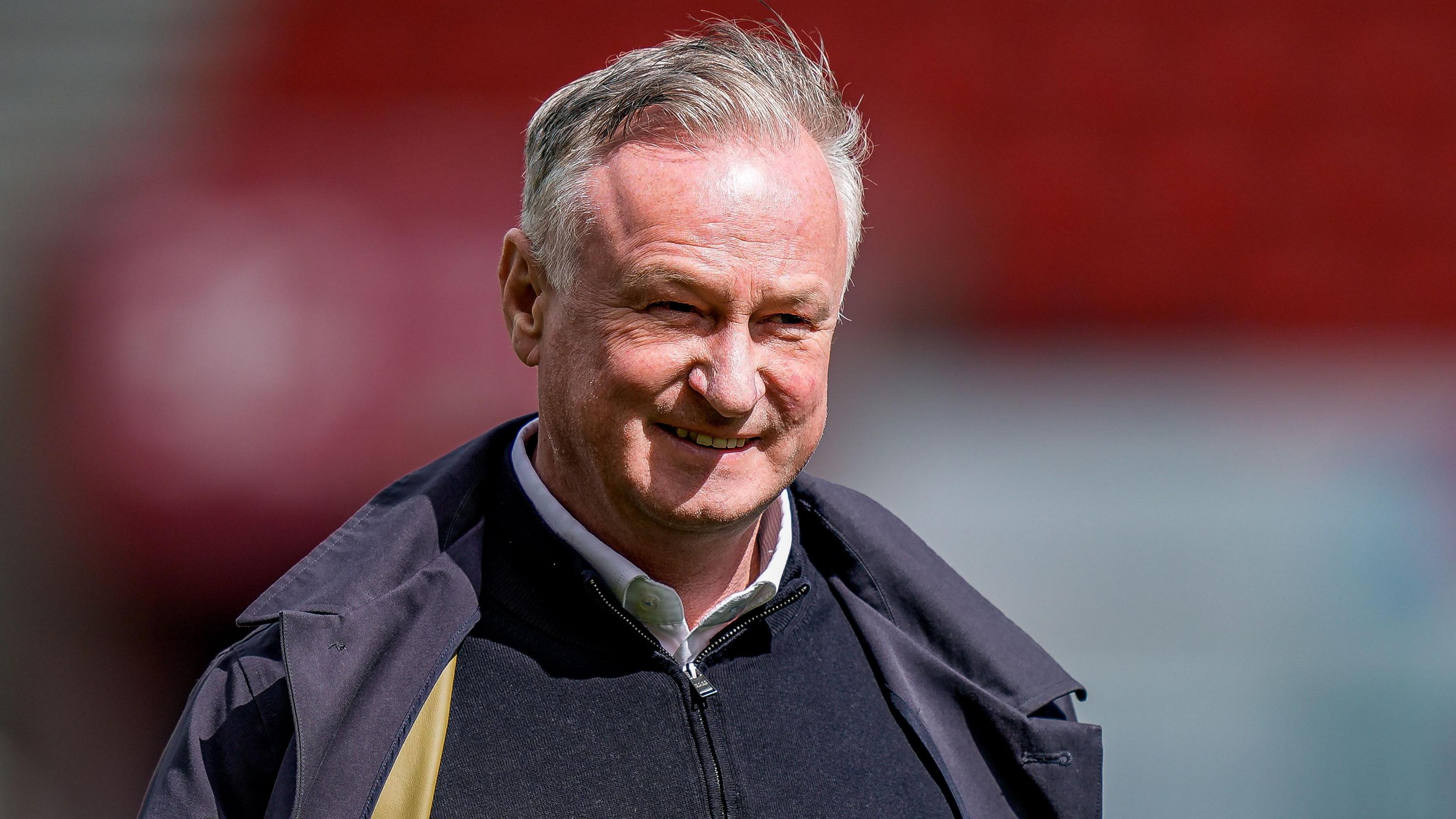
At 56 years old, Michael O'Neill has chosen legacy over ambition—and in doing so, has given himself until 2032 to achieve something he came tantalizingly close to nearly a decade ago. When Blackburn Rovers offered him a full-time job as manager, complete with what he called "a great offer," O'Neill stood at a crossroads that has confronted many international coaches: the lure of daily club football versus the longer arc of building a national team. He chose the latter, extending his Northern Ireland contract by four years and recommitting to a squad of young players he has nurtured since taking charge three years into his second spell with the Irish FA.
The decision carries weight because the alternative was tangible. O'Neill had been working in a dual role at Blackburn since January, managing 15 league games while maintaining his international duties—an arrangement he acknowledged worked temporarily but, as he put it, was not sustainable long-term. The club's chief operating officer, Suhail Pasha, "did everything possible to convince me to stay," O'Neill said. Yet the pull of unfinished business with Northern Ireland proved stronger than the promise of a fresh challenge in English football's Championship.
What distinguishes O'Neill's commitment is his explicit articulation of why: the opportunity to develop young talent across a longer horizon. The likes of Conor Bradley, Trai Hume, and brothers Shea and Pierce Charles represent a generation he has shepherded into international football. He now has three chances under his new deal—or at minimum, a clearly defined timeframe—to guide them to a major tournament. That goal has a particular resonance for O'Neill, who famously steered Northern Ireland to Euro 2016 during his first stint in charge, an achievement that remains the nation's most recent tournament qualification.
"Obviously the opportunity to try and develop the team further and get to a major tournament is something that I think would probably supersede anything I could do in club football," he explained. This is not mere rhetoric; it reflects a hard-won understanding of where his impact can be greatest. During his time at Stoke City from 2019 to 2022, and during his 15 games at Blackburn, O'Neill observed the constraints of club management at this level—the relentless pressure to accumulate points, the limited scope to influence youth development or academy systems. International football, by contrast, offered continuity and the chance to shape something beyond a single season.
The decision has not been entirely consequence-free. O'Neill acknowledged he "underestimated" the media noise surrounding his dual role and admitted that the situation could "probably have done with a little less drama." Still, his contract includes clauses on both sides, leaving theoretical room for future flexibility—something he did not rule out entirely, though he emphasized his long-term focus is firmly on the Irish FA.
The IFA themselves made clear they wanted him to stay, signaling their intention in March. O'Neill said the players responded positively too, a detail he seemed to value as much as the club's commitment. For a manager who has spent 11 years across two spells building this program, the affirmation mattered. He now has until 2032 to try and do what he did once before: take a small football nation on an improbable journey to a major tournament.