When Dr. Gregory Gray looks at the H5N1 bird flu sweeping through American dairy herds, he sees a warning sign—and an opportunity. "We have the science," said the University of Texas Medical Branch infectious disease researcher. "Now it's about deciding to use it."
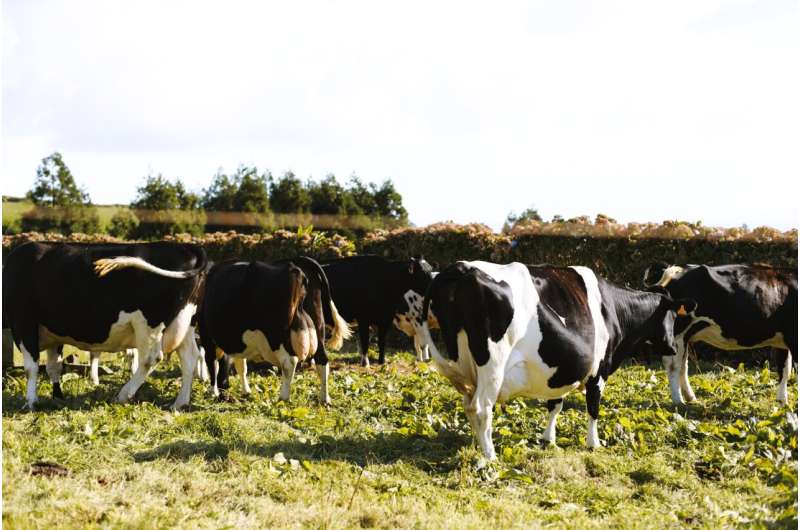
The numbers tell the story of an escalating crisis. Since 2022, more than 190 million birds have died from the virus. By 2024, H5N1 had made an unexpected leap into dairy cattle, infecting more than 1,000 herds across at least 19 states and dealing a $14 billion blow to the U.S. economy—$4 billion of that from the dairy sector alone. The virus has also infected at least 71 people in the U.S., with two deaths.
But Gray and his colleagues believe vaccination could turn the tide. Writing in The Journal of Infectious Diseases, they argue that immunizing dairy cattle is one of the most important steps the country can take to get ahead of the threat. The virus has become what researchers call "enzootic" in North American wildlife—permanently circulating rather than arriving in seasonal waves—making it clear that controlling it will require a new approach.
"This virus has changed," Gray said. "We used to think of H5N1 as a bird problem in Asia. Now it's clearly something bigger and here in our own backyard."
The risks extend beyond agriculture. Each infection gives the virus another chance to evolve. Dairy cattle may now be serving as what researchers describe as a "training ground" for H5N1 to adapt to mammals—including humans.
"Every H5N1 infection in animals or humans is like a roll of the dice," Gray said. "But the more chances the virus gets, the greater the risk that it will become more dangerous."
The hopeful part: vaccines could work. Studies show cattle develop strong, lasting immunity after infection—some animals remained protected for more than a year without shedding the virus when re-exposed. "That's exactly what you want to see," Gray noted. "It tells us the immune system in cattle can handle this virus and that vaccines have a real shot at working."
Equally important, the dairy industry already has the infrastructure to support a rollout. Routine vaccinations and detailed herd records are standard practice on most farms. "This isn't starting from scratch," Gray said. "We already have systems in place."
Other countries have proven that vaccination helps, even if it doesn't eliminate the virus entirely. Mexico and China have used H5N1 vaccines in poultry for years, significantly reducing illness and controlling outbreaks. "Vaccines don't have to be perfect to be useful," Gray said. "If they reduce disease and transmission, that's a win."
The strategy is straightforward: reduce how much virus circulates in dairy herds, and you reduce the chances of it spreading to other animals, farms, and people. "Think of it as turning down the volume on the virus," Gray said. "You may not eliminate it entirely, but you make it much harder for it to cause serious problems."
The path forward is clear. With promising vaccine candidates, existing farm infrastructure, and proof that cattle immunity is achievable, the tools are in place. The question now is whether to deploy them in time.