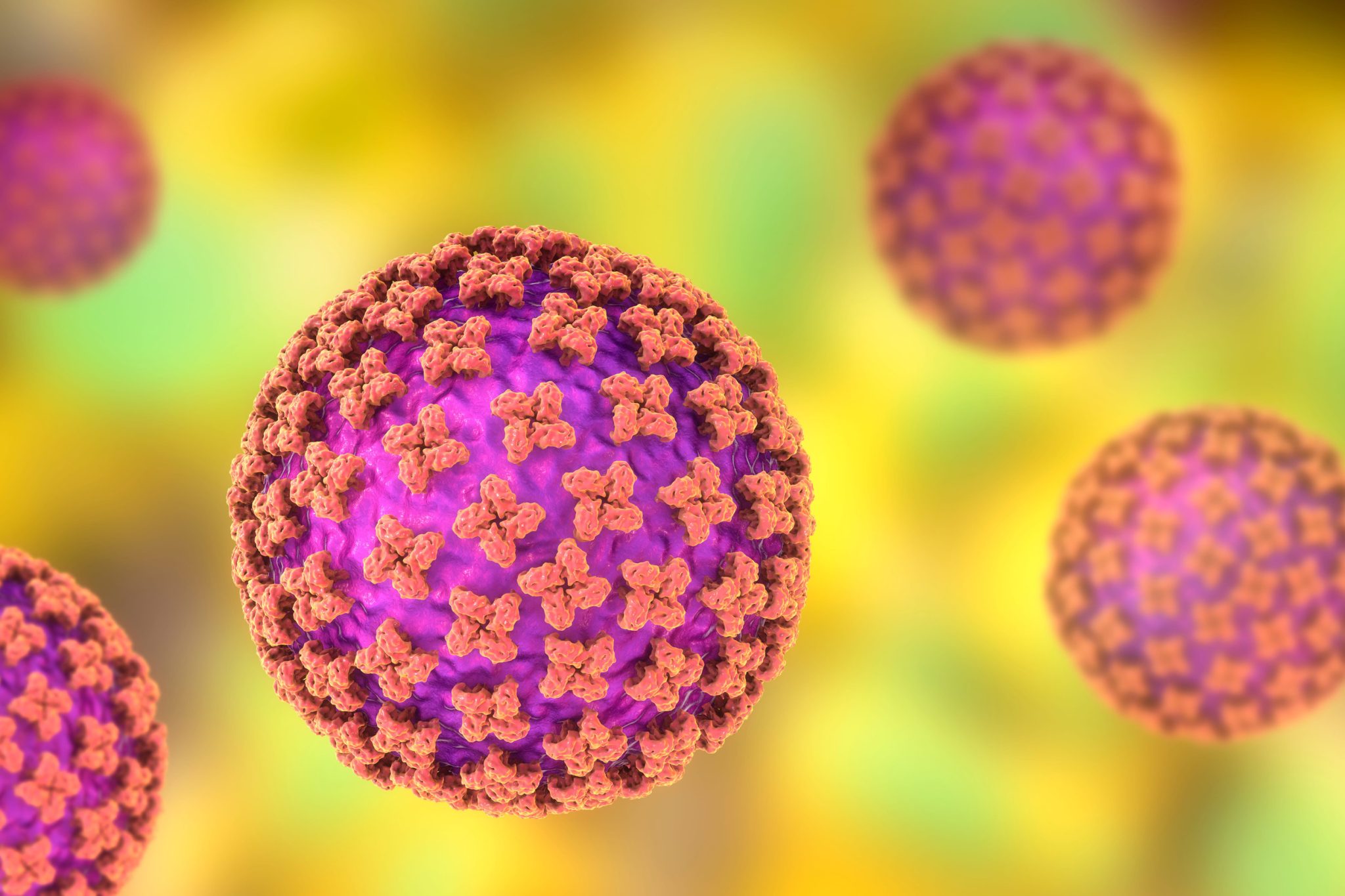
Seven people on the M.V. Hondius, a Dutch polar expedition vessel sailing from Argentina toward the Canary Islands, tested positive for Andes hantavirus by mid-May, triggering the kind of alarm that instantly evokes memories of COVID-19's early days: an outbreak on a ship, passengers confined to cabins, international health authorities mobilizing a response. But public health officials want to be clear about what makes this outbreak fundamentally different—and why the public's intuition to panic should be redirected toward something closer to cautious attention.
The reason matters because it touches something deeper than statistics: our ability to distinguish between which viral threats genuinely reshape civilization and which, while serious for those affected, remain contained by their own biological nature. The seven confirmed Andes hantavirus cases aboard the ship claimed three lives, a toll that demands respect and rigorous medical response. Two additional suspected cases remain under investigation. After being denied docking in Cape Verde, the M.V. Hondius reached Tenerife in the Canary Islands, where Spanish health authorities and the WHO coordinated passenger disembarkation. Seventeen American passengers and one British national living in the United States were transferred to the University of Nebraska Medical Center's National Quarantine Unit for evaluation by the CDC. This was the machinery of containment working as designed.
Yet here is where transmission biology diverges sharply from the narrative of exponential spread. Andes hantavirus, the only strain within its family known to transmit between humans, still does so reluctantly and inefficiently. Most hantavirus species travel from infected rodents—which shed the virus in urine, droppings, and saliva without falling ill themselves—to humans through aerosolized particles when people disturb contaminated materials in barns, infested structures, or old nesting debris. The Andes strain broke this rule by developing what appears to be resistance to antiviral components in human saliva that typically neutralize other strains before they can spread further. Yet even this evolutionary adaptation produces a virus that, as immunologist Steven Bradfute of the University of New Mexico Health Sciences Center explains, "transmits rather poorly." Spread requires sustained close contact: sharing a bed, intimate partnership, sharing food. The virus does not linger in the air after an infected person has left a room—a critical distinction from both measles and COVID-19.
A 2018 to 2019 outbreak in Argentina crystallizes both the threat and its limits. One person contracted hantavirus from a rodent, transmission moved through close social contacts, and 34 people ultimately became infected before the outbreak was contained. That was one of the largest Andes outbreaks on record. Even under conditions of close quarters aboard a confined ship, the seven confirmed cases aboard the M.V. Hondius reflect the biological ceiling of human-to-human transmission for this virus.
WHO Director-General Tedros Adhanom Ghebreyesus addressed the comparison directly, stating that this is not another COVID. His head of epidemic and pandemic preparedness, Maria van Kerkhove, assessed the risk to the general public as low—a judgment rooted not in hope but in transmission dynamics that, for now, work in the public's favor. The response itself—identifying confirmed cases, docking under medical supervision, transferring exposed passengers to specialist quarantine—followed the playbook of a contained, manageable cluster. For those who contracted Andes virus, this remains serious. But distinguishing between serious and catastrophic, between contained outbreak and pandemic, requires understanding which viruses can sustain exponential spread and which cannot. The biology here suggests restraint.