Landon Mossberg was working at Tesla and Northvolt when he saw a quiet revolution brewing in battery chemistry—one that could reshape how the world stores energy. Now, as CEO of Peak Energy, he’s helping lead it. Last week, his Burlingame, California–based startup announced a landmark partnership with General Motors to develop sodium-ion batteries for grid storage, a move that could accelerate the adoption of safer, more sustainable energy solutions across North America. Unlike the lithium-ion batteries that power most electric vehicles and gadgets, sodium-ion technology relies on one of Earth’s most abundant elements: sodium, the same material found in table salt. "It’s an abundant element," says Cameron Dales, Peak’s co-founder and chief commercial officer, who helped launch the company in 2023 alongside Mossberg. "And the fire risk is much lower."
That safety advantage matters, especially for large-scale energy storage systems anchored to the power grid. While lithium-ion batteries dominate today thanks to decades of refinement and high energy density, they come with significant drawbacks: reliance on scarce minerals like lithium and cobalt, volatile supply chains, and flammability risks. Sodium-ion batteries sidestep many of these issues. Though they’re bulkier for the same energy output, they’re inherently safer and built from materials that are both cheaper and more widely available. Right now, sodium-ion batteries cost more due to limited production, but Peak and GM believe that will flip as manufacturing scales.
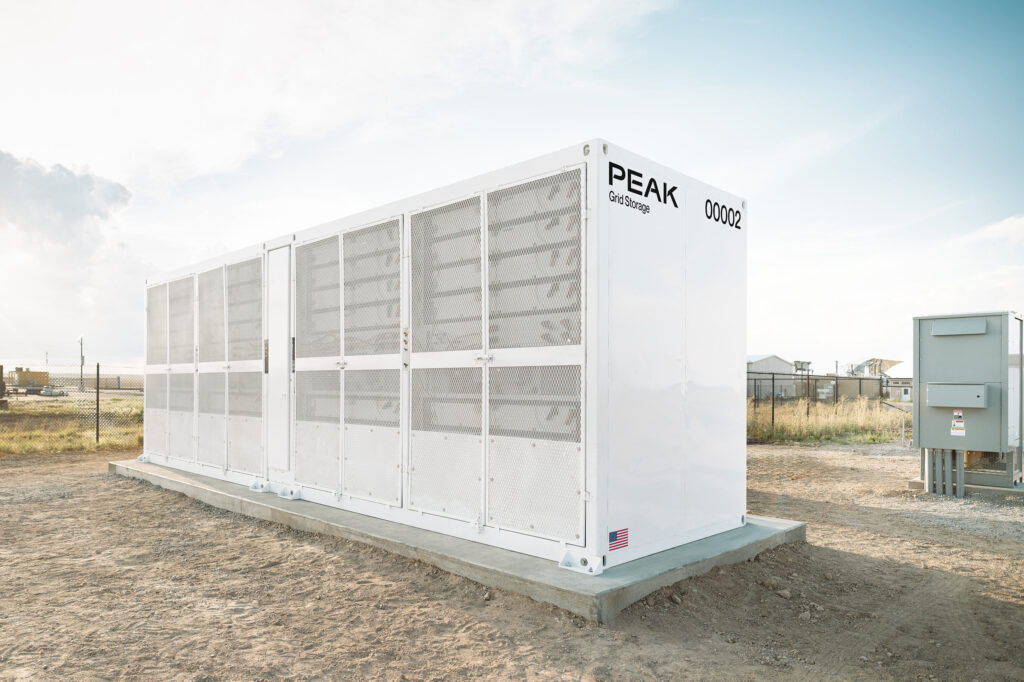
The collaboration will see GM produce sodium-ion cells at its battery lab in Michigan, while Peak integrates them into its energy storage systems. The automaker, which has already invested heavily in EV battery capacity, sees stationary storage as a strategic growth area—especially as demand for electric vehicles lags behind production capabilities. Kurt Kelty, GM’s vice president for battery and sustainability, called sodium-ion "a defining chemistry for grid-scale energy storage systems." The momentum is already visible: Peak completed a 3.1-megawatt-hour sodium-ion battery system in Broomfield, Colorado, proving the technology’s viability in real-world conditions. With 125 employees and growing, Peak is one of the few U.S. companies advancing this technology, especially after peer Natron Energy shuttered last year.
Though sodium-ion currently holds near-zero market share in North America, Benchmark Mineral Intelligence forecasts steady growth, and in China, it’s already at 1% and climbing toward 3.4% by 2030. Analyst Anya Sidhu notes that the technology has moved "from lab-scale validation to early commercial deployment" in just two years. This partnership signals not a replacement for lithium-ion, but a complementary solution—one where cost, safety, and supply chain resilience matter more than compact size. As Dales puts it, "The market is large and diverse enough that several, if not many, battery technologies will be major contributors." With climate pressures mounting and clean energy demand rising, that diversity may be exactly what the grid needs.