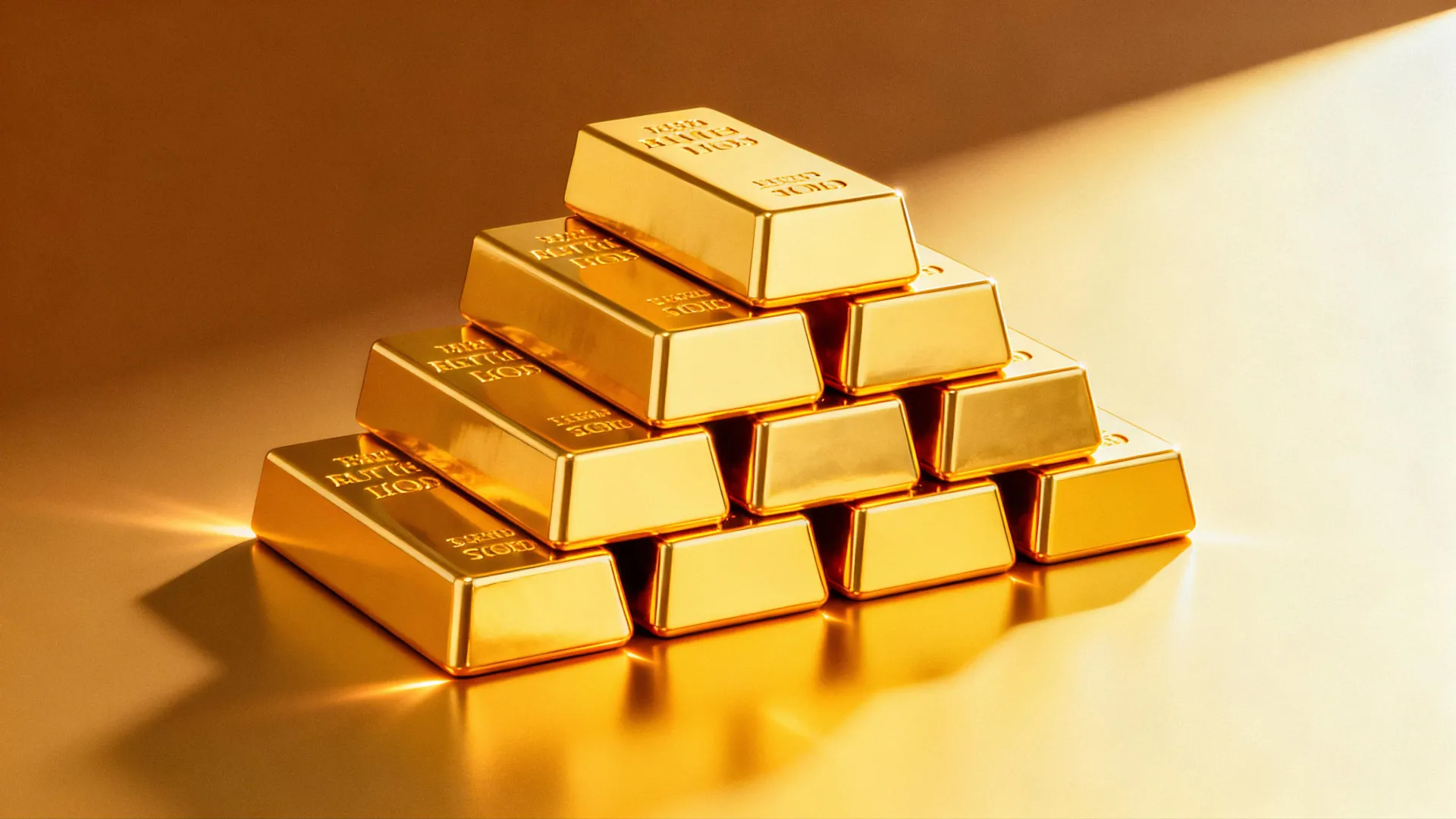
Imagine a gold coin from ancient Rome — over 2,000 years old — still gleaming like the day it was minted. While iron turns to crusty rust and silver fades to black within years, gold keeps its shine forever. Now scientists think they finally understand why.
Researchers at Tulane University in New Orleans discovered that gold's secret isn't just that it doesn't like to react with oxygen (the gas that causes rust and tarnish). The real reason is how the tiny atoms on gold's surface naturally rearrange themselves, building their own protective shield.
Matthew Montemore, a chemical engineering professor at Tulane, explained it simply: people assumed gold doesn't tarnish because it doesn't interact much with oxygen. But his team found that on the two most common types of gold surfaces, the atoms actually shift into special patterns that make it extremely hard for oxygen to attack.
Montemore and Santu Biswas, a postdoctoral researcher at Tulane, ran computer simulations to watch what happens when oxygen molecules meet gold. They found that without this atomic rearrangement, oxygen could easily break apart and react with the gold, causing tarnish. But the atoms naturally reorganize into a protective barrier that cuts those reactions down by a billion to a trillion times.
"What we show is that for two of the most common gold surface types, the surface atoms actually rearrange themselves in a way that makes the gold much more resistant to oxidation," Montemore said.
The finding, published in the journal Physical Review Letters, explains a mystery that has puzzled people for centuries. But the research might also help engineers build better catalysts — materials that speed up chemical reactions used to make everyday products.
Gold-palladium catalysts already help produce vinyl acetate, an ingredient in many plastics. Scientists are also studying gold catalysts for cleaning carbon monoxide from car exhaust and making propylene oxide, used in many industrial materials.
The catch? The same property that makes gold perfect for jewelry — its refusal to react with oxygen — makes it less useful for some chemical reactions. But Montemore sees this as an opportunity: "If you can trick gold into dissociating oxygen, it can actually become a very effective catalyst."
The new research suggests one way to do that might be by controlling the geometry of gold's surface and how its atoms arrange themselves. It's a small science lesson that could lead to big changes in how we manufacture everything from plastics to clean energy technologies.