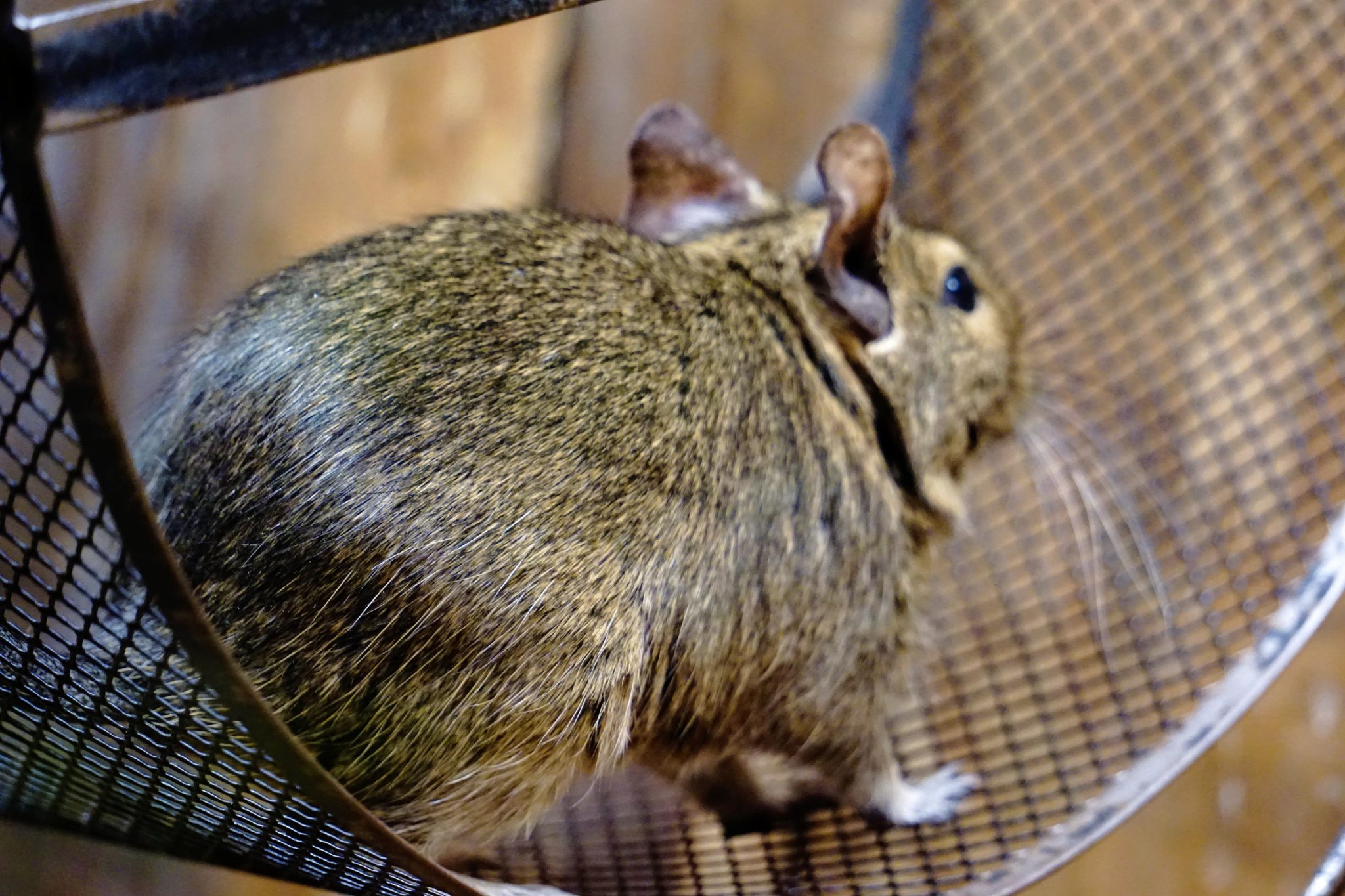
In 2014, researchers in the Netherlands placed exercise wheels in an urban green space and a remote sand dune, then watched what happened. Within days, wild mice discovered the wheels and began running on them—sometimes for up to 18 minutes at a stretch—with no training, no food bait, and no human encouragement whatsoever. The animals kept running long after the bait disappeared. For the first time in decades of research, scientists had proof that wheel running was not a sign of captive stress but something wild animals actively sought out.
This finding shattered a long-held assumption. For generations, researchers had believed that rodents ran on wheels only because captivity had made them neurotic—a kind of animal compulsion born from confinement. But Johanna Meijer and her colleagues' three-year study at those two locations revealed something far more interesting: wheel running appears to be hardwired into rodent nature itself, as natural a choice as foraging or nesting.
The outdoor wheels attracted more than just mice. Shrews, frogs, and slugs also climbed aboard, though mice dominated the action, accounting for 88 percent of all recorded wheel-running activity. Theodore Garland Jr., a UC Riverside biologist who has studied this behavior for over 30 years, offers a straightforward explanation for why rodents are drawn to the wheels: their bodies are built for it. Mice have the aerobic capacity, metabolic rate, and home-range size to cover tremendous distances—a chipmunk might run ten kilometers in a day, Garland notes, whereas a toad simply never would.
But capacity alone doesn't explain the drive. Why would a wild animal with a full range of natural behaviors choose to run in circles?
The answer, Garland's research suggests, lies in the brain's reward system. Dopamine—the neurochemical associated with pleasure and motivation—appears to be the final common denominator. When mice run, they seem to experience the same kind of neurochemical payoff that humans feel after exercise. In Garland's lab, researchers have watched mice slow mid-run, coast through a complete 360-degree rotation on the wheel, then take off again. There's no survival advantage to the maneuver. It looks, frankly, like fun. "I'm hesitant to use the 'F-word' about lower vertebrates," Garland says with a wry smile, "but it's hard to ignore the idea that they're getting some sort of pleasure or enjoyment out of it."
Yet the most profound finding may be about timing. Mice given access to wheels immediately after weaning—at just three weeks old—ran significantly more as adults than those introduced to the equipment later in life. The developmental window, in other words, matters. Early experience appears to permanently reshape the brain's reward circuitry, making exercise feel intrinsically rewarding.
Garland believes the same principle applies to humans. Children who never play basketball or ride bikes may never develop the neural wiring that makes movement feel good. When those kids reach adulthood, physical activity simply doesn't register as appealing—not because they lack willpower, but because their reward systems were never built. This reframes the entire conversation about youth fitness. The question isn't how to motivate sedentary adults to exercise. It's whether we're giving children the conditions to develop the neural foundations for lifelong movement before those circuits are set.