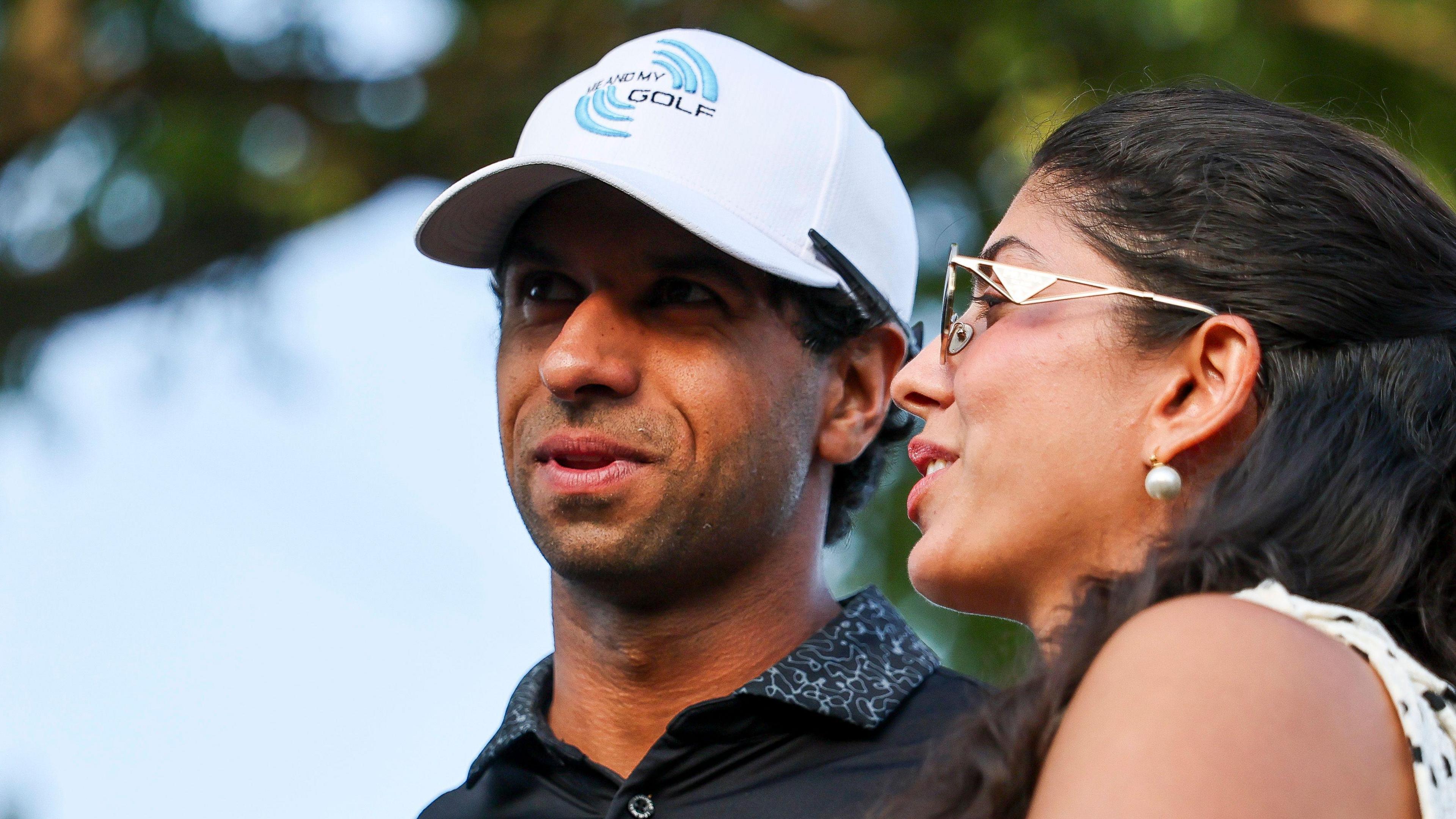
Aaron Rai stood in the Aronimink clubhouse in Philadelphia with his arm raised in triumph, and the opening notes of "Eye of the Tiger" echoed through the room—the Rocky soundtrack playing in Rocky Balboa's backyard as the 31-year-old Englishman claimed his first major championship at the US PGA Championship. It felt fitting, as one observer noted, that an underdog with unorthodox methods would be the last one standing at a grueling slugfest of a tournament.
The underdog part is unmistakable when you meet Rai. He wears two golf gloves instead of the single glove worn by virtually every other professional and amateur golfer in the world. It was an accident that started it all. "I just happened to be given two gloves and I got into the habit of wearing them," Rai explained. When his father forgot to pack both gloves one day early in his career, Rai tried playing with one. "It was terrible. I couldn't play—I couldn't feel the grip—so I've always stuck with the two gloves ever since."
But the two gloves are only the surface of a story shaped by chance and determination. Rai, born in Wolverhampton, England, didn't come to golf through some grand plan. It was an accident at home that changed everything. Playing with his older brother's hockey sticks as a toddler, he took a nasty blow to the head. His mother, Dalvir, rushed to the shops for safer plastic versions—but came back with plastic golf clubs instead. That shopping trip altered the course of her son's life.
At age four, Rai began regular lessons at the 3 Hammers Golf Complex in Wolverhampton under instructor Darren Prosser, with his father Amrik driving him for practice on the par-three course. By age five, he was already winning tournaments—footage exists of young Rai demonstrating his prodigious talent to local BBC reporters. The focus and discipline were evident even then. "He already possessed a rare tunnel-visioned focus," Prosser recalled, "for a player so callow." By age ten, Rai was coached by Andrew Proudman and Piers Ward, two Wolverhampton professionals who still guide him today.
What drives Rai's story beyond the quirky gloves and accidental beginning is the sacrifice of his parents. Amrik quit his job to devote himself fully to his son's development. Dalvir worked long hours to support the family financially. In his post-victory news conference, an emotional Rai spoke of what they meant to him: "I can't put into words how much they've done in terms of the support, in terms of the care, in terms of love. I wouldn't be here without them at all."
For a British Asian family in those years, the path to professional golf was unusual. Amrik himself had turned down a tennis scholarship in the United States at age twenty because, as Rai explained, "it was more about getting an education and a proper job, and sport or tennis at that time was never really seen as a proper job." Yet his parents encouraged their son to chase his dream anyway. Now, at thirty-one, with a major championship around his neck, Rai stands as a role model not just for British Asians but for aspiring golfers from all backgrounds—proof that sometimes the most improbable paths lead to the greatest victories.