For Scottish football fans, the equation has never been simpler or more extraordinary: a draw against five-time World Cup winners Brazil in Miami would send Scotland through to the knockout stage of the tournament for the first time in the nation's history. Even a narrow defeat might be enough.
The prospect has sparked what journalists are calling a new national obsession — poring over the complex tables of third-placed finishers, running calculations, and daring to believe that Scotland's wait of nearly 50 years to appear at a World Cup might be rewarded with something even more remarkable: advancement beyond the group stage.
Head coach Steve Clarke will face plenty of questions this week about whether Scotland might adopt a more cautious approach, simply aiming not to lose. Former Scotland captain Craig Levein offered a candid warning about that temptation.
"I don't believe Steve will be playing for a draw because there's a dangerous element to that," Levein told BBC Scotland. "Because you're in a mode where if you do lose a goal then getting shifted out of that mind space is difficult."
Levein pointed to Scotland's infamous 4-6-0 experiment against the Czech Republic in 2010 — a game where a draw would have been an excellent result, but where the passive approach ultimately cost them. "You can plan all you want to play for a certain outcome, but football is so random that you're not guaranteed to get that."
The numbers from Scotland's opening matches offer both concern and context. Against Haiti and Morocco, Scotland managed just two shots on target across 180 minutes of football. They averaged 25 seconds to recover possession against Morocco — eight seconds slower than their opponents. Former Hibs and Celtic midfielder Scott Allan observed that such passive defending can seep into players' mindsets, replacing belief with worry.
But there are signs Scotland may be ready to change course. The potential inclusion of winger Ben Gannon-Doak could signal a more aggressive intent, and former Rangers midfielder Andy Halliday believes Scotland must press higher and quicker.
"I think every chance we created actually came from us putting pressure on Moroccan players and turning the ball over at the top end of the pitch," Halliday said. "Out of possession, we can't just allow these top players time and space on the ball."
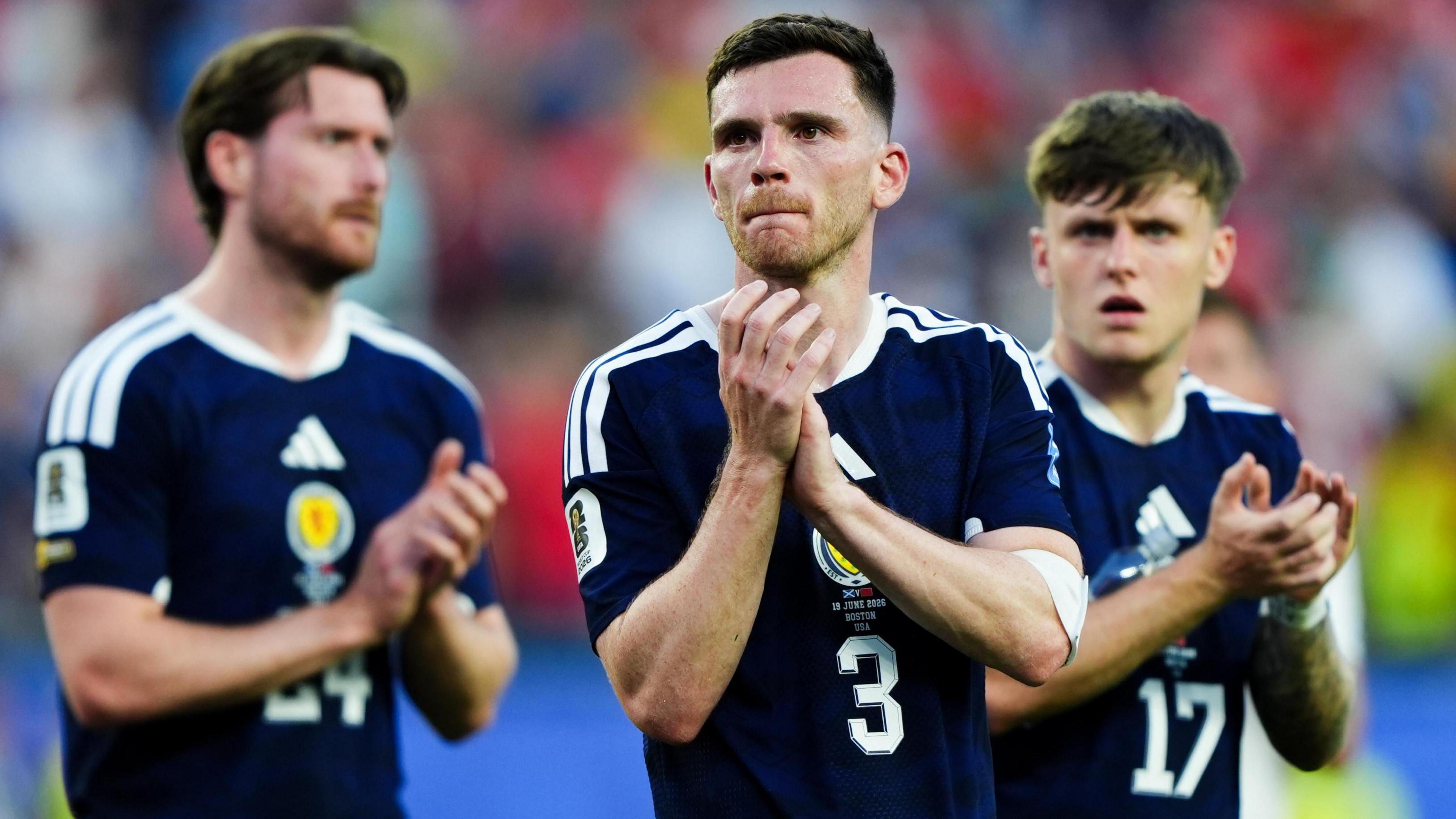
Captain Andy Robertson will lead Scotland out at Miami Stadium on Wednesday, with a nation watching — not just hoping for survival, but for a historic breakthrough that could redefine Scottish football for generations.