For years, the food on European plates has been quietly tied to a problem thousands of miles away: deforestation in South America. But a decision made in Brussels in April 2026 is beginning to change that connection.
The European Commission voted to classify soybean oil as a high-risk biofuel — meaning it can no longer count toward the EU's clean energy goals. This is a big deal because it signals that the massive farming needed to produce soy for fuel is pushing out forests in Brazil and elsewhere, and Europe doesn't want to be part of that problem anymore.
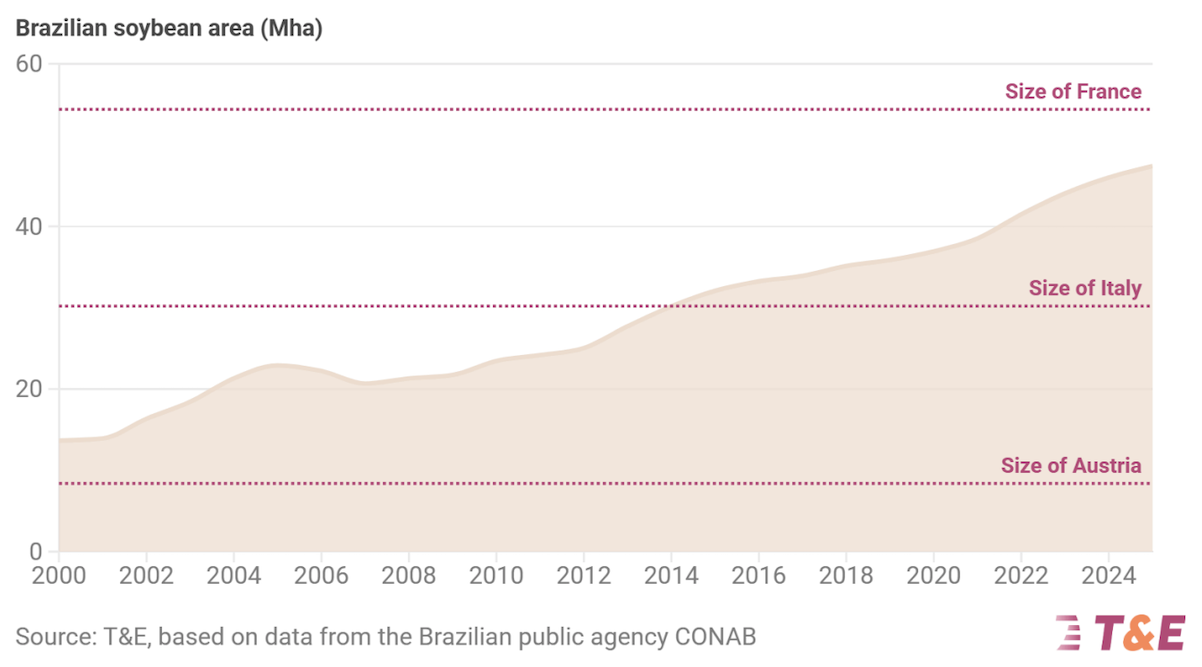
Soybean oil is used in cars and trucks as a type of biofuel, mixed in with regular diesel. But growing soy takes up huge amounts of land. In South America, forests and grasslands — including parts of the Amazon rainforest and a savanna region called the Cerrado — are being cleared to make room for soy farms. When trees are cut down, the carbon stored inside them gets released into the air, making climate change worse.
Several EU countries already knew this was a problem. France, Denmark, Belgium, and the Netherlands have all been phasing out soy-based biofuels on their own. Now the EU is catching up with a single, continent-wide rule that takes effect in June 2026.
The policy means that starting this year, oil companies can no longer count soy biofuel toward targets for renewable energy. They will need to find cleaner alternatives instead. Advocates hope this will help drive money toward truly green energy sources and break the link between fuel prices and food prices — something that has made cooking oils more expensive for families around the world.
Some industry groups pushed back against the new rule, arguing it was too strict. But supporters say the evidence linking soy farming to deforestation is strong, and continuing to reward it with clean energy credits would undermine the EU's climate promises.
The change is part of a broader shift in how Europe thinks about what counts as "green." Simply swapping one fuel for a plant-based alternative isn't enough if the growing process destroys forests and releases carbon. The new classification sends a clear message: if a biofuel harms the planet in hidden ways, it doesn't belong in the clean energy club.