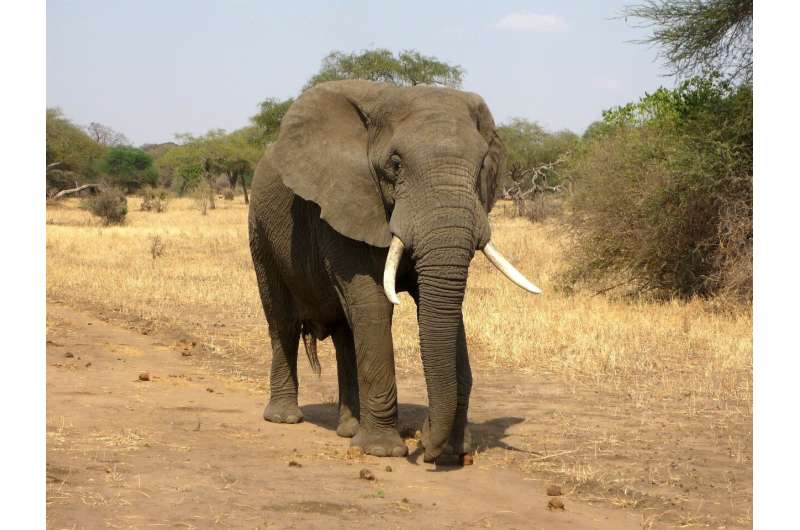
A new study examining funding for African elephants across 79 protected areas in 24 countries has revealed a troubling pattern: conservationists are pouring money into protection strategies without first agreeing on what success actually looks like. The research, published in Conservation Science and Practice, shows that vague conservation goals are leading to poorly strategized spending that wastes precious resources needed to save vulnerable species.
The problem is more subtle than simple neglect. When conservationists must decide where limited funds go, the stakes are high. Should they invest where elephant populations are largest, hoping that size provides protection? Where declines are fastest, trying to reverse downward trends? Or should they spread money across multiple smaller sites to maintain the species across its geographic range? The answer, according to researchers from the University of York and the Key Biodiversity Areas Secretariat, depends entirely on what the conservation program actually aims to achieve—and right now, most programs don't define that clearly enough.
The study compiled population and financial data covering roughly half of the continental elephant population and found that current funding allocations are rarely efficient. A strategy optimized for one goal—say, maximizing the total number of elephants across Africa—produces completely different funding priorities than a strategy aimed at creating geographically stable, viable populations. Yet many organizations proceed without explicitly choosing between these objectives.
"Conservation plans often set out broad visions, but this work shows that defining more precise, measurable conservation goals could mean more sustainable and better-funded conservation actions," said Dr. Rob Critchlow from the University of York. His research reveals that successful funding requires a dynamic approach. When budgets are small, it's more efficient to concentrate money on several smaller, manageable sites to secure individual populations. As budgets grow, resources should shift toward reversing declines in much larger protected areas. This directly challenges the common practice of simply ranking sites from best to worst and funding downward until money runs out.
The researchers advocate for what they call a "portfolio approach"—one where international investors, donors, and governments first agree on precise definitions of success, then allocate funding accordingly. Currently, elephant funding is driven by inconsistent factors: the varying spending abilities of local governments and the unpredictable nature of philanthropic support. The result is that many funding decisions, though seemingly sensible individually, amount to slowing species declines rather than securing healthy populations for the future.
The implications reach far beyond elephants. Prof Colin Beale from the University of York posed the essential question: if flagship species like elephants are being funded inefficiently, how likely is it that conservation broadly is achieving its potential? Similar funding challenges affect other high-profile species including great apes and large predators, while the broader global goal of conserving "biodiversity" lacks even a single agreed-upon metric.
Dr. Andrew Plumptre, Head of the Key Biodiversity Areas Secretariat, noted that most species conservation plans fail to identify what they truly aim to achieve, making optimal fund allocation impossible. As biodiversity decline accelerates globally, the urgency to redirect scarce conservation resources based on clearly defined objectives has never been sharper. The path forward requires conservationists to be explicit about what conservation success looks like before deciding where to spend.