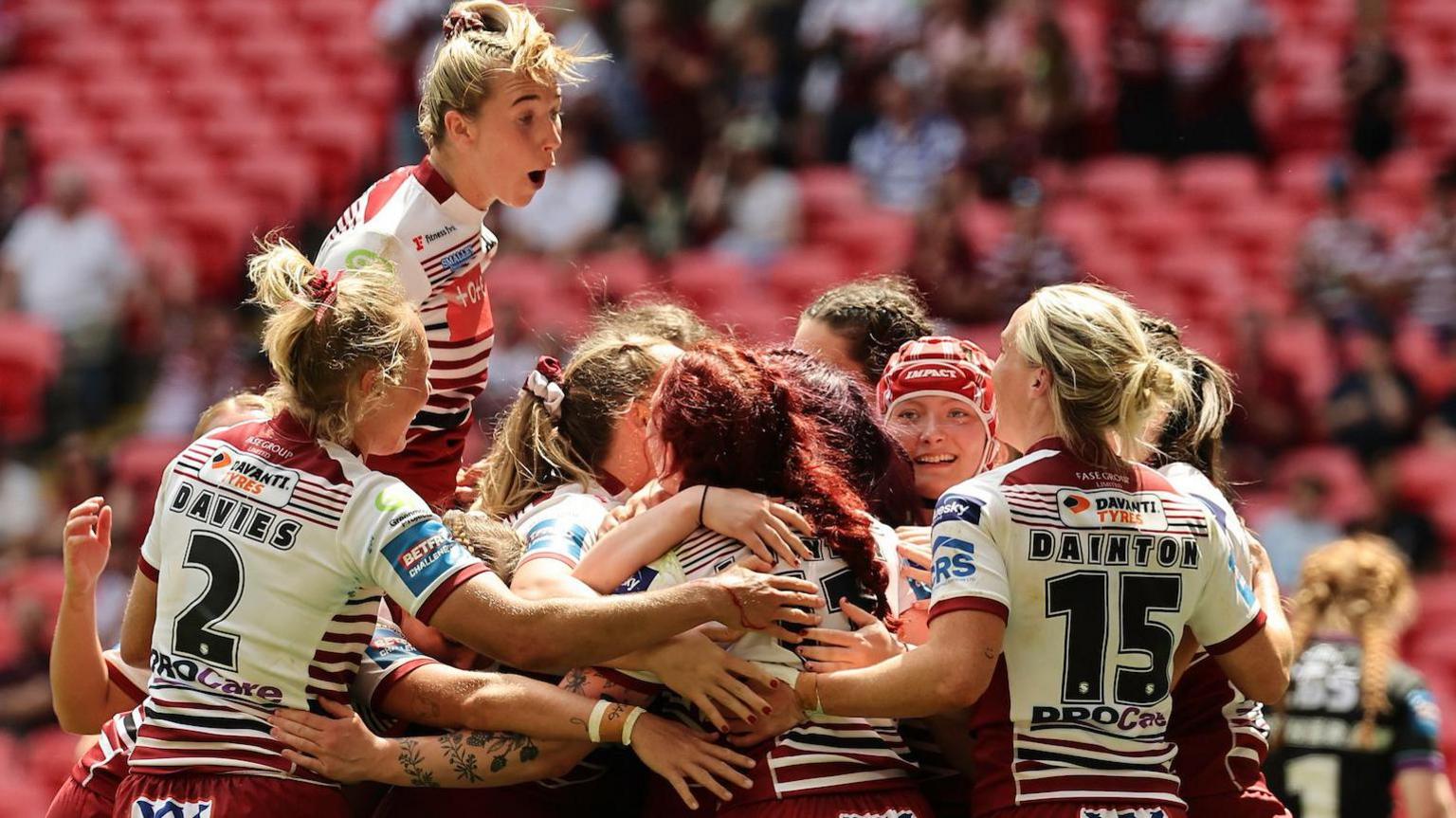
Katelyn Hunter's three-try performance on Saturday at Wembley wasn't just a standout individual effort—it was a statement that women's rugby league has fundamentally shifted. Wigan Warriors demolished St Helens with 10 tries to one, retaining the Women's Challenge Cup in a 50-point victory that left no doubt about the new order in the sport.
The dominance was on display from the opening minutes. Within six minutes, Wigan had the ball working crisply across the field to Emily Wilson for the opening try. Their second try came from only their second attack, when Jenna Foubister set up Hunter, who burst through Paige Travis's defense with ease. Hunter, seemingly unstoppable, added a second try moments later after racing down the left wing and outpacing the St Helens defenders who simply couldn't adjust to the space she was exploiting.
What made Wigan's performance so clinical was its completeness. Foubister's high lateral pass found Ellise Derbyshire, who moved it quickly to Salihi for another converted try. Davies added a corner try that barely stayed in bounds, while the impressive Izzy Rowe's boot was flawless through the first half. By contrast, St Helens' only first-half response came through McColm's try just before halftime—a moment of resistance in an otherwise one-sided affair.
The second half only widened the gulf. Just 44 seconds in, Davies crossed again as St Helens' defense crumbled. Grace Banks outpaced a depleted defense minutes later. Hunter completed her hat-trick with 20 minutes remaining, then added a fourth try with a sensational individual effort that showcased both power and skill. Wilton capped the performance with Wigan's 10th try, the Warriors never relenting despite their commanding lead.
What's most striking is what this victory represents. Saint Helens had won this competition four times in a row before Wigan's first-ever title win last year. That era hasn't just ended—it's ended decisively. Coach Betts' side has announced something far bigger than back-to-back trophies: they've signaled that the women's game itself has changed. The difference in pace, decision-making, and structural sharpness was stark. When St Helens did get possession, they moved slowly and lacked shape to create attacking options. Wigan, by contrast, seemed energized by the late-May heat that softened the pitch, carving open their opponents with devastating efficiency.
Hunter and Davies were the architects of St Helens' defensive collapse, exploiting gaps on either side of halftime with ruthless precision. Yet the broader story is less about individual brilliance and more about a systematic gap in performance level. Wigan's ball movement, their positioning, their decision-making at speed—these weren't just better than what St Helens offered; they represented a step change in the sport's standard.
This Saturday performance at Wembley wasn't Wigan announcing themselves, as their dominant 2025 treble did. This was them cementing their place as the benchmark, the team everyone else must measure themselves against. Women's rugby league has a new reality, and Wigan Warriors are writing the script.