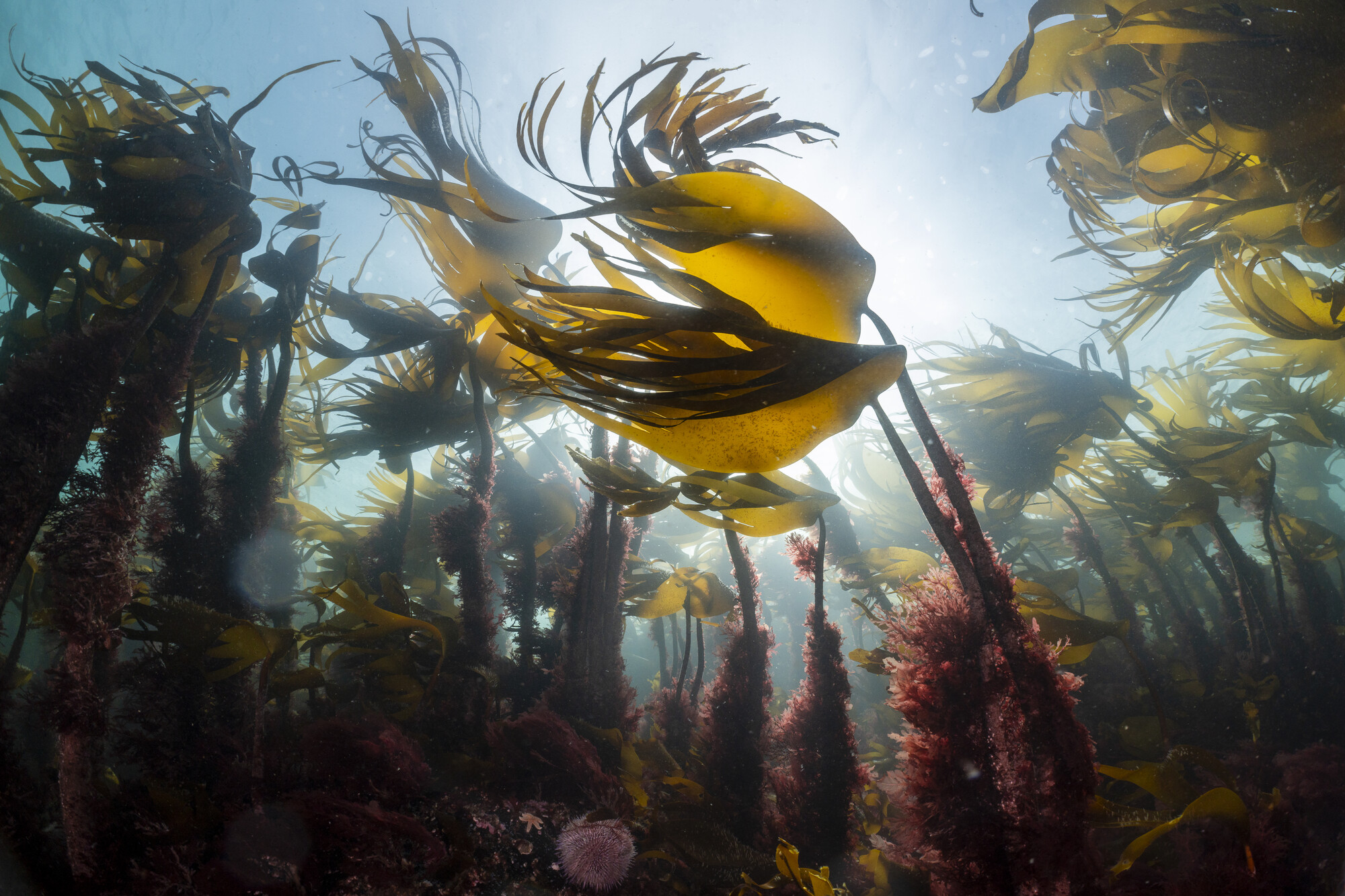
On Europe’s shores, a river blocked far inland can shape the life of an estuary where it meets the sea. Rewilding Europe is widening its Wilder Seascapes work to restore those links between rivers, coasts and nearshore waters—and the wildlife and communities that depend on them.
From North Sea tidal flats to Atlantic salt marshes and Mediterranean seagrass meadows, coastal habitats support a remarkable range of life. They provide nursery grounds for fish, resting places for migrating birds, stores of carbon and natural protection from storms and rising seas. They also help sustain people’s livelihoods. But these places face pressure from warming and more acidic seas, rising water levels and extreme weather, as well as industrial fishing, development, pollution and changes to rivers.
Wetlands have been drained, dunes flattened and estuaries narrowed by dykes. Dams and channelled rivers can interrupt the flow of water, sediment and nutrients towards the coast. They can also block fish such as salmon, sea trout, sturgeon and eels as they travel between freshwater and the ocean. The effects spread through habitats and food webs, not just along the shoreline.
Wilder Seascapes treats the coastal zone as a connected system. Coastal rewilding includes estuaries, deltas, salt marshes, dunes, tidal habitats and waters close to shore, along with the rivers and land areas that shape them. Marine rewilding reaches farther offshore, to underwater habitats and the food webs they support. Rewilding Europe’s approach puts the focus on restoring natural processes across these connected places rather than treating each one separately.
Some of that work begins inland. Along the German-Polish border, the Rewilding Oder Delta team and local partners have removed barriers in the Ina River catchment, reopening waterways for migrating fish. In Sweden’s Nordic Taiga, the Rewilding Sweden team has removed old dams in the Vindel River catchment. This has restored more natural water flow and opened routes for fish and other aquatic wildlife.
The aim is to give nature more room to recover. Where dykes and drainage systems have interrupted the tides in estuaries and deltas, removing barriers or managing them differently can help restore the exchange of water. The source article’s account of this work is incomplete, so it does not provide further details on those projects or their results.
The examples point to a practical idea: coastal recovery can start many kilometres from the sea. When rivers flow more freely, they can carry water, sediment, nutrients and wildlife through the landscape again. Reconnecting those routes can help rebuild the living systems that healthy coasts rely on—and strengthen the natural defences and wildlife habitats that make these places valuable to people as well as nature. Rewilding Europe is expanding its focus on landscapes where land and sea meet, with the hope of supporting more resilient coasts across the continent.