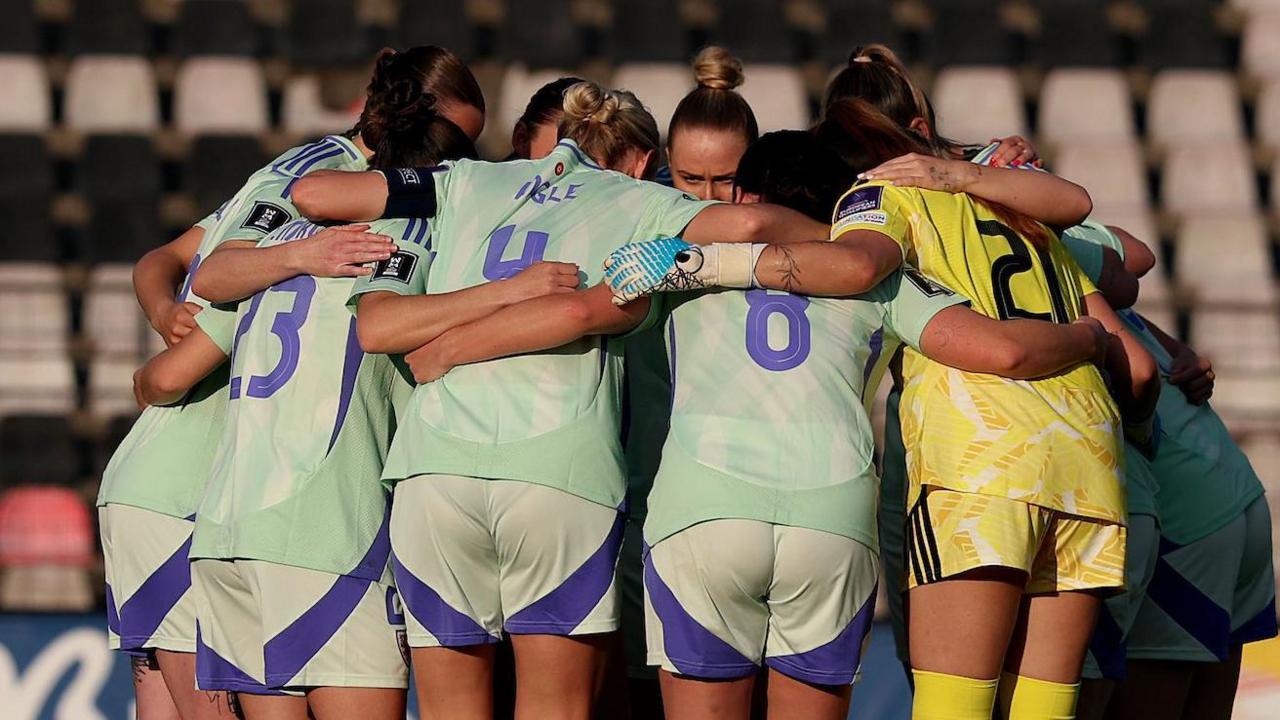
Rhian Wilkinson spent Thursday night in an airport waiting area, but she wasn't about to let her squad know it. When Wales Women's head coach and her backroom staff were forced to sleep in Brindisi airport after electrical storms diverted their journey to Montenegro, she made a deliberate choice: shield the players from the chaos, and let her team do the work behind the scenes.
The disruption was severe. Wales had been due to arrive in Podgorica on Wednesday evening for Friday's Women's World Cup qualifier against Montenegro, but the squad was diverted to the Italian city of Brindisi mid-flight. The Football Association of Wales scrambled to find accommodation, eventually settling the playing staff in southern Italy in the early hours of Thursday—less than 23 hours before kick-off at Gradski Stadion. Wilkinson and many of her backroom team had no beds available, so they spent the night in the airport.
Yet in a testament to how elite sports teams operate under pressure, the players knew none of this. While Wilkinson was awake at the airport, the squad was resting at their hastily arranged accommodation, eating well, and sleeping. "They're not aware of half of what's been happening and that's the point," Wilkinson explained. The head coach wasn't trying to hide difficulty—she was protecting her players' preparation for a match that could reshape Wales' qualifying path.
This wasn't just about comfort. The Montenegro game is pivotal. Wales must finish first in Group B1 to secure the most favourable route through the World Cup qualifying play-offs later this year. The Czech Republic currently lead on goal difference, and they face Albania on Friday before meeting Wales at Cardiff City Stadium on Tuesday, June 9th. That final group game will likely determine who tops the group—and who gets the easier play-off draw.
Wilkinson's team had momentum. Wales were unbeaten in their previous six matches and had demolished Montenegro 6-1 in the reverse fixture in March. The head coach was confident they could repeat that dominance despite the travel nightmare. "There's no excuses. We'll be ready for the game," she said, though she acknowledged the staff's sacrifice freely. "It's not nice, right, spending the night at the airport for the staff. But how quickly they prioritise the players, getting them to sleep, prioritising food, all those things—the players have noticed they've gone above and beyond this trip."
Wilkinson was unsparing about her own role. As head coach, she recognised she was "the least useful person on matchday minus one and two"—the days before the match. The medical team, the logistics staff, the people ensuring players could rest and recover: they were the essential ones now. The head coach's job was to be present, to sacrifice a night's sleep if needed, and then to send her team out ready to win.
By Friday evening, Wales would face Montenegro knowing that despite the chaos, their preparation had been protected. Wilkinson had made sure of that—one night at an airport at a time.