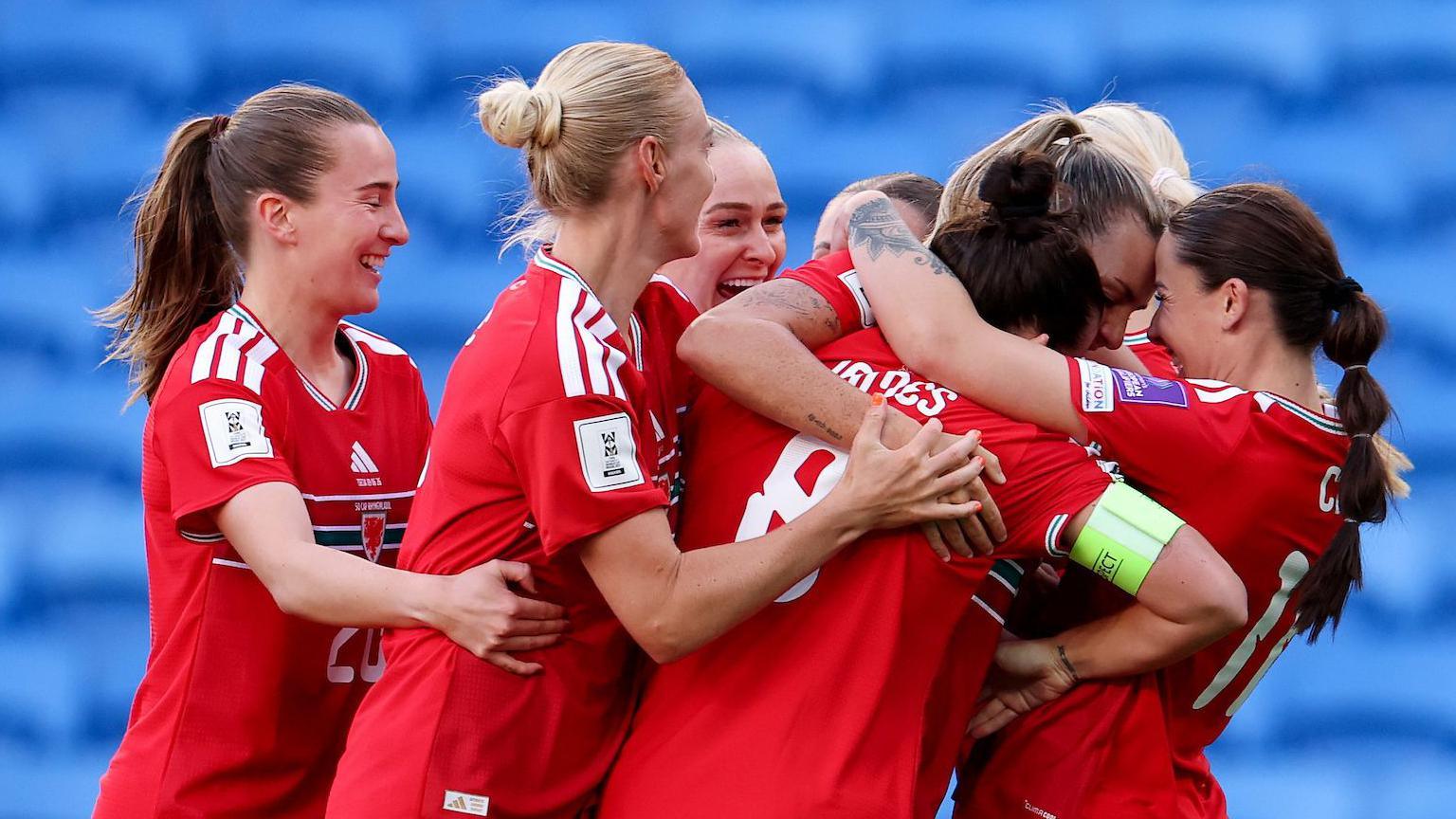
When Hannah Cain burst through the Czech Republic's defence in the final group match, she wasn't just scoring a goal—she was writing a new chapter in Welsh women's football history. The forward's six goals in Euro qualifying were the latest sign that Wales' ambitious rebuild under head coach Wilkinson is working, even as the team grieves the loss of legends like Alex Fishlock, who retired after Euro 2025.
Wales topped their World Cup qualifying group despite the departure of two pillars of their game. Fishlock, an inspirational figure across two decades in the shirt, hung up her boots last October. Forward Kayleigh Barton, who earned 89 caps and scored 22 goals, followed her out the door after the Euros. The transition could have been an excuse to falter, but instead Wilkinson's squad discovered something new.
Cain's emergence has been the most striking story. She arrived at this campaign with just five international goals to her name. Six in the group phase made her one of only two players across all of Europe to match that scoring rate—a remarkable acceleration that signals genuine depth in Welsh attacking talent. Yet Cain is far from alone. Mared Griffiths, just 19 years old, has scored three goals in qualifying and four in only ten Wales appearances, immediately establishing herself as a senior international of consequence. In midfield, Laura Hughes has shown she can shoulder significant responsibility alongside established figures like Sophie Ingle and Angharad James. Carrie Jones, meanwhile, reached 50 caps before her 22nd birthday and captained Wales for the first time—a symbol of generational strength. Even centre-back Mayzee Davies' return from a year out with injury adds a welcome layer of experience and physicality to the back line.
The path to the Women's World Cup, however, remains steep. Wales secured the group-stage top spot that grants them a favourable playoff route, but the qualification system is what FAW chief executive Noel Mooney frankly called "convoluted." In their semi-final playoff, Wales will face a team that finished second or third in a League B group, with the second leg at home. Should they progress, they'll likely face a League A side in the final—and if they win that, they could still be drawn into inter-confederation playoffs early next year. As a lower-ranked playoff winner, Wales might find themselves in that draw.
The immediate challenge is consistency. Away from home, Wales scraped and scratched through the group phase. A draw in the Czech Republic's opening match, a narrow 1-0 win in Albania, a shock draw in Montenegro—even accounting for the drama of their team plane being struck by lightning en route to Pogdorica, the performances left room for improvement. Wilkinson knows her squad can compete "on our day," but October's playoffs will allow few off-days.
Yet for a nation that has never qualified for a World Cup, the dream feels tangible. FAW officials are eyeing Euro 2029 in Germany as a primary target—Wilkinson just received a two-year contract extension—but that doesn't mean the World Cup is off the table. One step at a time, Wales' players say. But the first major hurdle is coming, and a generation of young talent is ready to face it.