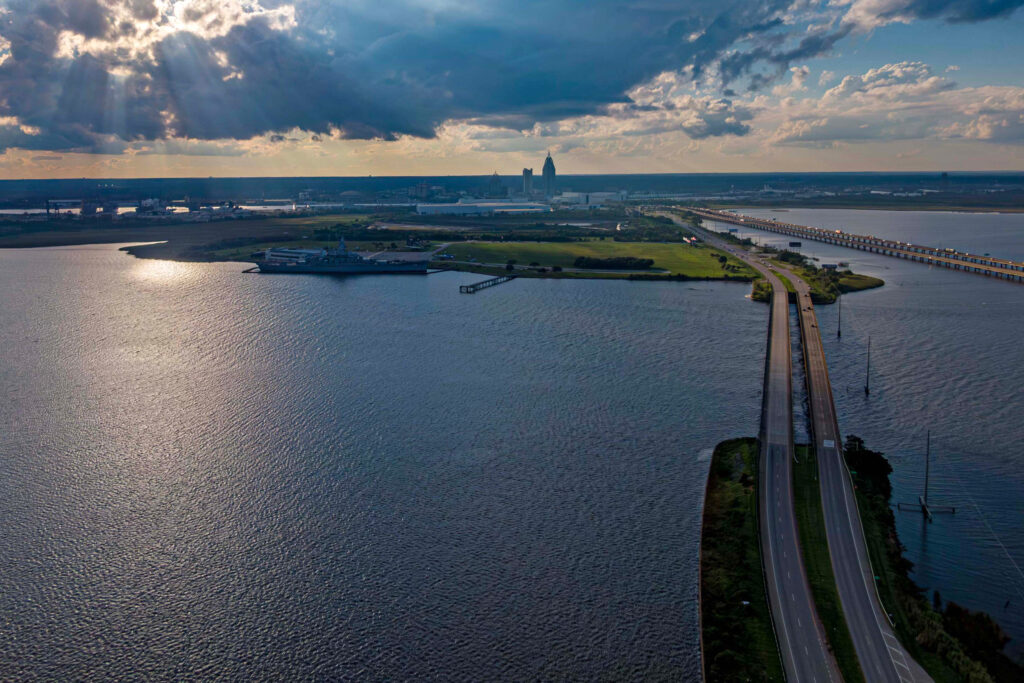
For decades, people who fish, swim and live near Mobile Bay have watched muddy water spread across what used to be clear. The cause: the U.S. Army Corps of Engineers spraying tons of dredged mud across the bay to deepen the shipping channel for the Port of Mobile. Now, that practice could finally be coming to an end.
Congress is moving to ban "thin-layer placement" — the technical term for spraying sediment from dredging operations across the bay. U.S. Rep. Shomari Figures, a Alabama Democrat, has included an amendment in the Water Resources Development Act of 2026, a federal bill that sets Army Corps projects every two years. If passed, the amendment would block the Corps from using thin-layer placement in most cases.
"It essentially removes that option away from the Corps to dispose of dredged material," Figures told Inside Climate News. "They can no longer just spray it across the bay."
The issue matters because Mobile Bay's ecosystems support both wildlife and people's livelihoods. William Strickland, who leads the environmental group Mobile Baykeeper, said the mud clouds the water, blocking sunlight that seagrass needs to grow. The sediment also settles on oyster beds and smothers them. "Where they place it, we see a lot less life," Strickland said. The Corps has been depositing 6 to 12 inches of sediment across the bay and calls this a "beneficial use" for the ecosystem.
Alabama already took action in February, passing a state law that requires 70 percent of dredged material to go toward beneficial use projects and excludes thin-layer placement from counting as beneficial. The federal bill would go further by banning the practice outright, with exceptions only for emergencies or when no other option exists.
This year's legislation passed the House Transportation and Infrastructure Committee unanimously — not a single lawmaker voted against it. The full House vote timing is uncertain, but Figures expects the bipartisan bill to move quickly.
"We would not expect the language to change at all," he said. "It's something obviously that we discussed with other members of the delegation before we came up with the final language." Senator Katie Britt, an Alabama Republican, has also pushed back against the practice and previously helped add provisions promoting beneficial use of dredged sediment in the 2024 version of the bill.
For communities around Mobile Bay, the amendment represents years of advocacy finally reaching the finish line. The bill now awaits a full House vote before heading to the Senate.