When Marcus Mumford joked at a Fenway Park concert that Scotland had brought the rain, the Boston crowd booed — not out of anger, but out of love. Chants of “No Scotland, No Party” rang out, a playful testament to the deep affection the city had developed for the Tartan Army during their two-week stay. In the shadow of Fenway, where baseball reigns supreme, thousands of Scottish fans transformed Boston into an unlikely hub of World Cup joy, singing in train stations, waving flags in kilts, and leaving an impression no one expected. Brandon Finnan, manager of the Cask ’n Flagon pub, admitted they “probably ran out of almost every beer at some point,” but called the experience “a lot of fun” — and deeply meaningful. “Speaking for the city of Boston, we feel blessed,” he said. “They brought a lot of happiness to the city when we needed it.”
That happiness rippled through the city’s institutions and leadership. Boston Mayor Michelle Wu signed a formal letter of intent to establish Boston and Glasgow as sister cities — a rare diplomatic gesture sparked not by politics, but by goodwill. The Boston Globe honored the Tartan Army with a full-page tribute: “You came for the World Cup, but gave us something more.” Even Fenway Park, sacred ground for Red Sox fans, opened its gates to soccer supporters on June 14, when hundreds of Scots attended a baseball game, turning the stadium into a cross-Atlantic celebration. Red Sox President Sam Kennedy later wrote to the Scottish FA, praising how “kilts and Scottish flags filled our ballpark with a spirit that has no equivalent in American sport.”
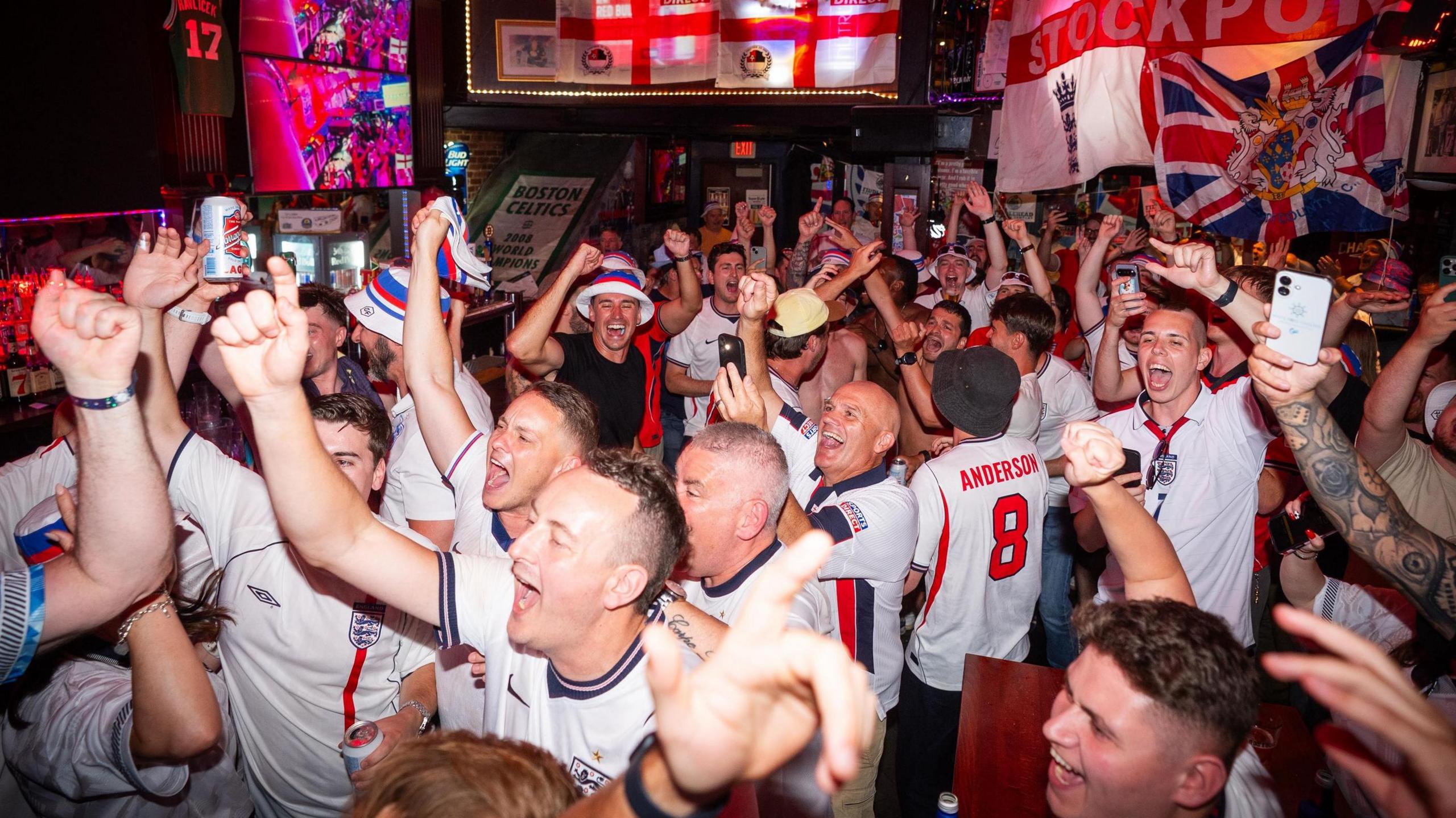
Now, with Scotland’s fans having moved on to Miami for their final match, between 10,000 and 15,000 England supporters have arrived ahead of their game against Ghana. The question on everyone’s mind: can they match the magic? At The Dubliner pub, manager Brian McDonnell admitted they “won’t be hanging up an English flag outside as much,” though he welcomed them warmly. Thomas Concannon of the Football Supporters’ Association believes England fans can deliver the same energy — “minus the bagpipes” — and continue the celebration. But the shadow of Scotland’s legacy looms large. As Frank Fishman of the Red Sox ticket office put it, “England and Scotland may be apples and oranges,” but Boston has already fallen in love with one.
Still, the door remains open. The city that embraced a wave of Scottish joy now waits to see if England can write its own chapter — not as favorites, but as friends. One thing is certain: Boston has rediscovered the power of shared celebration, and it won’t forget it anytime soon.