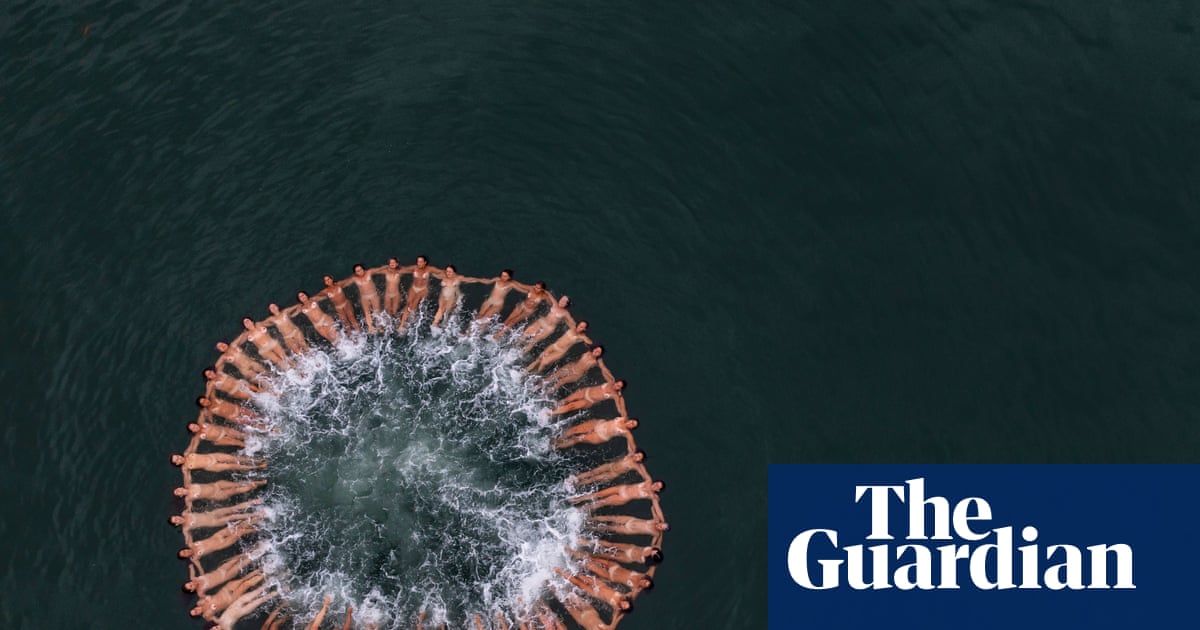
Before dawn on a Lima beach in March 2023, women entered the water as their anger turned into something fiercer: collective reclamation. Peruvian artist Ana Elisa Sotelo had called them together through Instagram and WhatsApp, deliberately keeping the location secret until the last moment—security against unwanted observers, but also an act of care. What unfolded at playa Agua Dulce that morning became a visceral protest against the femicide crisis sweeping through Peru, and a defiant statement about who gets to claim their own body.
The past weeks had been heavy in Lima. A string of femicide cases had sent grief and rage through the city's streets, but alongside that despair lived something equally powerful: sisterhood. Sotelo, a teacher now based in the US, had begun the Women of the Water project in 2022 in Patagonia, Chile, when three female swimmers asked her to photograph them naked in the place they felt most free. That initial impulse—documenting women's power in their own skin—had evolved into something larger. By 2023, Sotelo had expanded the series across multiple countries, each iteration shaped by its own geography and moment.
For the Lima performance, titled Women's Circle, the artist worked with Ana De Orbegoso, who created vests emblazoned with "Alive and Fearless"—the day's rallying cry. At dawn, women arrived at the beach and waded into water that held no warmth, but they carried heat of a different kind. Three volunteers on paddleboards stood by for safety as the swimmers moved further out, peeling away their swimsuits underwater. In those minutes before the circle formed, there was no performance about it—the gestures were raw. The kicking and screaming came without script. Women held each other afloat, skin to skin, making a ring that said without words: we are here, we exist, we refuse to disappear.
For twenty minutes, they swam freely. Then they emerged, collected their suits, returned to shore. The beach filled with smiles. Some rushed to jobs, to homes, to the rest of their lives. But something had shifted. Sotelo captured it from above, her drone recording a geometry of resistance that would later ask difficult questions about whether that solidarity could survive in a world that seemed only to grow colder.
Three years on, Sotelo reflects on the project with a tempered hope. Gender-based violence persists globally, and the urgent conversations that once surrounded it have quieted in the public sphere. The artist wonders aloud: if she made the call today, would women still answer? Has fear overshadowed solidarity? The question carries real weight—a measure not just of momentum lost, but of how backlash and exhaustion can dim the fire that once burned so bright. Yet the image remains, and so does the fact that women once showed up at dawn, naked in cold water, to say: we are alive, and we are fearless.