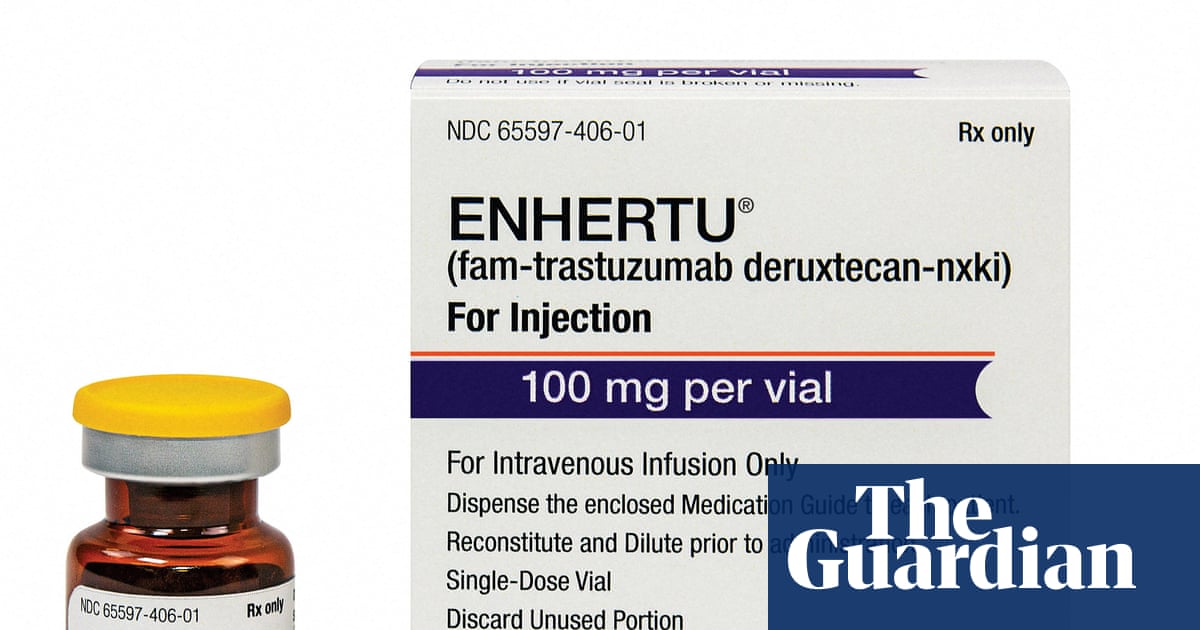
For Claire Rowney, the moment felt "momentous." After two long years of campaigning by charities, cancer specialists and patients themselves, England's NHS will finally offer Enhertu — a life-extending drug for incurable breast cancer — starting this Thursday.
About 1,000 women a year with a form of advanced breast cancer called HER2-low will get the drug through the NHS for the first time. The good news comes after months of tense, behind-the-scenes negotiations over its price between Nice — the body that tells the NHS whether a treatment is worth the money — and Enhertu's makers, the pharmaceutical firms AstraZeneca and Daiichi Sankyo.
This matters because breast cancer is common. Roughly 60,000 new cases are diagnosed in the UK every year, and about one in seven of them are what doctors call HER2-positive — meaning the cancer has too much of a protein called HER2 on its cells. For women whose HER2-low cancer keeps growing despite treatment, Enhertu offers something precious: more time.
The numbers are striking. In clinical trials, Enhertu nearly doubled the time patients lived without their cancer getting worse, from 5.1 months to 9.9 months. Overall survival rose too — people on the drug lived a median of 23.4 months, compared with 16.8 months without it. That is a gain of 6.6 months to spend with loved ones.
Enhertu is a clever treatment. As Dr Catherine Elliott of Cancer Research UK explains, it works like a targeted delivery truck — guiding chemotherapy straight to the cancer cells, sparing healthy tissue. It has been available in Scotland since December 2023 and in 27 European countries. England, however, lagged behind.
Nice had rejected the drug in July 2024, calling it too expensive despite proof it worked. Drugmakers initially refused to lower their price. But a crucial change in April let Nice recommend spending up to £35,000 a year on a single patient's treatment, up from £30,000. That flexibility unlocked what Nice calls "a commercial solution," and England finally joined the list.
Health secretary Yvette Cooper called it "life-changing," praising the campaigners who "never stopped pressing" for the drug. Wales and Northern Ireland are expected to follow England's lead.
Dr Anne Rigg, NHS England's national speciality adviser for chemotherapy, summed up the feeling of many: "This is hugely positive news for women with secondary breast cancer who will now be offered this life-extending treatment on the NHS." The fight was hard-won, but for about a thousand women a year, the wait is over — and with it comes the chance to gain precious time with the people they love.