Against the backdrop of Mount Hermon's ancient slopes, Hasbaya's olive groves and terraced hillsides hold secrets of economic potential that residents themselves are only now beginning to unlock. Yet for decades, the rural communities scattered across South Lebanon's scenic landscape have faced deep economic marginalization—intensified by national financial instability and geographical isolation that has kept opportunity locked behind mountain roads. Now, through a project called "Hounna Lil Tamkeen" (Women for Empowerment), that isolation is becoming a source of strength rather than a barrier.
The initiative, launched in late 2025 and scaling through 2026, represents a deliberate shift in how development work approaches rural recovery. Rather than sending women to distant cities for work, the program brings professional economic training directly to their doorsteps—transforming underutilized homes into guesthouses and family kitchens into commercial enterprises. The stakes are urgent: one out of every three people in rural Lebanon now lives below the poverty line, while female labor force participation stands at just 27.54%, roughly half the global average of 51.07%.
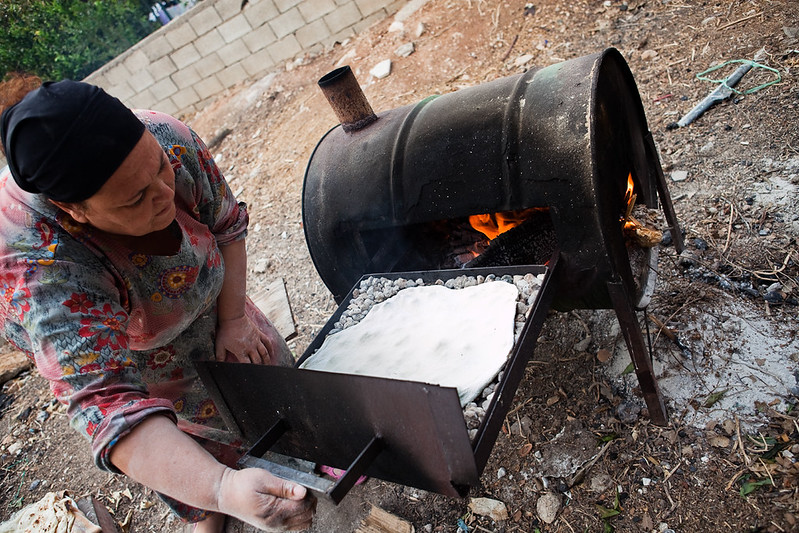
Al Madad Foundation established the project under the vision of Lebanese-British artist and humanitarian Aya Haidar, whose work explores cultural heritage and the value of women's domestic labor. The approach prioritizes business ownership over temporary aid, professionalizing the production of mouneh—traditional Lebanese preserves—so that cultural heritage becomes a marketable asset in the modern economy. The United Nations Development Program recently provided $1.5 million in assistance and technical support to women-led enterprises across Lebanon, anchoring this effort within a broader national recovery strategy.
The program unfolds in three distinct phases. First, participants receive intensive hospitality training covering international service standards, food safety protocols, and digital literacy—skills that enable them to list their traditional homes on global booking platforms and transform domestic spaces into reliable revenue streams. Second, women are trained to scale and professionalize their mouneh production, standardizing quality and packaging so that artisanal goods can reach both visiting tourists and high-end urban markets. This addresses a critical economic need; tourism currently contributes only around 5.5% to Lebanon's economy, despite the region's potential. Third, the initiative provides physical infrastructure and marketing training so women can establish digital visibility and bypass Lebanon's banking obstacles that disproportionately affect entrepreneurs.
The real-world impact is already visible on the ground. Under the guidance of expert trainer Omar Abou Ali and support from the Mediterranean Women's Fund, the project executed specialized "Treasures of Hermon: Feminine Tourism" training modules across villages including Kfayr, Mimes, and Khalwat. One intensive two-day workshop in Khalwat culminated in a traditional rural lunch that doubled as a practical showcase for professionalized mouneh production—connecting hospitality training seamlessly with culinary heritage. The assessments from these sessions are now being translated directly into localized tourism brochures for each village, creating permanent marketing infrastructure that links rural women directly to the modern travel economy.
This approach mirrors a broader recognition that Lebanon's economic recovery depends on micro, small and medium-sized enterprises, which comprise 90% of the country's economy. By empowering women in traditionally conservative rural regions to become business owners and cultural ambassadors, Hasbaya is demonstrating that economic renewal and cultural preservation are not competing goals—they are the same journey.