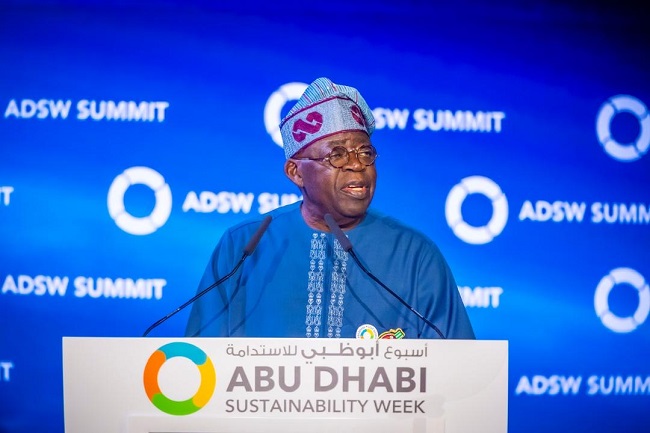
Nigeria's Conservation Foundation made an urgent plea to President Bola Tinubu on World Biodiversity Day this May: sign the Endangered Species Conservation and Protection Bill into law. The call comes as Nigeria faces a biodiversity crisis that threatens not just wildlife, but the food security, water, health, and livelihoods of millions of people across the country.
Nigeria ranks among Africa's most biodiverse nations, supporting nearly 8,000 plant species across 338 families and over 22,000 animal species—insects, fish, birds, mammals, reptiles, and amphibians. Globally, Nigeria ranks 36th in overall biodiversity richness, with particularly high diversity in birds, mammals, and vascular plants. This natural wealth, however, is vanishing at an alarming rate. Over 90% of Nigeria's original forest cover has already been lost, and the country has one of the highest deforestation rates in the world. Habitat fragmentation, climate change, overexploitation, pollution from oil spills and gas flaring, and invasive alien species continue to drive species decline and ecosystem degradation across savannas, montane forests, rainforests, freshwater swamps, floodplains, and coastal and marine habitats.
The bill, which has already been passed by Nigeria's National Assembly, would provide what NCF calls "the legal backbone needed to prosecute wildlife crimes, regulate trade, and deter the exploitation of threatened species." According to Dr. Joseph Onoja, Director General of the Nigerian Conservation Foundation, the legislation is long overdue. "Biodiversity loss is not an abstract global problem," he said. "It is happening in our forests, wetlands, and communities, and it affects food security, water, health, and livelihoods."
The crisis is compounded by illegal hunting and wildlife exploitation, often facilitated through social media and informal markets. Without stronger legal protections and enforcement, these practices continue to undermine conservation gains across the country. NCF emphasizes that action must be inclusive, evidence-based, and well-funded—yet biodiversity research in Nigeria remains far below global output. Without urgent investment integrated with poverty reduction strategies, the window to reverse biodiversity loss will close.
Looking forward, the Nigerian Conservation Foundation has committed to prioritizing conservation actions for the key species and ecosystems most at risk over the next five years. The organization will work with communities, state governments, academia, and the private sector to strengthen the protection and management of priority habitats, combat illegal hunting and wildlife trade through enforcement and monitoring, build local capacity for biodiversity monitoring, and restore degraded landscapes through community-led initiatives. By integrating biodiversity values into development planning at state and local levels, NCF hopes to ensure that conservation becomes embedded in how Nigeria grows and develops.
The call for presidential action on World Biodiversity Day is more than symbolic. It represents a turning point for a nation whose natural wealth—its forests, wetlands, and wildlife—forms the foundation of survival for millions of Nigerians.