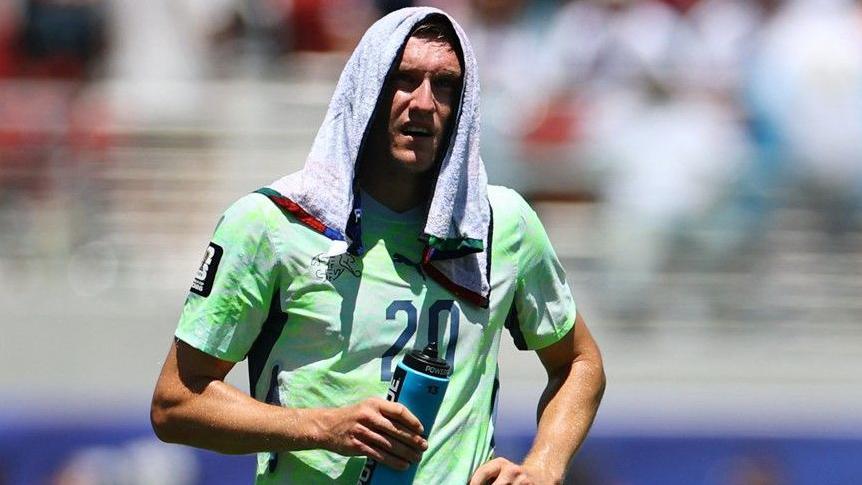
When Carlo Ancelotti sent his Brazil squad out against Morocco at the New Jersey New York Stadium last Saturday, something was clearly wrong. The five-time world champions were second best, trailing 1-0 after a lacklustre opening half. But when the referee blew his whistle for a hydration break 22 minutes into each half across all 104 World Cup games—a first for the tournament—the Italian coach seized his moment.
Six minutes after play resumed, Brazil were level. Vinicius Jr had produced a moment of individual brilliance, cutting inside and lashing the ball into the roof of the net. But Ancelotti, speaking afterwards, was quick to credit the interruption itself. "You can explain a problem to the players," he said. "[You can] make a tactical adjustment that can be very good."
FIFA's introduction of mandatory three-minute drinks breaks in each half has divided opinion across the tournament. The decision, made to help players cope with stifling heat and humidity levels in Mexico, Canada and the United States, has sparked debate about whether it serves player welfare or simply disrupts the flow of the game.
Not everyone is convinced. US head coach Mauricio Pochettino made his feelings clear: "I don't like it. I only like it when the conditions are extreme. When the conditions are good, it is unnecessary." Former Arsenal striker Ian Wright was blunter still, suggesting the breaks amount to "another way of getting adverts in from an American point of view." US broadcaster Fox indeed overran with adverts during the opening match between Mexico and South Africa.
Yet several teams have turned these pauses to their advantage. Canada drew level with Bosnia-Herzegovina shortly after a second-half hydration break when substitute Cyle Larin cancelled out their opponents' lead. Scotland scored their only goal of the game against Haiti moments after a break. Australia grabbed their opener against Turkey in similar circumstances.
US women's boss Emma Hayes, speaking to ITV Sport, offered perhaps the most nuanced take: "It's advantageous for the team losing momentum—that's why I call them momentum breaks. When you're on top, you don't want it; when you're losing, you do." She added that the breaks could serve as a chance to calm players, not just deliver tactical instructions. "Sometimes it can be doing nothing, but that can be considered coaching as well."
Spain manager Luis de la Fuente offered a contrasting perspective before his side's opening match against Cape Verde. "I am always interested in the health of my players," he said. "I think it's the right measure—a pause, freshen up and continue." The breaks are particularly contentious at venues with retractable roofs and climate control, where extreme heat is less of a factor.
As the tournament progresses, coaches and players continue to adapt. Whether the breaks ultimately benefit the game may depend less on the policy itself than on how teams choose to use the pause.