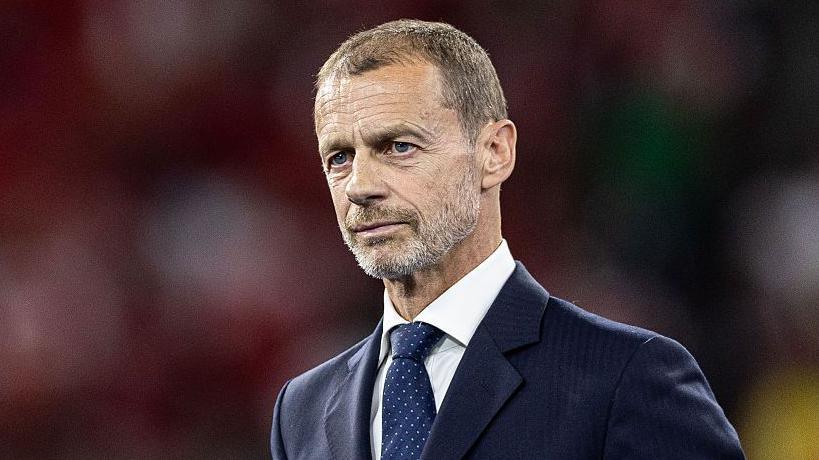
For footballers from Cape Verde, a volcanic archipelago off West Africa, reaching the World Cup for the first time was the realisation of a generations-old dream. For DR Congo and Haiti, returning to football's greatest stage after decades away meant everything to millions of supporters who had waited years — in some cases decades — for that moment. So when UEFA president Aleksander Ceferin reportedly dismissed matches featuring such nations as "completely uninteresting," thirteen World Cup nations answered back with one voice.
In a joint statement released Sunday, the football associations of thirteen countries competing in this summer's expanded tournament in the United States, Mexico and Canada condemned the Slovenian's comments, saying they "respectfully but firmly reject" his characterisation. "For our countries, there is no such thing as an unimportant World Cup match," the statement read.
Ceferin had reportedly made the remarks at a conference in Ljubljana, his native city, where he argued that expanding the World Cup from 32 to 48 teams — the first such change since the tournament grew from 24 to 32 teams in 1998 — had diluted the quality of competition. "We have a lot of matches that are completely uninteresting," he was quoted as saying by Slovenian outlet 24ur.
But the joint statement pushed back hard on that framing. "To suggest that these matches are somehow less important is deeply disappointing and fails to recognise the efforts, sacrifices and aspirations of players, coaches, clubs, football leaders and supporters across the world," the nations wrote. They included Cape Verde, Curacao, Uzbekistan, DR Congo, Haiti, Algeria, Tunisia, Morocco, Egypt, Ghana, Senegal, Ivory Coast and South Africa — nations spanning five continents and united in their response.
"Football does not belong to a select group of nations," the statement continued. "Its strength comes from its universality. Behind every qualification stand years of work and investment. Behind every national team stand entire communities and millions of people who see football as a source of pride, hope and unity."
The controversy arrives as FIFA's expanded 48-team World Cup unfolds across North America, giving historically underrepresented regions their first taste of the tournament's biggest stage. For nations like Uzbekistan — making their debut — and returning powers like DR Congo, whose last appearance came in 1974, the stakes extend far beyond entertainment value.
"We believe every nation that qualifies deserves respect," the statement concluded. "Every team has earned its place on merit. Every supporter has the right to dream. Every match carries meaning for millions of people around the world."