On a quiet beach in Florida, a tiny loggerhead hatchling no bigger than a human palm claws its way through the sand, guided by an invisible force that will one day carry it across entire oceans. This fragile creature, just beginning its journey, already carries within it a biological marvel: the ability to read Earth’s magnetic field like a compass and map combined. For over 100 million years, sea turtles have navigated the planet’s waters with this internal guidance system, returning with astonishing accuracy to the very beaches where they were born. Today, on World Sea Turtle Day, scientists are uncovering the depth of these animals’ resilience—while also confronting the mounting pressures of climate change, plastic pollution, and shifting ecosystems.
Recent research has revealed that loggerhead sea turtles can learn and remember the unique magnetic “addresses” of key locations, from nesting beaches to feeding grounds. Hatchlings, within moments of entering the ocean, can detect subtle variations in the planet’s magnetic field, allowing them to orient themselves across thousands of miles of open water. This natural GPS has enabled sea turtles to survive mass extinctions and continental shifts, but now faces a new test: the accelerating pace of human-driven environmental change.
Rising global temperatures are already altering sea turtle behavior. In parts of the western Atlantic, loggerhead populations are nesting up to 10 days earlier than they did 30 years ago—a shift believed to help avoid lethal incubation temperatures. But there are limits to adaptation. Warmer sands not only reduce hatchling survival but also skew sex ratios, since temperature determines sex in developing embryos. In some regions, scientists have observed clutches producing nearly 90% female hatchlings, raising concerns about long-term population viability.
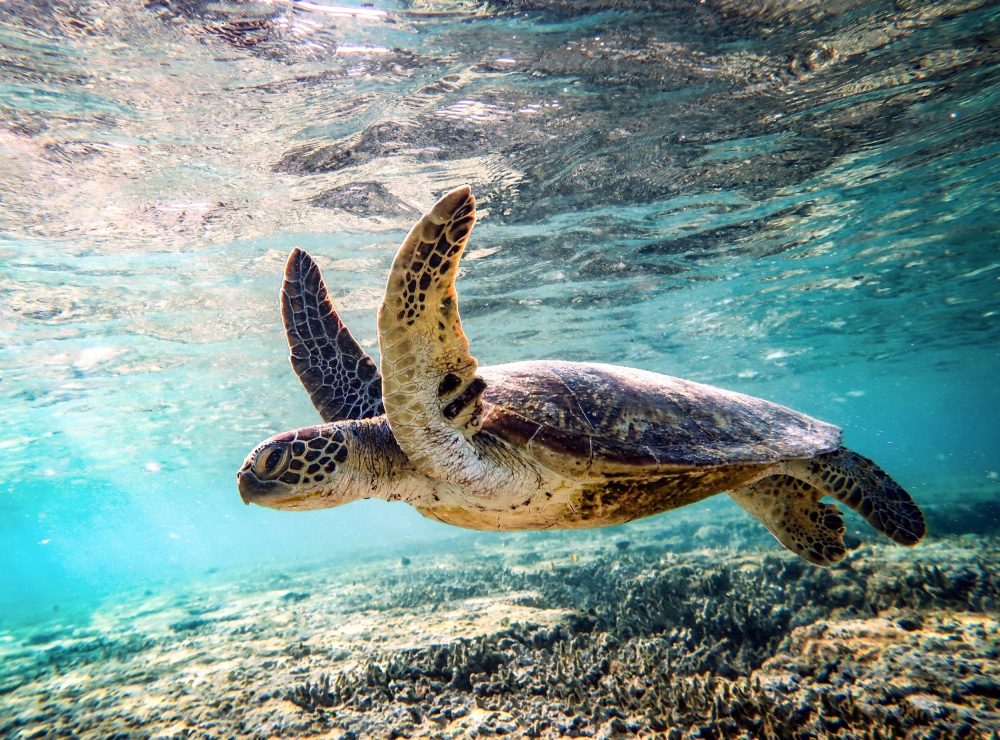
At the same time, plastic pollution is following turtles across international waters. Green sea turtles, studied in the Caribbean, have been found to ingest plastic debris that originated thousands of miles away, a stark reminder of how ocean currents connect distant ecosystems. Because sea turtles migrate across multiple jurisdictions, the pollution they encounter is a shared responsibility—one that demands global cooperation.
Yet there is reason for hope. Innovative techniques, like extracting male DNA from egg shells, are helping scientists study breeding patterns without capturing elusive males. And the layers of a turtle’s shell, much like tree rings, now serve as life archives, revealing diet shifts, migration patterns, and physiological stress over time. These tools are illuminating the hidden chapters of a creature that spends most of its life beyond human sight.
As oceans change, so too must our stewardship. The survival of sea turtles depends not just on their ancient instincts, but on our modern choices.