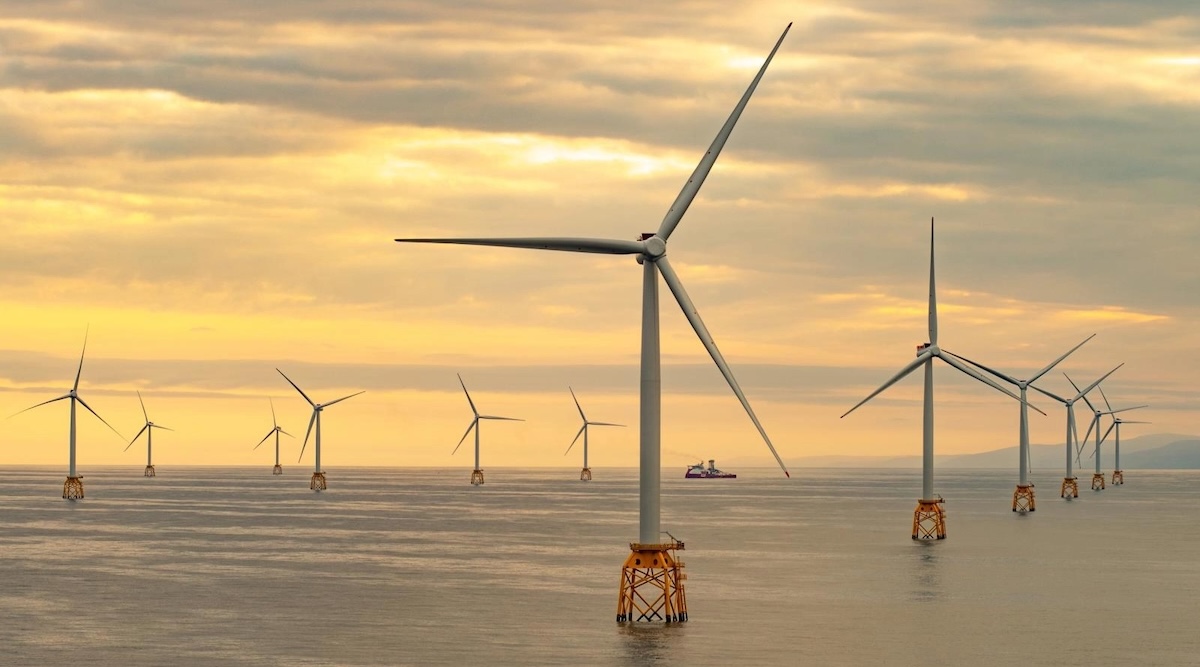
California, the world's fourth-largest economy, is poised to harness 200 gigawatts of offshore wind potential—enough energy to power millions of homes—despite the Trump administration's efforts to halt clean energy development. Rather than back down, state officials and industry leaders are forging ahead with ambitious timelines and global partnerships that signal California's determination to lead the offshore wind revolution.
The stakes are enormous. California's Energy Commission, acting under state law AB 525, has set a target of 5 gigawatts of offshore wind by 2030 and 25 gigawatts by 2045, according to a feasibility study from the National Renewable Energy Laboratory. Adam Stern, Executive Director of Offshore Wind California, has emphasized that achieving the near-term goal "will position the state to meet and even exceed its 25 GW goal by 2045." These aren't abstract numbers—the industry analysis projects that California's offshore wind sector could support tens of thousands of jobs, supply over 15 percent of the state's current electricity needs, generate enough power for at least 7 million homes, and produce tens of billions of dollars in GDP by 2050.
The path forward relies on floating wind turbine technology, a relatively new innovation that allows turbines to operate in the deeper waters of the Pacific Coast, where traditional monopile construction is impossible. This technology has been maturing with substantial support from the US Department of Energy, positioning California to lead where geography would otherwise be limiting.
When Trump returned to office in January 2025, he moved swiftly to obstruct offshore wind development. He suspended all new offshore leases in federal waters, halted existing projects for additional reviews, and issued stop-work orders on five projects already under construction. But the courts have been a formidable barrier to his ambitions. In December, a federal judge ruled that while Trump can prevent new offshore leases from being issued, he lacks legal authority to arbitrarily re-review projects that already hold permits. Earlier this year, additional federal judges affirmed that work could continue on the five halted projects. When litigation failed, Trump pivoted to financial coercion—offering TotalEnergies nearly $1 billion in March to walk away from its two Atlantic coast leases, a template for further buyouts. Congressional Democrats have launched an investigation into the legality of that deal.
California, however, is playing a longer game. The state has positioned itself as a member of the Global Offshore Wind Alliance and has already forged agreements with major offshore wind players including Norway, Scotland, Denmark, Japan, the UK, and China. These partnerships create pathways for California companies and expertise to participate in the global offshore wind industry, regardless of federal obstruction domestically.
Last week, Offshore Wind California hosted a global wind industry summit in Long Beach, underscoring the momentum behind the state's vision. Industry experts and stakeholders are already mapping next steps and new investments. With federal judges repeatedly siding against Trump's attempts to halt the offshore wind projects that already have leases and permits, and with global markets increasingly hungry for clean energy expertise, California appears poised to weather the political turbulence and emerge as a world leader in offshore wind technology and deployment—long after Trump's presidency ends on January 20, 2029.